




Winslow Homer Oil Painting Reproductions
Winslow Homer replica paintings on Canvas for sale
Winslow Homer is regarded as one of America's greatest painters because he captured the country's landscapes, coastlines, and everyday life with a realism that helped define a distinctly American artistic identity. From the powerful waves of the Atlantic Ocean to quiet rural scenes and sporting subjects, his paintings combine technical mastery with an honest observation of nature that continues to influence artists and collectors.
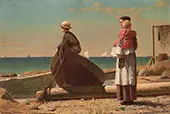
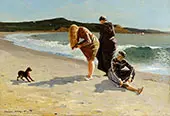
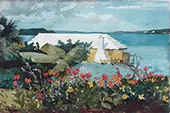
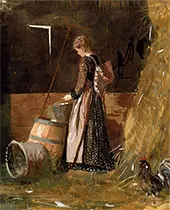
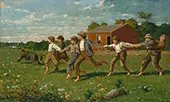
Our collection features hand-painted oil painting reproductions of Winslow Homer's most celebrated works, including The Gulf Stream, Breezing Up (A Fair Wind), Eight Bells, Northeaster, The Fox Hunt, and Snap the Whip. Every painting is recreated entirely by hand on canvas to preserve the original brushwork, color relationships, and surface character that distinguish Winslow Homer's art.
A hand-painted oil painting reproduction by Winslow Homer is equally suited to a coastal home, an American art collection, or anyone looking for a dramatic marine painting.
Why Winslow Homer Changed American Painting
Winslow Homer helped transform American painting by proving that the country's own people, landscapes, and coastlines deserved the same artistic importance that European painters had long reserved for their own history, mythology, and rural life. Rather than imitating European traditions, Homer developed a distinctly American style built on realism, direct observation, and an uncompromising portrayal of nature.
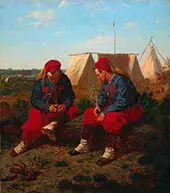
Born in Boston in 1836, Homer began his career as a commercial illustrator before joining Harper's Weekly, where he documented the American Civil War.
The demands of illustration taught Homer to observe quickly, simplify complex scenes, and record events with remarkable accuracy. Those habits remained visible throughout his painting career, giving his work an honesty that became one of its defining characteristics.
France broadened Homer's artistic horizons through the work of artists including Gustave Courbet and Édouard Manet, but he never became a follower of European artistic movements. Instead, he developed his own visual language, using balanced compositions, carefully controlled color, and natural light to create paintings that were unmistakably American.
When Winslow Homer settled at Prouts Neck, Maine, he found the landscape that would define the final decades of his career. The rugged Atlantic coastline became both his studio and his inspiration, leading to some of the most celebrated marine paintings in the history of American art.
How the Atlantic Ocean Transformed Winslow Homer's Art
The Atlantic Ocean transformed Winslow Homer's art, becoming more than a subject to paint; it became the central force shaping his mature style. Living at Prouts Neck, Maine, Homer observed the sea in every condition, from calm summer mornings to violent coastal storms, allowing him to paint its changing light, movement, and power with exceptional authenticity.
Unlike many 19th century marine painters who concentrated on ships, naval victories, or busy harbors, Homer made the ocean itself the principal subject of many of his most celebrated seascape paintings. Fishermen, sailors, and lifesaving crews often appear in his paintings, but they exist to emphasize humanity's relationship with nature rather than dominate the composition. The sea is both beautiful and unpredictable, offering opportunity and danger in equal measure.
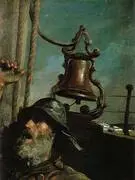
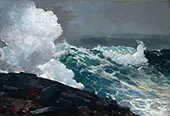
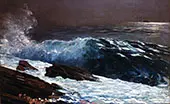
This new direction produced some of Homer's greatest maritime paintings, including The Gulf Stream (1899), Eight Bells (1886), Northeaster (1895), and The Life Line (1884). Each demonstrates his remarkable ability to combine careful observation with dramatic composition, creating paintings that feel both emotionally powerful and entirely believable.
Homer's Atlantic paintings helped establish a new standard for American marine art because they captured not simply the appearance of the sea, but its character. They remain among the most admired interpretations of the ocean in the history of Western art.
Why Winslow Homer Became One of America's Most Important Artists
Winslow Homer's reputation has endured because his paintings combine technical brilliance with subjects that remain relevant across generations. Rather than relying on historical spectacle or idealized figures, he explored resilience, self-reliance, humanity's relationship with nature, and the changing American landscape. Those themes continue to resonate with museums, collectors, and art historians.
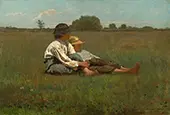
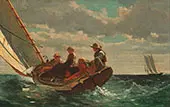
His greatest paintings demonstrate this remarkable range. Snap the Whip (1872) reflects the optimism and renewal of post-Civil War America, while Breezing Up (A Fair Wind) (1876) captures youthful confidence and the nation's growing connection with the sea. In contrast, The Gulf Stream (1899) confronts the vulnerability of human life in the face of nature's immense power, proving Homer's ability to communicate profound emotion through observation, composition, and atmosphere rather than sentimentality.
Homer's influence extended far beyond his own generation. His commitment to realism, mastery of natural light, and honest portrayal of American life established new standards for marine and landscape painting. Winslow Homer's paintings remain central to American art because they combine technical excellence with an enduring understanding of both the natural world and the human experience.
Which Winslow Homer Painting Is Right for Your Home?
The right Winslow Homer painting depends on the atmosphere you want to create. Powerful marine paintings such as The Gulf Stream and Northeaster become striking focal points in larger rooms, while Breezing Up (A Fair Wind) and Eight Bells bring a lighter coastal character to living rooms, studies, and beach homes.
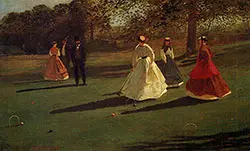
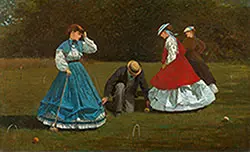
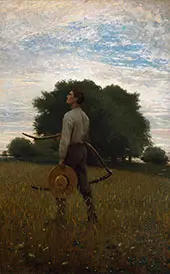
If you prefer traditional American subjects, Snap the Whip reflects the optimism of rural America after the Civil War. Homer's sports wall art and landscapes offer a quieter alternative to his dramatic seascapes while celebrating outdoor recreation and everyday American life.
His diverse body of work makes it easy to find a painting that complements both your interior and your personal taste.
Choose the subject that best reflects the mood you want to create, whether it is the power of the Atlantic Ocean, the tranquility of the New England coast, or scenes from rural America. If you would like help selecting the right painting size for your room, our Buying Guide explains how to choose artwork that suits your space. Every hand-painted Winslow Homer oil painting reproduction is created to preserve the brushwork, color harmony, and surface character that define the original, allowing you to enjoy the timeless appeal of one of America's greatest artists in your own home.
Creating Hand-Painted Winslow Homer Oil Painting Reproductions
Reproducing a Winslow Homer painting requires more than accurately copying the composition. Much of his work depends on the way oil paint captures changing light, moving water, weathered rock, and the varied textures of the natural world. These qualities are created through the physical application of paint and cannot be fully replicated by a flat print.
Subtle brushstrokes, carefully layered color, and areas of impasto give Homer's marine paintings a physical depth and surface character that change as natural light falls across the canvas. Recreating those effects requires an understanding of how Homer balanced realism with expressive brushwork rather than simply matching colors.
Our artists study each original before work begins, analyzing the brushwork, color palette, and paint handling that define Homer's style. Every completed painting also passes through our rigorous Quality Control Process before it is approved for shipping.
Marine paintings are assigned to artists experienced in coastal landscapes and seascapes, ensuring that every hand-painted oil on canvas reproduction captures the brushwork, surface texture, and shifting effects of light that give Winslow Homer's paintings their distinctive presence.







Enter Your Private Gallery
Log in with your gallery ID here
Track Your Order
Type your order number here
Most Popular Artists