




Famous Oil Paintings
Buy Art reproductions on canvas of famous oil paintings
Why Some Paintings Became Famous
Certain works became internationally recognized because they changed how artists approached realism, emotion, symbolism, color, and visual storytelling. Others gained lasting cultural influence through museum collections, public exhibitions, academic study, and continued visibility across books, film, and interior design. Many of these artworks continue to attract viewers because they combine technical mastery with subjects and emotions that still feel recognizable today.
Since 1996, our family-owned studio has specialized in museum-quality hand-painted oil painting reproductions. Over nearly three decades, our artists have carefully studied the techniques, textures, color structures, and brushwork associated with many of the world’s most influential paintings.
Renaissance Paintings That Changed European Art
The Renaissance transformed Western painting through advances in perspective, anatomy, proportion, and natural observation. Artists increasingly focused on realism, spatial depth, and the psychological presence of their subjects rather than purely symbolic representation.
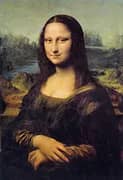
Leonardo da Vinci helped redefine portrait painting through the Mona Lisa, now housed in the Louvre Museum. The painting became closely associated with Renaissance innovation because of its subtle facial expression, atmospheric transitions, and carefully balanced composition.
Another important Renaissance masterpiece, The School of Athens by Raphael, brought together philosophers, mathematicians, and classical thinkers within a monumental architectural setting. The fresco became one of the defining visual representations of Renaissance humanism and intellectual culture.
Northern European artists also transformed oil painting during this period. Jan van Eyck introduced remarkable levels of surface detail and realism in works such as The Arnolfini Portrait, which remains widely studied for its symbolism, reflective surfaces, and technical precision.
Why These Paintings Still Feel Powerful
By the 19th century, many artists began moving away from strict academic realism toward more personal and emotional forms of expression. Brushwork became more visible, while color and atmosphere began to play a larger role in the emotional impact of a painting.
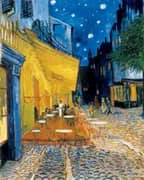
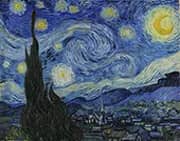
Vincent van Gogh transformed modern painting through emotionally charged works such as The Starry Night, where movement, color, and energetic brushwork became central to the viewing experience. His paintings demonstrated how emotion itself could shape composition and paint handling.
Artists associated with Romanticism explored emotion differently. Caspar David Friedrich created Wanderer above the Sea of Fog as a meditation on solitude, scale, and the relationship between humanity and nature. The painting became one of the most recognizable images associated with Romantic landscape painting.
Later artists explored modern urban life and psychological atmosphere. Edward Hopper painted Nighthawks as a quiet study of isolation and city life, creating one of the most recognizable American paintings of the 20th century.
Paintings That Influenced Modern Art Movements
Certain works became historically important because they influenced the direction of new artistic movements, experimental techniques, and modern visual ideas.
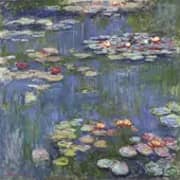
Impressionism emerged partly through Claude Monet’s interest in changing light, atmosphere, and outdoor observation. His visible brushwork and shifting color relationships moved European art away from highly polished academic surfaces toward a more immediate and atmospheric way of seeing.
Other artists explored color and composition differently. Georges Seurat developed the Pointillist technique through carefully structured arrangements of color and optical balance. A Sunday Afternoon on the Island of La Grande Jatte became one of the defining works associated with color theory and late 19th century modernism.
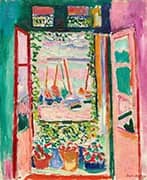
In the early 20th century, Henri Matisse used bold color and simplified forms to create paintings such as The Dance, helping move European painting further toward modern abstraction.
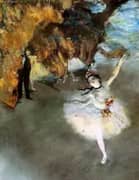
Paintings centered on movement, rhythm, and the human figure continue to influence contemporary figurative interiors, including collections focused on dance paintings and ballerina art.
How Museum-Quality Oil Painting Reproductions Are Created
Creating a hand-painted fine art reproduction involves much more than copying the visible image of an artwork.
Oil surfaces contain subtle variations in texture, reflected light, glazing, and pigment density that change depending on lighting conditions, room scale, and viewing distance.
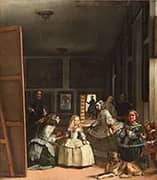
Artists such as Claude Monet, Vincent van Gogh, and Diego Velázquez relied on layered oil pigments, glazing, tonal refinement, and carefully directed brushwork to create depth, atmosphere, and surface movement across the canvas.
Before beginning a reproduction, our artists study the structure and visual character of the original painting in detail. Attention is given to brush direction, paint density, edge softness, tonal balance, and the interaction between light and texture across the canvas. This helps preserve the atmosphere, depth, and movement associated with the original work rather than producing a flat or overly uniform appearance.
Scale also changes how an artwork is experienced within a room. Larger reproductions require careful adjustment of proportion, texture, and tonal balance so the composition maintains its visual presence across gallery spaces, hospitality interiors, and contemporary architectural settings.
Many clients commission oversized or custom dimensions designed around specific walls, furnishings, or architectural settings while preserving the balance of the original composition.
For nearly three decades, our studio has created hand-painted oil reproductions for collectors, interior designers, hospitality projects, and curated residential spaces worldwide. Many commissions are designed around specific interiors, allowing classical and modern artworks to function naturally within contemporary living environments, gallery-style spaces, and large-scale architectural settings.
Our experienced team works closely with collectors, interior designers, and private clients to help select paintings suited to specific interiors, architectural settings, and presentation styles.
Guidance is also available for custom sizing, framing options, and large-scale commissions created for residential, hospitality, and commercial interiors.





















































Enter Your Private Gallery
Log in with your gallery ID here
Track Your Order
Type your order number here
Most Popular Artists