




Vincent van Gogh Oil Painting Reproductions
Vincent van Gogh replica paintings on Canvas for sale
What Makes Van Gogh's Paintings So Distinctive?
Vincent van Gogh remains one of the most recognizable artists in the world and is widely regarded as one of the leading figures of the Post-Impressionist movement. His paintings combine color, movement, texture, and emotion in a way few artists have matched. More than a century after his death, works such as The Starry Night (1889), Sunflowers (1888), Irises (1889), Almond Blossom (1890), and The Bedroom (1888) continue to attract visitors to museums and remain among the most requested subjects for hand-painted oil painting reproductions.
Unlike many artists of the 19th century, Van Gogh used paint not simply to describe what he saw but to communicate atmosphere, energy, and feeling. Landscapes appear to move, skies seem to swirl, and ordinary subjects become visually powerful through color and brushwork alone.
Understanding Van Gogh's Brushwork and Impasto Technique
One of the defining characteristics of Van Gogh's paintings is his use of visible brushwork and impasto. Rather than applying paint in thin, smooth layers, he frequently built sections of a painting using textured brushstrokes that create movement, depth, and surface character.
In many of his landscapes and self-portraits, the paint surface forms an integral part of the artwork. The direction of the brushstrokes, the build-up of paint, and the relationship between color and texture all contribute to the visual impact of the finished painting. Rather than concealing the artist's hand, the brushwork becomes an essential part of the image itself.
In many original Van Gogh paintings, the texture remains clearly visible when viewed in person, creating highlights and shadows across the paint surface that cannot be fully appreciated in printed reproductions.
Customers purchasing Van Gogh reproductions frequently ask about texture and brushwork because these qualities are among the most recognizable aspects of his work. Our artists carefully study the original painting before work begins, paying close attention to brushstroke patterns, color relationships, paint application, and impasto effects. Where these characteristics are present in the original artwork, they are incorporated into the reproduction using traditional oil painting techniques.
From Dutch Realism to Post-Impressionism
Born in Groot-Zundert in the Netherlands on March 30, 1853, Van Gogh worked as an art dealer, teacher, and lay minister before becoming a professional artist.
His earliest paintings, including The Potato Eaters (1885), were influenced by Dutch masters such as Rembrandt van Rijn and Frans Hals. Following his move to Paris in 1886, exposure to artists including Claude Monet, Camille Pissarro, Edgar Degas, and Georges Seurat introduced brighter colors and new approaches to painting.
Within only a few years, Van Gogh developed the distinctive style that would make him one of the leading figures of the Post-Impressionist movement. While Impressionist artists focused on capturing the effects of light and atmosphere, Van Gogh used color, brushwork, and paint texture to communicate emotion and personal expression. His work would later influence Expressionism, Fauvism, and many other developments in modern art.
The Starry Night, Sunflowers, and Van Gogh's Most Famous Paintings
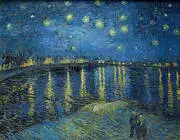
Painted in June 1889 while Van Gogh was staying at the Saint-Paul-de-Mausole asylum in Saint-Rémy-de-Provence, The Starry Night remains one of the world's most famous paintings. The original measures 73.7 x 92.1 cm (29 x 36¼ inches) and is housed in the Museum of Modern Art in New York.
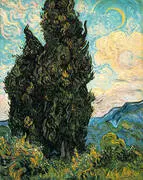
Although inspired by the view from his room, the painting combines observation with imagination. The swirling sky, glowing stars, and towering cypress tree create an image that remains instantly recognizable throughout the world.
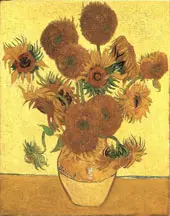
The Sunflowers series was created in Arles while Van Gogh was preparing for the arrival of Paul Gauguin. The best-known version measures 92.1 x 73 cm (36¼ x 28¾ inches) and is held by the National Gallery in London.
Today, these paintings are celebrated not only for their bold yellow palette but also for the confidence and energy visible in the brushwork.
Irises, Almond Blossom, and the Influence of Nature
Flowers and gardens inspired some of Van Gogh's most admired paintings.
Irises (1889), now in the J. Paul Getty Museum in Los Angeles, measures 71 x 93 cm (28 x 36⅝ inches) and demonstrates his ability to transform a simple garden subject into a dynamic arrangement of color and movement.
Almond Blossom (1890), painted to celebrate the birth of his nephew Vincent Willem van Gogh, measures 73.3 x 92.4 cm (28⅞ x 36⅜ inches) and remains in the Van Gogh Museum in Amsterdam.
The painting reflects the influence of Japanese ukiyo-e prints, which Van Gogh collected and admired throughout his career. Its delicate branches and bright blue sky reveal a quieter and more contemplative side of the artist.
The Bedroom, The Night Café, and Everyday Subjects
Many 19th century artists focused on historical, religious, or mythological subjects. Van Gogh frequently found inspiration in everyday life.
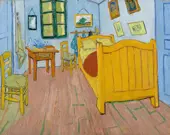
The Bedroom (1888) transformed a modest room in Arles into one of the most recognizable interior paintings in Western art.
The Night Café (1888), now housed at the Yale University Art Gallery in Connecticut, measures 70 × 89 cm (27½ × 35 inches) and demonstrates Van Gogh's belief that color could communicate emotion as powerfully as subject matter.
Writing to Theo van Gogh, Vincent explained that he wanted to express the "terrible passions of humanity" through color. The painting remains one of the clearest examples of this artistic approach.
Theo van Gogh and the Artist's Legacy
Much of what we know about Vincent van Gogh comes from the hundreds of letters exchanged with his brother Theo van Gogh.
These letters provide an unusually detailed record of an artist's thoughts about painting, color, technique, artistic development, and daily life. Few artists have left behind such a rich account of their creative process.
Theo provided financial support throughout Vincent's career, while Theo's widow, Johanna van Gogh-Bonger, played a crucial role in preserving the paintings, organizing exhibitions, and introducing Van Gogh's work to a wider audience. Her efforts helped ensure that Van Gogh's paintings would eventually achieve international recognition.
Choosing a Van Gogh Painting for Your Home
Van Gogh's paintings remain popular with collectors, homeowners, and interior designers because they combine artistic significance with strong visual presence.
Collectors are often drawn to his floral paintings for their decorative character and vibrant color, while landscape compositions can provide a stronger focal point in larger rooms and open-plan interiors. Interior scenes and self-portraits offer a different perspective on the artist's work and often appeal to collectors looking for something less familiar than the best-known masterpieces.
All of our standard catalog paintings are created using the original aspect ratio of the artwork. Regardless of the size selected, the composition is never cropped, stretched, compressed, or digitally altered to fit a particular format. Maintaining the original proportions ensures that the relationships between the elements within the composition remain consistent with the original painting.
How Our Artists Study Van Gogh's Original Paintings
Our artists create hand-painted Van Gogh oil painting reproductions entirely by hand on canvas using traditional oil painting techniques. We never use digital printing, giclée processes, or canvas transfer methods.
Particular attention is given to the brushwork, color relationships, paint application, and impasto effects that contribute to the character of the original artwork. Van Gogh's paintings rely heavily on visible texture and directional brushstrokes, making these qualities an important part of the reproduction process.
The objective is not simply to reproduce an image, but to capture the energy, movement, and visual character that make Van Gogh's paintings so distinctive.
Whether creating a floral study, landscape, interior scene, or self-portrait, our artists focus on preserving the qualities that define Van Gogh's work while maintaining the original composition and proportions of the artwork.




Testimonial from JV, Houston, Texas

Enter Your Private Gallery
Log in with your gallery ID here
Track Your Order
Type your order number here
Most Popular Artists