




Neoclassicism Art Oil Painting Reproductions
Find Neoclassicism Art Oil Painting Replicas by Neoclassicism Art Artists
Neoclassicism Art: A Brief Introduction
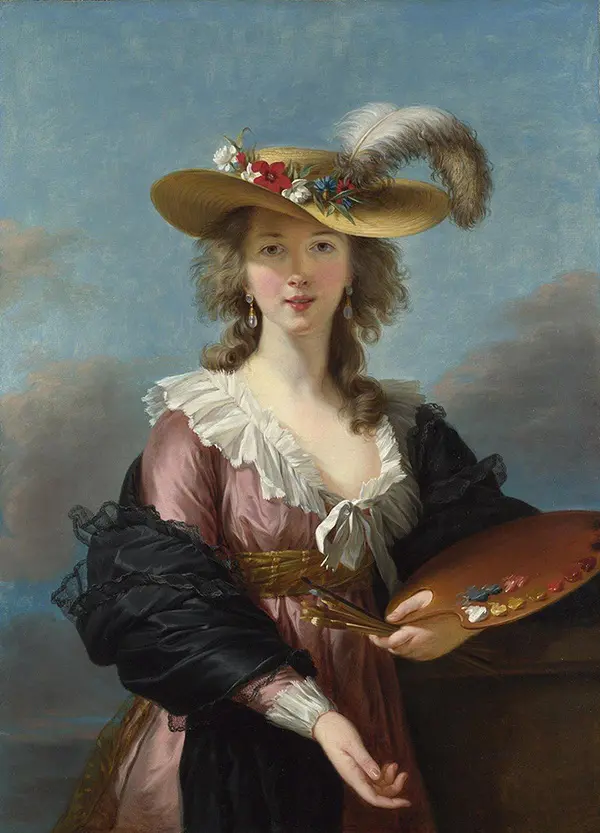
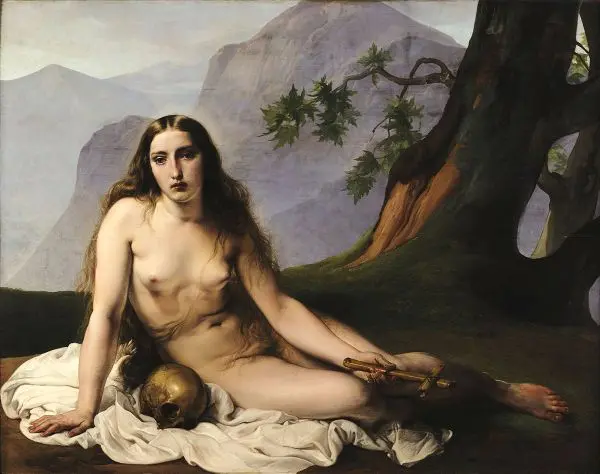
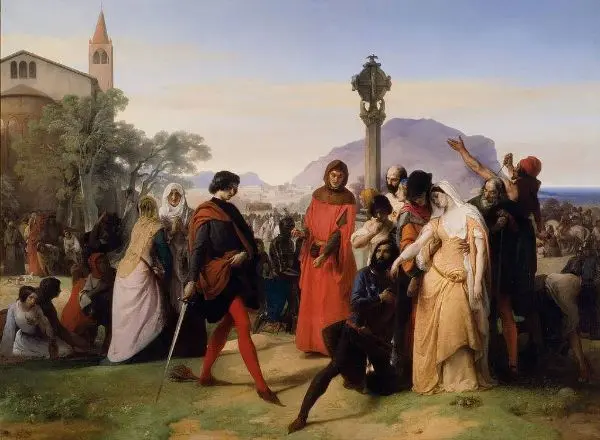
Neoclassicism art often appears in discussions about fine art oil paintings. It is something artists have taken inspiration from and rallied against since the dawn of classical civilizations. Nonetheless, it is also an often misunderstood term that is hard to define. This brief introduction explains what Neoclassicism and Classical oil paintings are and their defining characteristics. We also examine five leading artists and their most famous classic paintings.
What is Neoclassicism Art?
The word neoclassicism refers to art taking inspiration from ancient Greece or Rome. This period of classical antiquity, lasting from the 8th century BC to the 6th century AD, saw the civilizations of the Mediterranean Sea flourish. As a result, they gained massive influence throughout Europe, Western Asia, and Northern Africa.
Starting with the epic Greek poetry of Homer, the period covers the rise of Christianity in the 1st century AD through to the fall of the Western Roman Empire. It lasted until the decline of classical culture in the 6th century. The term applies to many cultures and histories, supplying rich and varied artistic sources. Regarding neoclassical paintings, the descriptions “classic” and “classical” appear during the 17th century. However, describing art in ancient Rome and Greece, culture, and philosophy was a major inspiration for writers, thinkers, artists, and architects.
This style of painting dominated Western artistic production from the late Renaissance onwards. Indeed, classical mythology (the myths and tales of ancient Greco-Roman heroes and gods) became one of the most painted subjects.
What are the Characteristics of Neoclassical Art?
Neoclassical paintings are usually associated with principles of restraint and harmony. This type of art emphasizes obedience to accepted forms of composition, color, and technique. These standards refer to the art of ancient Greek and Rome, which classicists tried to emulate.
All artists in this genre shared a deep respect for the Greco-Roman world, often in a heavily idealized form. As the poet Edgar Allan Poe put it, artists celebrated the “glory that was Greece” and the “grandeur that was Rome.” Indeed, Neoclassicism refers to an artistic canon of widely accepted ideal forms and their revival in Western art. Neoclassicism prevailed in the 17th century, particularly during the Age of Enlightenment.
The movement eventually led to more modern approaches, such as Impressionism and Expressionist art.
What are the Five Neoclassicism Art Characteristics?
In its simplest form, Neoclassicism paintings refer to a philosophical and aesthetic outlook inspired by ancient Greece and Rome. While this applies to a wide variety of paintings, architecture, and literature, it resulted in five essential characteristics:
- Restrained simplicity in color and form
- Muted or calm emotions and “ideal” bodies
- Strict proportions and perspectives
- An intellectual approach to art and architecture
- Clear compositions and narratives
Speaking of the Discobolus, an iconic Greek sculpture depicting a male athlete throwing a discus, the art historian Kenneth Clark remarked how its “restraint and compression” was fundamental to its appeal. He described how violent emotion or rhythmic motion would destroy the principles of “balance and completeness.” It was only through these qualities, Clark argued, that Neoclassicism art kept its “position of authority” through the centuries.
What makes Neoclassicism Art?
What exactly makes neoclassical paintings is elusive. Indeed, art historians vigorously debate the differences between movements such as classicism, neoclassicism, and academicism. While many Italian Renaissance oil paintings focus on Greco-Roman mythology, paintings by Leonardo da Vinci and Titian are not “classical.” Instead, the Renaissance art movement led to developments in the 16th and 17th centuries when oil paintings were more classically formal.
The later process emphasizes structure, order, geometry, and the use of grids in painting; a new generation of rigorously disciplined painters stuck to the strict teaching of Europe’s prestigious art academies. The French King Louis XIV’s court was the center of this European Neoclassicism. Indeed, the grandeur of Versailles launched some of the finest painters of the era.
However, exploring some of the most famous classical paintings is worthwhile to understand better what makes Neoclassical paintings.
Who Created the Most Famous Neoclassical Paintings?
Here are five leading paintings and the artists who created them:
Nicolas Poussin 1594-1665
Nicolas Poussin created some of the most famous Neoclassical paintings of all time. He grew up in France but spent most of his working life in Rome. Paintings by Nicolas Poussin focus on Religious art and mythological narratives created for private commissions.
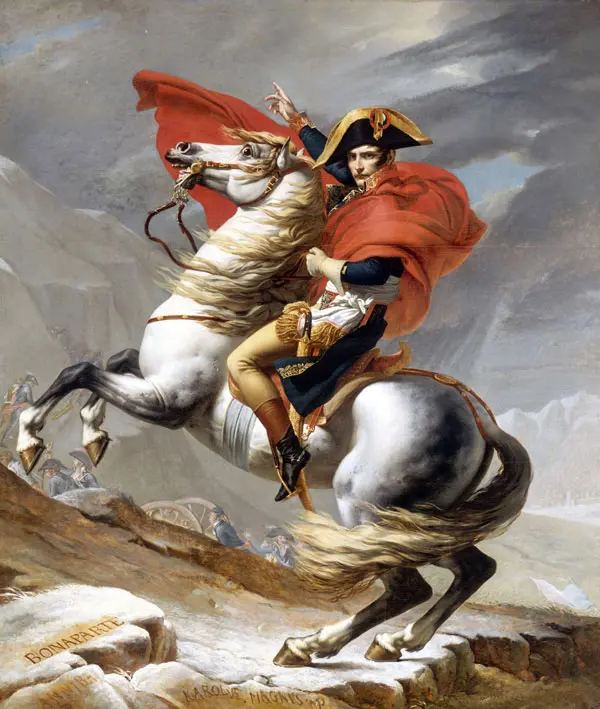
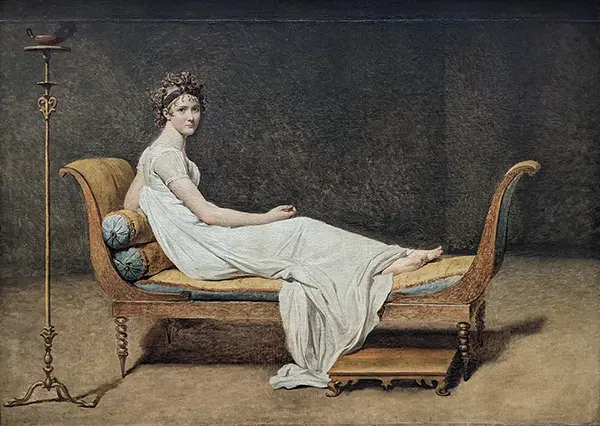
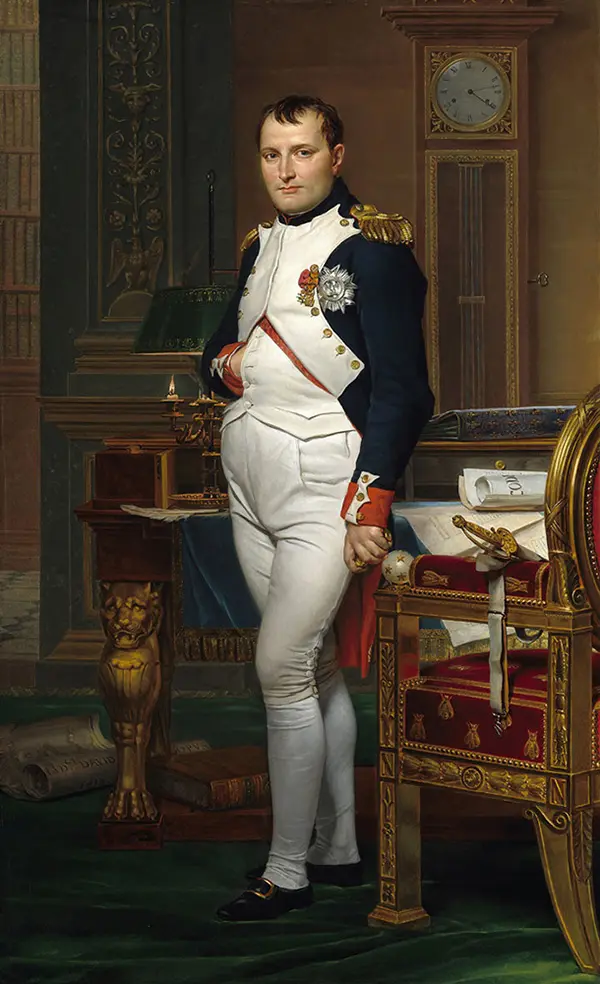
One of Poussin’s most celebrated oil paintings is Et in Arcadia Ego, also known as The Arcadian Shepherds. Four individuals stand around an austere tomb in a heavily stylized pastoral scene. It serves as a “memento mori” to the viewer that death remains, even in the idyllic Arcadia. As the founding father of Classicism, Poussin inspired many later painters, including Jacques-Louis David, Jean-Auguste-Dominique Ingres, and the post-impressionist Paul Cézanne.
Claude Lorrain 1600-1682
A contemporary of Nicolas Poussin, Claude Lorrain is another leading painter of classic art and a famous Baroque artist. He also spent much of his working life in Italy, reflecting the commercial importance of Rome at the time. Unlike Poussin’s strictly mythological paintings, Lorrain is notable for focusing on landscape paintings. This was incredibly unusual at the time when the more prestigious genre of history painting usually took precedence.
Lorrain’s Neoclassical Landscapes paintings often contain small figures, adding extra meaning to his paintings. For instance, his oil paintings Sunrise and View of Delphi with a Procession transform rural views into moralizing, allegorical works.
Alexandre Cabanel 1823-1889
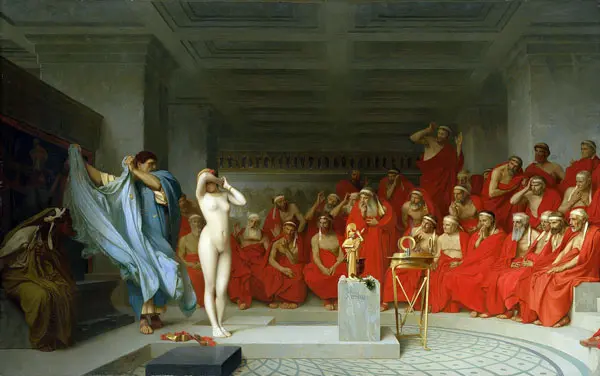
As a painter working in 19th-century France, Alexandre Cabanel heavily drew on the works of Claude Lorrain and Nicolas Poussin. Well-known as a portrait painter, Cabanel served as Napoleon III’s preferred artist. Dedicated to the classical style, Cabanel produced many “L’art Pompier” oil paintings. This initially derisive term originated in the 19th century, referring to the large “official” academic canvases of the time.
While Cabanel produced several large historical paintings, with The Birth of Venus 1863 being one of the most Famous Nude Paintings, Cabanel's oil painting was displayed at the Paris Salon, where Napoleon III immediately bought the work for his private art collection. The painting’s sexuality, combined with classical imagery, was incredibly appealing. As one art critic said, Cabanel’s Venus hovers halfway between “an ancient deity” and a “modern dream.” Impressionist artists saw Cabanel's paintings as outdated and old-fashioned, and towards the end of the artist's life, neoclassical art gradually fell out of favor.
William-Adolphe Bouguereau 1825-1905
Like Cabanel’s Venus, William-Adolphe Bouguereau is known for his classic nude paintings. In addition, Bouguereau produced his own La Naissance de Venus in 1879. It shows Venus rising out of a seashell, surrounded by dolphins, fifteen putti (cherubs), and nymphs with centaurs. Bouguereau often created mythological paintings with a focus on the nude female body. Particularly popular in France and the United States, Bouguereau was a famed Salon painter of the highest quality.
Pierre Auguste Cot 1837-1883
Pierre Auguste Cot produced some stunning classic oil paintings as the last painter on this list. He excelled in realistic portrait paintings and studied under Alexandre Cabanel and William-Adolphe Bouguereau. Cot’s Paris Salon debut came in 1863, and his popularity and prestige grew. Pierre Cot's painting The Storm 1880 depicts a romantic couple in an idealized landscape. Cot’s carefully observed figures, usually wearing classic attire, are the pinnacle of youthful beauty and love. As some of our most popular replica oil paintings, his reputation for Neoclassical paintings lives on today.
Who are the lesser-known Neoclassical Artists?
In addition to well-known French masters such as Poussin, Lorrain, and Cabanel, several other renowned neoclassicism art painters exist. Included in this list are artists such as Pierre Subleyras and Guillaume Seignac. While the movement influenced many artists around the globe, it was particularly prevalent in the UK.
Here, painters such as William Clarke Wontner, a portrait painter steeped in romanticism and neoclassicism, and John William Godward, a neoclassical protégé of Sir Lawrence Alma-Tadema, maintained the movement’s beautifully constructed neoclassical painting compositions with astounding skill.
Exemplified by his most famous painting, Lord Frederic Leighton's painting Flaming June 1895 is also heavily influenced by Neoclassicism. Flaming June is one of our top 100 famous paintings.
Neoclassicism Paintings: Fine Art Reproductions
If you enjoy the restrained beauty of Neoclassical paintings, explore our extensive collection of neoclassicism art replica paintings.
Buy classic nude paintings by William-Adolphe Bouguereau and the thrilling landscape paintings of Claude Lorrain. Discover high quality art reproductions to add elegance to your walls.






Enter Your Private Gallery
Log in with your gallery ID here
Track Your Order
Type your order number here




Cannot Find What You Are Looking For?
Reproduction Gallery Information
Customer Service

(Send Us A Message)

Tel: (302) 513 3464