




Edwin Austin Abbey Oil Painting Reproductions
Edwin Austin Abbey replica paintings on Canvas for sale
Who Was Edwin Austin Abbey?
Edwin Austin Abbey (1852–1911) was an American-born artist best known for his evolution from elite magazine illustrator to internationally respected Victorian historical painter. He first gained prominence in the United States for his highly detailed narrative illustrations, particularly his long association with Harper’s Weekly, which established him as one of the most accomplished illustrators of the late 19th century.
After relocating to England in the 1880s, Abbey expanded his artistic scope, moving decisively into large-scale oil paintings and monumental mural commissions. This transition marked his rise as a major figure in British Victorian art, earning him international recognition and prestigious public commissions.
What was Edwin Austin Abbey’s Personal Life?
Edwin Austin Abbey was born on April 1, 1852, in Philadelphia, Pennsylvania, where his early interest in drawing and literature was encouraged. He trained at the Pennsylvania Academy of the Fine Arts, developing the strong draftsmanship that underpinned his later career.
In the 1880s, Abbey settled permanently in England, living and working primarily in London, where he became a central figure in Victorian historical painting and a Royal Academician. Abbey was acquainted with John Singer Sargent and shared a studio with him. He died in London on August 1, 1911.
How Does Edwin Austin Abbey Fit Into Victorian Art?
Edwin Austin Abbey fits squarely within Victorian art through his focus on literary subject matter, historical accuracy, and narrative realism, all central values of late-19th-century British culture.
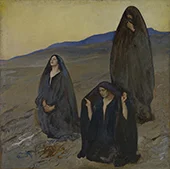
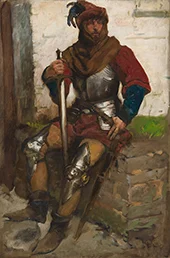
Although American-born, Abbey spent most of his professional life in England, where he became closely associated with Victorian historical painting. His oil paintings draw on Shakespeare, medieval legend, and moral narrative, supported by close study of period costume, architecture, and gesture.
What are the Most Famous Paintings by Edwin Austin Abbey?
Shakespearean and Literary Paintings
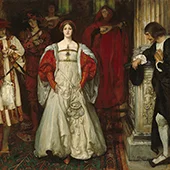
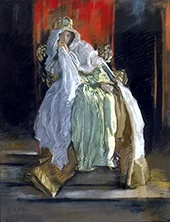
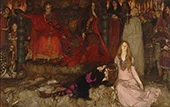
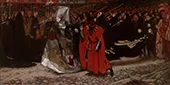
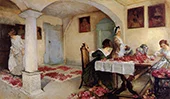
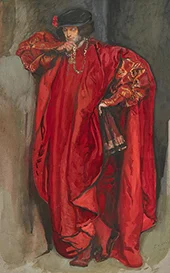
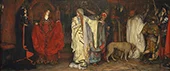
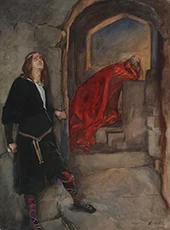
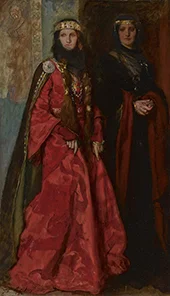
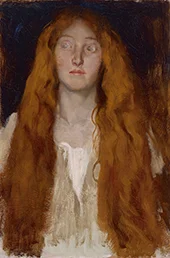
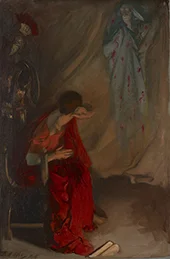
Edwin Austin Abbey is best known for his Shakespearean and literary paintings, which combine theatrical drama with scholarly historical accuracy. His most recognized subjects include:
- King Lear (various studies and illustrations)
- Hamlet illustrations
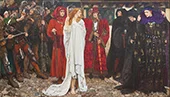
- The Penance of Eleanor
These works played a significant role in shaping how Shakespearean drama was visually interpreted during the late Victorian era, influencing both fine art and book illustration traditions.
What Defines Edwin Austin Abbey’s Artistic Style?
Edwin Austin Abbey’s style is defined by disciplined draftsmanship and narrative precision rather than painterly experimentation. Key characteristics include:
- Highly controlled composition and precise drawing
- Muted, historically accurate color palettes
- Detailed rendering of fabric, posture, and gesture
- Clear storytelling over abstraction
His foundation in illustration remained central throughout his career, ensuring that even his large-scale oil paintings retained narrative clarity and visual accessibility.
Why is Edwin Austin Abbey important?
Edwin Austin Abbey occupies a unique position in art history by demonstrating how illustration, traditionally viewed as commercial, could achieve intellectual rigor and monumental status within British Victorian fine art.
His influence extends across:
- Victorian historical painting
- Shakespearean visual culture
- Early American mural traditions
The elevation of illustration as a legitimate fine art discipline positions him as a key figure in both American and British art history.
Rather than pursuing stylistic innovation, Abbey grounded his reputation in narrative clarity and disciplined craftsmanship, values that defined his career across illustration, painting, and mural work.
How do art historians evaluate Edwin Austin Abbey today?
A Royal Academician, first exhibiting in 1890, he is one of the most intellectually rigorous artists of the Victorian era. Abbey's paintings combine academic research, literary scholarship, and disciplined craftsmanship, positioning him as a key figure in both American and British art history.
Rather than following stylistic trends, Abbey built his reputation on enduring narrative strength, historical credibility, and technical discipline, qualities that continue to resonate with museums, scholars, and art collectors worldwide.





Enter Your Private Gallery
Log in with your gallery ID here
Track Your Order
Type your order number here




Cannot Find What You Are Looking For?
Reproduction Gallery Information
Customer Service

(Send Us A Message)

Tel: (302) 513 3464