




Giovanni Boldini Oil Painting Reproductions
Giovanni Boldini replica paintings on Canvas for sale
Giovanni Boldini Paintings: An Artistic Biography
Giovanni Boldini is one of the most renowned Italian artists, recognized for his exquisite Genre Paintings and Portrait paintings.
He produced some of his most famous paintings while living and working in Paris for most of his artistic career. Humorously termed the “Master of Swish,” his portraits exude beauty and style.
This brief introduction examines Giovanni Boldini’s distinctive painting style and his intriguing personal life.
Where did Giovanni Boldini Live?
Born on December 31, 1842, he spent his early life in Ferrara, Italy. His father worked as a painter, primarily focusing on religious artworks. It was an artistic and creative family, as his older brother, Luigi, worked as a successful architect.
In 1862, at the age of 19, he traveled to Florence to study fine art. He enrolled at the Academy of Fine Arts and remained a student for the next six years. However, Giovanni Boldini wasn’t entirely committed to his studies, attending classes only intermittently.
Nonetheless, he met several artist friends during this time. His companions mostly worked in the realist style, attempting to depict their sitters and subjects truthfully and accurately. Known as the “Macchiaioli”, this group paved the way for Italian Impressionism. This group of artists focused on natural light, shade, and color, creating exquisite artwork.
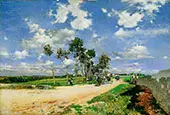
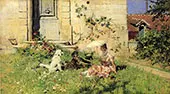
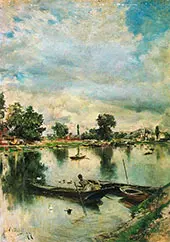
This influence is evident in Giovanni Boldini’s early landscape paintings, such as The Great Road in the Villas Combes, as well as in his later portrait art. Indeed, the Macchiaioli group's spontaneous brushwork and intense color define his artistic style.
What is Giovanni Boldini’s Painting Style?
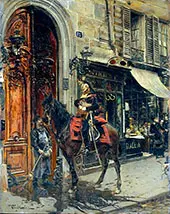
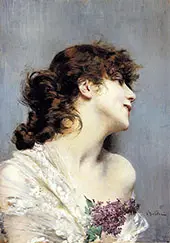
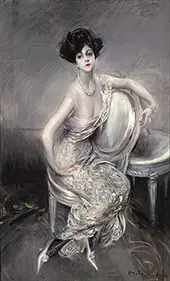
Giovanni Boldini created some of the most famous female portraits of this era. Many of his famous paintings are known as “genre painting”, an art style that focuses on scenes of everyday life.
After completing his studies, Boldini moved to London. He quickly established a career as a successful painter, creating portraits of high-society women.
In Paris in 1872, he befriended Edgar Degas. This friendship introduced him to avant-garde Impressionist artists' circles and wealthy clients. As a result, he soon emerged as the most in-demand portrait painter in Paris.
Boldini’s paintings reflected the influences of the Italian Macchiaioli group, including quick, dashing brushstrokes. He combined these approaches with contemporary Impressionist portraiture, as seen in the famous paintings of John Singer Sargent.
A painting such as La Signora in Rosa, a portrait of Olivia de Subercaseaux Concha, exemplifies this approach perfectly.
Genre Painting Definition: A Quick Guide
The term “genre painting” refers to art depicting everyday scenes. As such, this could include domestic locations, urban life, or countryside pursuits.
It emerged in Holland during the 17th Century, where paintings of peasants working or socializing, often in taverns, were popular. William Hogarth developed this form of art in Britain, creating many moralizing narrative images, such as A Rake’s Progress.
During the Victorian age, Genre Painting experienced a new lease of life. Sir David Wilkie’s sentimental creations often featured family scenes.
By the turn of the 19th century, Genre Painting once again re-emerged. This generation of artists focused on capturing the excitement and fleeting nature of modern industrial life in Europe’s great capitals. Strictly ordered Victorian compositions gave way to glittering street scenes and café interiors from Pierre-Auguste Renoir and Édouard Manet.
It is essential to note that the term Genre also refers to various subjects within a painting. So, for example, history painting, portraiture, landscapes, and still life paintings are all examples of Genre art.
Why is Giovanni Boldini Famous?
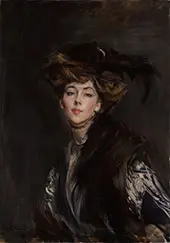
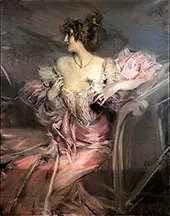
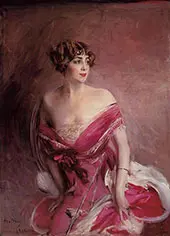
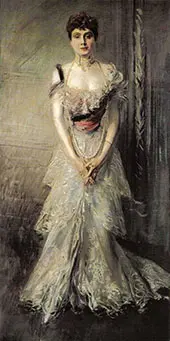
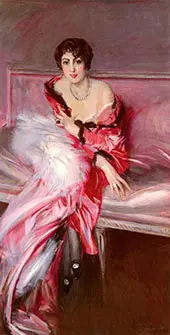
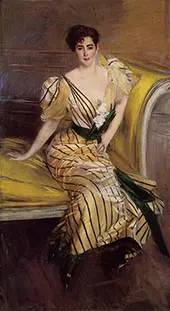
The artist is primarily known for his fashionable society portraits. However, he painted all the “grande dames” of Paris. These women included Madame de Gillespie (La Dame de Biarritz) and Madame Juillard (painted in a striking red dress).
With greater fame and renown, securing a Giovanni Boldini portrait painting represented the pinnacle of social achievement in a style-conscious Paris.
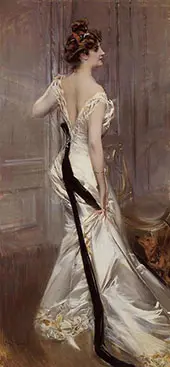
His style was incredibly advanced in the early 20th century, and the dashing lines in his paintings create a sense of movement even with carefully posed sitters. Among famous Italian artists, Giovanni Boldini is also known for his “décolleté paintings,” which provocatively draw the viewer’s gaze to a woman’s cleavage.
In 1889, he worked as the Commissioner for the Italian display at the Paris Exposition Universelle. This iconic event was the first “World’s Fair”, held from May to October 1889.
The exhibition drew in over thirty-two million visitors, not least for its crowning exhibit, the Eiffel Tower. In recognition of his work for the show, Boldini received the Légion d’honneur.
How many artworks did Giovanni Boldini paint?
Over his long and illustrious career, Giovanni Boldini created over 240 individual paintings. He participated in the Venice Biennale from 1895 onwards, representing Italian Art in future exhibitions. With a growing international reputation, he also held a solo exhibition in New York in 1897.
Despite this success, he stopped painting many years before his death. His paintings appeared increasingly old-fashioned with the emergence of 20th century abstract art.
He died at his home in Paris on January 11, 1931, at the age of 88. After his death, posthumous exhibitions of Giovanni Boldini paintings appeared worldwide. The 1938 exhibition at the Newhouse Galleries in New York was one of the most famous shows.
What is the story behind Boldini’s Portrait of Marthe de Florian?
Giovanni Boldini had many muses during his career. One of the most famous was Marthe de Florian, a French actress and socialite known for her many famous lovers.
These men included Georges Clemenceau, Pierre Waldeck-Rousseau (who both served as French Prime Minister), and Giovanni Boldini.
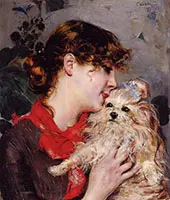
In 2010, a family member rediscovered Florian’s belongings in an abandoned apartment in Paris. These objects included Boldini’s Portrait of the Actress Marthe de Florian, 1888, accompanied by a love letter. Giovanni Boldini created the portrait when Florian was twenty-four years old.
Previously, this painting had never been published, exhibited, or displayed in public. Nevertheless, an astounding discovery of one of the artist's famous Italian paintings furthered our understanding of both Boldini and Marthe de Florian. In 2014, this artistic discovery formed the basis of Michelle Gable’s novel A Paris Apartment.
Giovanni Boldini Art: Reproduction Oil Paintings for Sale
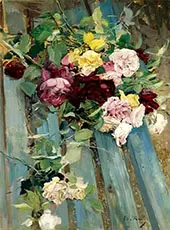
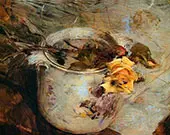
One of our Popular replica paintings is Still Life with Rose, and you can discover many more in our extensive selection of flower paintings online in our Art Collections catalog.
Explore our fine art reproduction to discover the striking beauty of famous paintings by Giovanni Boldini.




Testimonial from Candy C, The Villages, Florida

Enter Your Private Gallery
Log in with your gallery ID here
Track Your Order
Type your order number here




Cannot Find What You Are Looking For?
Reproduction Gallery Information
Customer Service

(Send Us A Message)

Tel: (302) 513 3464