




John William Godward Oil Painting Reproductions
John William Godward replica paintings on Canvas for sale
John William Godward Famous Paintings
John William Godward, an English artist known for his neoclassical artwork. Art critics often compare his famous paintings to those of Sir Lawrence Alma-Tadema and Frederic Lord Leighton. They capture the beauty and calm of the classical world with great detail. Discover some of Godward’s most beautiful paintings to understand the themes and techniques that make his work stand out.
The Artistic Style of John William Godward
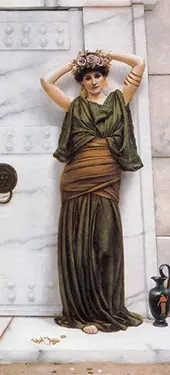
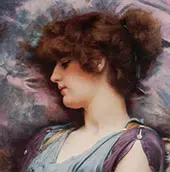
John William Godward academic art, is characterized by its adherence to traditional techniques and classical themes. The Pre-Raphaelite Brotherhood art movement and other famous artists of his time heavily influenced him. Godward's paintings often depict women in idyllic settings, surrounded by the opulence of the classical world. The artist’s attention to detail and use of color create a captivating sense of realism and depth.
Neoclassicism and Academic Art
Neoclassicism is an artistic movement inspired by art and culture of ancient Greece and Rome. It emphasizes harmony, clarity, and restraint, the qualities evident in Godward's famous paintings.
As an academic artist, he used meticulous techniques to achieve realism and beauty in his paintings. His oil paintings characterize precise lines, smooth brushwork, precise lines with vibrant colors. John William Godward’s paintings bring his classical subjects to life.
The Influence of the Pre-Raphaelite Brotherhood
The Pre-Raphaelite Brotherhood was a group of English artists from the mid-19th century. They wanted to bring back the detail, color, and complexity of Quattrocento Italian art from the 1400s. Even though Godward did not belong to the group, their ideas influenced him. He often used similar themes and techniques in his oil paintings.
John William Godward's paintings, like those of the Pre-Raphaelite artists, show the beauty of nature. He captures the human form with great detail and precision.
Famous Paintings by John William Godward
Godward's paintings are celebrated for their beauty and attention to detail. Here, we explore some of his most famous artworks.
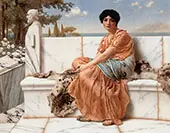
Dolce Far Niente
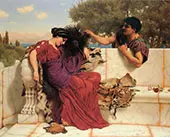
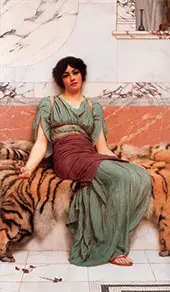
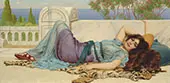
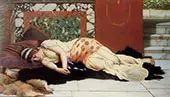
One of Godward's most famous paintings, Dolce Far Niente, translates to "sweet doing nothing." His painting epitomizes the leisurely elegance of women in serene, classical settings. The painting depicts a young woman reclining on a marble bench, surrounded by lush greenery. Her relaxed posture and the tranquil setting evoking a sense of peace and contentment.
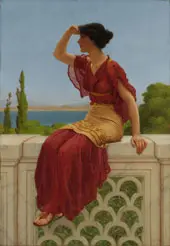
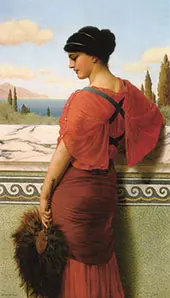
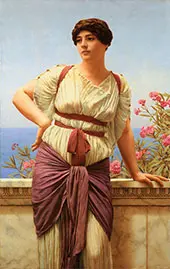
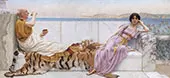
John William Godward The Signal 1899
Godward's oil painting The Signal illustrates his remarkable talent for blending classical themes and artistic techniques of the time. John William Godward captures the beauty of the human form and demonstrates exceptional attention to detail. Inspired by the aesthetics of ancient Roman and Greece.
The Signal demonstrates classical art in both the subject matter and the overall composition. The painting depicts a serene scene with a young woman, portrayed with grace and elegance, as she interacts with her surroundings.
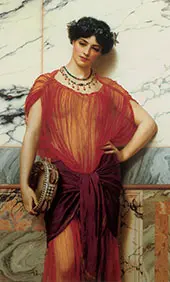
Godward’s choice of color palette and masterful brushwork, brings a sense of life and vibrancy to his painting. The woman's clothing shows his skill in painting soft drapes and detailed textures of fabrics.
Godwards famous painting is as a testament to his legacy as one of the significant figures in the neoclassical movement of the late 19th century.
The original painting The Signal 1899 is one of the Getty Museum famous paintings.
The Legacy of John William Godward
Godward's paintings, though sometimes overshadowed by contemporaries like Sir Lawrence Alma-Tadema, has achieved recognition for both technical excellence and beauty.
Collectors and art enthusiasts hold his paintings in high regard, and prestigious collections, including the Getty Museum, feature them.
John William Godward's famous paintings continue to captivate viewers with their beauty and technical skill. His remains a shining example of academic art and neoclassicism.
Buy fine art reproductions of famous paintings by academic artists Alexandre Cabanel and Paul De la Roche.




Testimonial from Jeff H, Honolulu, Hawaii

Enter Your Private Gallery
Log in with your gallery ID here
Track Your Order
Type your order number here




Cannot Find What You Are Looking For?
Reproduction Gallery Information
Customer Service

(Send Us A Message)

Tel: (302) 513 3464