




Red Tree By Piet Mondrian


What Is The Red Tree by Piet Mondrian?
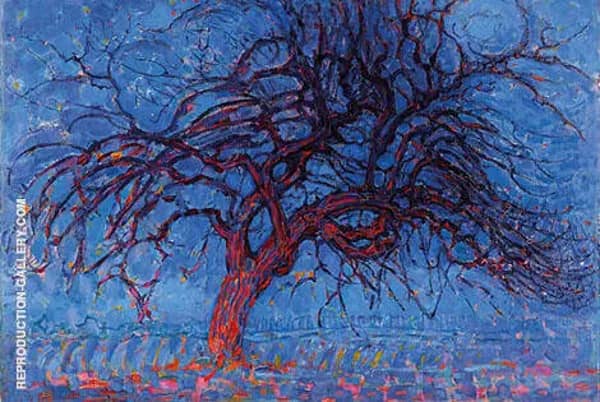
The Red Tree (1908) is an oil painting by Piet Mondrian that marks his transition from naturalism toward abstraction. Set against a deep blue background, the vividly red tree explores balance, structure, and expressive color—early principles that would later define Mondrian’s De Stijl philosophy.
Why is the Red Tree so important?
Although this oil-on-canvas work measures only 70 x 99 centimeters, it creates a remarkably powerful visual impact. Celebrated for its balance of serenity and dynamism, The Red Tree is among Mondrian’s most recognizable paintings and a popular subject for museum-quality art reproductions. It marks a pivotal moment in the artist’s development and invites viewers to explore the deeper ideas behind this iconic tree composition.
When Was The Red Tree Painted?
Painted in 1908, The Red Tree is one of the most important works in Piet Mondrian’s tree painting series. In the same year, Mondrian also completed The Windmill in Sunlight, further demonstrating his stylistic experimentation during this formative period. The expressive brushwork and vivid colors reveal Mondrian’s engagement with Luminism, an art movement emphasizing light effects, strong color contrasts, and simplified forms with key elements that shape the painting’s luminous, energetic presence.
Where Is The Red Tree by Mondrian Today?
Piet Mondrian painting is housed today in the Kunstmuseum Den Haag, one of the world’s leading institutions for modern art and the largest holder of Mondrian’s works. The museum titles the painting Avond (“Evening”), emphasizing its twilight atmosphere and contemplative mood within Mondrian’s early development.
Why Did Piet Mondrian Paint The Red Tree?
Piet Mondrian painted The Red Tree while staying in Domburg, a coastal resort in the Netherlands known for its clear light and vibrant seaside atmosphere. The region’s intense sunlight and open landscape encouraged his use of bold, expressive color and heightened contrast.
During this period, Mondrian repeatedly studied a specific apple tree located in the garden of Villa Loverendale, a gathering place for progressive artists such as Jacoba van Heemskerck and Marie Tak van Poortvliet. He produced numerous preparatory sketches, carefully refining the tree’s structure and branching rhythms. This same motif later inspired related works including The Gray Tree and Trees in Blossom (both 1912), which further chart his move toward abstraction.
In The Red Tree, Mondrian presents a unified vision of nature and inner harmony. Despite the tree’s intense, almost violent red coloration, the composition conveys balance and calm. By flattening traditional perspective and using rhythmic, linear brushstrokes, Mondrian transforms the natural form into a largely two-dimensional structure, signaling his growing interest in abstraction, order, and visual equilibrium.
How Does The Red Tree Mark Mondrian’s Move Toward Abstraction?
The Red Tree reveals Mondrian’s early shift toward simplified color and structural abstraction. Although painted nearly a decade before the founding of the De Stijl art movement in 1917, The Red Tree already reveals Mondrian’s emerging commitment to balance, structure, and universal harmony through abstraction.
As such, The Red Tree functions as a crucial bridge between representation and the fully abstract compositions that followed, including Composition with Red, Blue, and Yellow (1930) and Broadway Boogie-Woogie (1943).
What Artistic Influences Shaped The Red Tree?
By 1908, color had become Piet Mondrian’s central artistic focus. He consciously moved away from Tonalism, a style emphasizing subtle tonal transitions rather than bold contrasts. Earlier oil paintings, such as Farm at Duivendrecht (1905), reflect this tonal approach, while The Red Tree marks a decisive shift toward heightened color intensity and expressive contrast.
When viewed up close, the original painting reveals heavily worked brushstrokes beneath the red canopy, reinforcing the artist's physical engagement with the surface.
How Did Vincent van Gogh Influence The Red Tree?
The post-Impressionist paintings of Vincent van Gogh were a major influence on Piet Mondrian during this period. In The Red Tree, Van Gogh’s impact is evident in the primary colors, thick impasto application, and animated sky. When compared with Van Gogh’s works, such as Olive Grove (1889), the expressive brushwork and emotional intensity of Mondrian’s painting become especially clear.
How Do Color and Balance Work in The Red Tree?
Van Gogh famously associated deep blue with infinity, a concept that helps explain the calm, expansive atmosphere of The Red Tree. Mondrian adopts this idea by allowing red tones to advance visually while blue hues recede, creating a carefully balanced composition. This dynamic interplay of color gives the painting a sense of equilibrium despite its energetic surface.
What Do Trees Symbolize in Art?
Throughout art history, trees symbolize growth, mortality, renewal, and continuity. They also hold powerful mythological significance, which explains their frequent appearance in classical and symbolic artworks across cultures and historical periods.
Trees often symbolize human growth, resilience, individuality, and strength. Their deep roots and expansive branches evoke stability while inspiring imagination and reinforcing humanity’s enduring connection to the natural world.
Why Are Tree Paintings Popular in Art Collections?
Tree paintings appear in many of art history’s most famous paintings, including Vincent van Gogh’s olive tree series:
These works highlight the enduring appeal of trees as expressive and symbolic subjects.
Where Can You Explore Tree Paintings and Mondrian Reproductions?
You can explore a wide range of colorful tree paintings by browsing our exclusive art collections, showcasing famous paintings inspired by nature. Discover our curated selection of fine art reproductions of famous Piet Mondrian paintings, including The Red Tree, recreated with museum-quality craftsmanship.
At our studio, recreating The Red Tree requires exceptional technical precision. Mondrian’s dense red impasto must be built up in carefully layered applications, while the branching structure demands rhythmic control to preserve its underlying balance. Having recreated this painting multiple times, we understand how its apparent simplicity conceals a complex surface and compositional discipline.
We offer a 100% money back guarantee or replacement service. If for any reason you are dissatisfied with your painting please contact us within 7 days of receipt, advising the reason you are unhappy and we will provide you with all the information you need for its return or replacement.
We ship free to anywhere in the world via FedEx or DHL expedited service with online tracking.
Your painting will be shipped rolled in strong plastic tubing, ready for stretching and/or framing locally. This is the conventional method of transporting hand-painted oil on canvas. Learn more about how your painting is shipped.
We are able to offer a framing service intercontinental U.S. Please contact us if you would like a quotation. Alternatively, should you prefer, we can recommend a framer in your area.
Your painting will be shipped directly from our Studio in Thailand.
Notes About Your Painting
All of our paintings come with a 7.5cm (just under 3") clean surplus canvas so the framer can achieve good leverage and easy stretching.
Recently Viewed:


Cannot Find What You Are Looking For?
Reproduction Gallery Information
Customer Service

(Send Us A Message)

Tel: (302) 513 3464