




Fantasy Painting Oil Painting Reproductions
Find Fantasy Painting Oil Painting Replicas By Fantasy Artists
Fantasy Painting: A Brief Introduction
Fantasy paintings include a vast genre of art. It incorporates Greek mythological paintings and 19th century art movements such as Romanticism and Symbolism. It consists of any art with supernatural themes. Fantasy artists create paintings of extreme beauty and mystery, but with an intensely realistic style.
To explore this fascinating genre, we examine the roots of fantasy art and some of its most famous proponents.
What is Fantasy Wall Art?
Fantasy paintings depict supernatural, mythological, or magical themes. It is a loosely defined genre not linked to any specific group of artists. Instead, the subject matter is essential for fantasy wall art. These topics can include mythological or folkloric subjects, mystical spiritualism, or entirely fictional creations.
Even so, fantasy art is usually figurative. “Figurative art” represents people and places in contrast to Abstract Art. Fantasy is a vital component of artistic creation. Indeed, some of the oldest cave paintings refer to mythical beasts and animals. Greek mythology paintings also focus on ancient gods and heroes.
Greek and Roman mythology particularly inspired painters from the Renaissance art period onwards. Its influence is evident in many other art movements, including Mannerism, Romanticism, Symbolism, and Surrealism.
What is Fantasy Art called?
Fantasy art falls under the French title of Le Fantastique. It is sometimes referred to as grotesque or visionary art, inspired by fantasy literature and ancient texts. Despite this, some fantasy paintings take inspiration from personal fantasies, hallucinations, and dreams. Reflecting on the links between imagination and madness, Salvador Dali once said the only difference between him and a madman was that “I am not mad.” In the modern day, fantasy art often applies to more recent creations from the mid-20th century onwards.
What Defines Fantasy Paintings?
Fantasy wall art can apply to many different genres of painting. Victorian artists, often working in Symbolist and Pre-Raphaelite art movement styles, focused on inner emotions and mythological scenes. For instance, Edvard Munch’s famous painting The Scream showcases his fantastical imaginings and inner turmoil. The central character’s anguished face appears against a blood-red sky, reflecting a “scream of nature.” For Munch, these feelings pervaded modern existence.
In an entirely different manner, the Pre Raphaelites paintings include fantastical creations inspired by Greek and English mythology. These inspirations included legends of King Arthur, romantic chivalry, and tales from Greek and Roman mythology. Similarly, paintings focusing on classical mythology have a long history in Western art. These influences are evident in early Renaissance works, such as Botticelli’s Birth of Venus.
Religious Art is also linked to fantasy, as it represents supernatural subjects in a naturalistic manner. Nonetheless, scholars do not usually describe religious art as fantasy art. Instead, art historians define this as a separate genre.
What Style of Painting do Artists use?
Given the broad nature of fantasy art, there are no hard and fast rules. Nonetheless, most fantasy paintings use realistic techniques. Realism involves painting subjects and scenes in a naturalistic manner with intense attention to detail. Meticulous brushstrokes and gradual blending are common factors. Fantasy artwork often has a very smooth surface. In the case of Pre-Raphaelite paintings, famous artists employed techniques that approach photo-realism. John Everett Millais’s painting, The Lady of Shalott, illustrates this point.
Who Created Fantasy Artwork?
While fantasy paintings have roots in Greek and Roman mythology, this art genre started in the 16th and 17th centuries. Early fantastical artists include the Italian painter Giuseppe Arcimboldo, known for his portrait paintings comprising fruit and vegetables. Indeed, Giuseppe Arcimboldo’s Summer 1573 is one of the most unusual portraits ever created. On the other hand, oil on canvas paintings by William Blake are celebrated for their emotionally charged and visionary qualities.
Artists like Hieronymus Bosch from the Netherlandish art school also created religious and fantasy art. His nightmarish depictions of punishment and hell are particularly memorable.
Moving into the 19th century, French artists such as William-Adolphe Bouguereau took great inspiration from mythology in art. The German romantic artist Caspar David Friedrich also painted fantastical and allegorical scenes.
However, famous Spanish artist Francisco de Goya produced some of the most recognizable oil paintings. His career culminated in his Black Paintings of 1819 to 1823, which depicted intensely haunting themes of insanity and pessimism.
What Are Three Examples of Mythological Paintings?
Here are three examples of fantasy paintings dealing with supernatural and mythological themes:
- Luis Ricardo Falero, The Witches Sabbath 1880. Falero was a Spanish artist who specialized in female nude paintings. Like The Witches Sabbath, these nudes often appeared in mythological and fantastical settings. Falero also loved astronomy, and many of his nude fantasy art features highly detailed night skies. Despite his popularity in the late 19th century, most of Luis Ricardo Falero's oil paintings remain in private collections. However, one artwork, Twin Stars, hangs in the Metropolitan Museum of Art, New York.
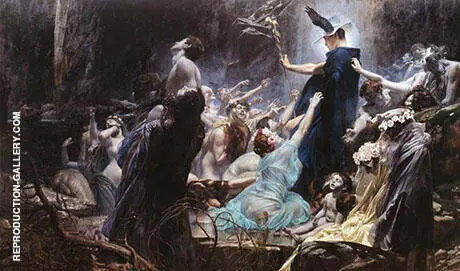
- Adolf Hirémy-Hirschl, Souls on the Banks of the Acheron, 1898. In Souls on the Banks of the Acheron, dead people throng on the banks of a black river. These waters carry dead souls before they reach their final destination in the underworld. With this oil painting, Adolf Hirémy-Hirschl creates a nightmarish scene where everyone dreads their passage from the upper to the lower realms. From women to young children and older men, none escape
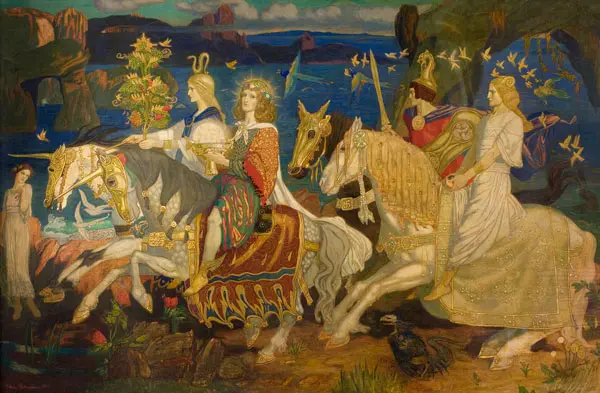
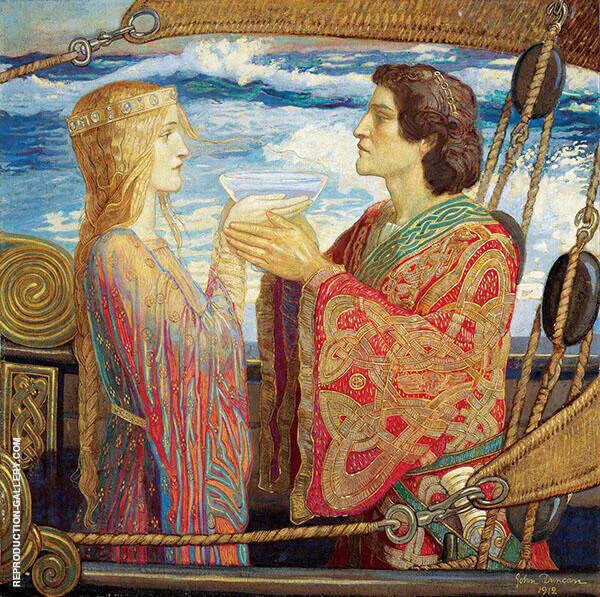
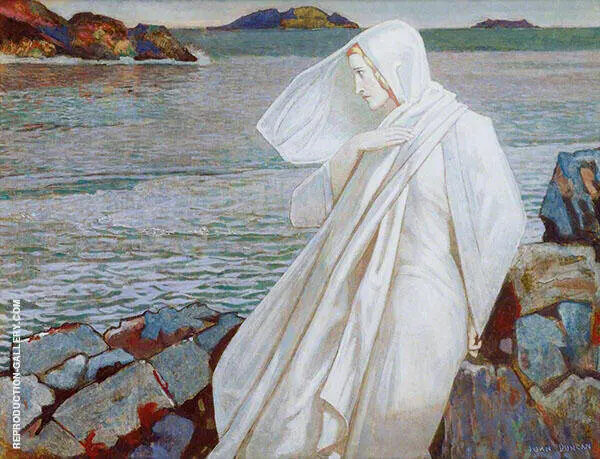
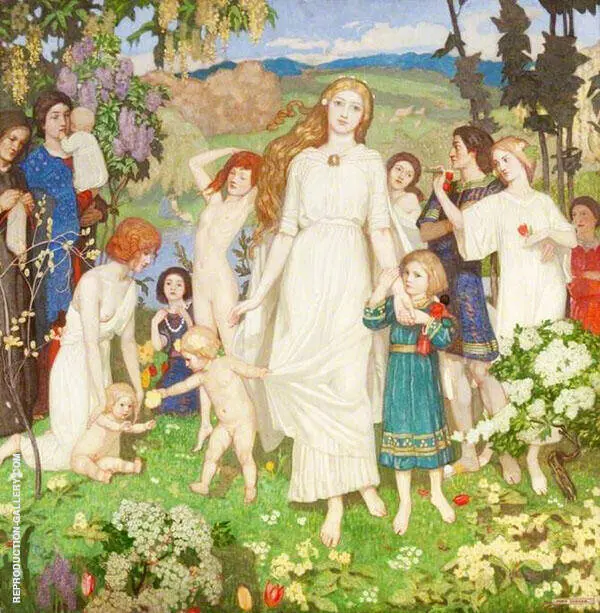
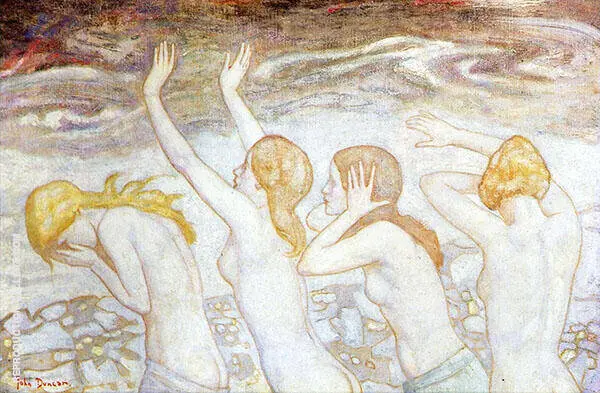
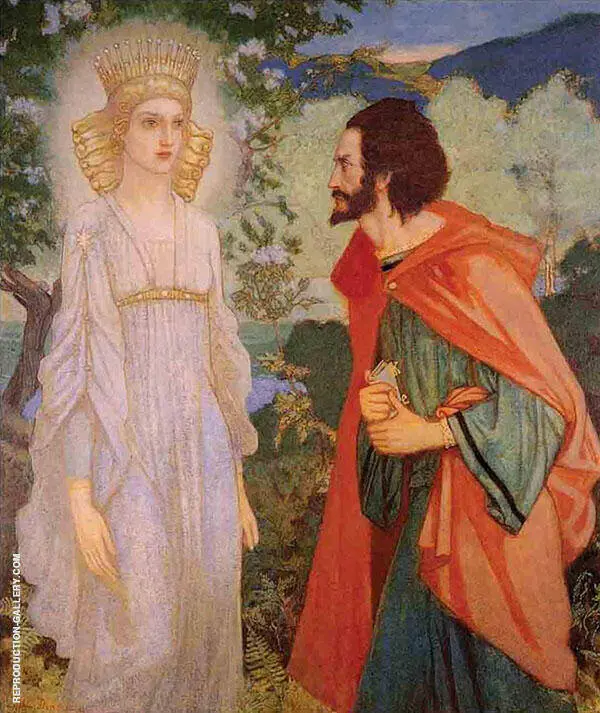
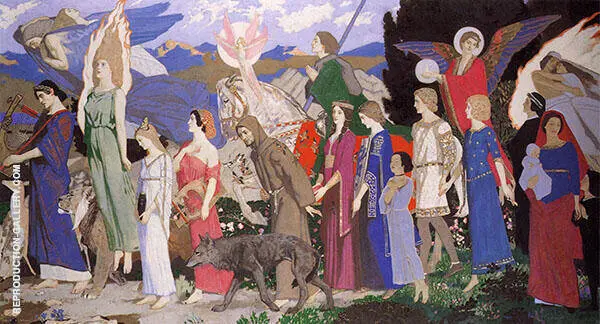
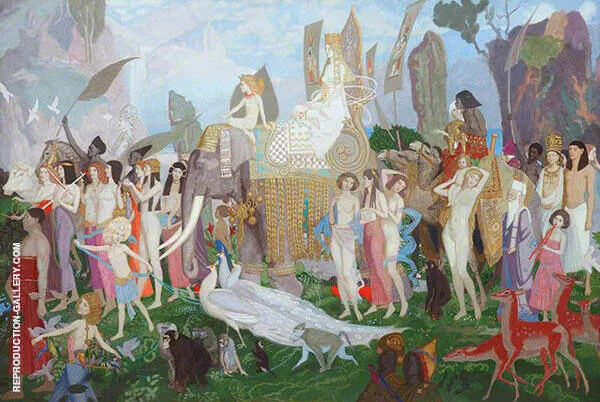
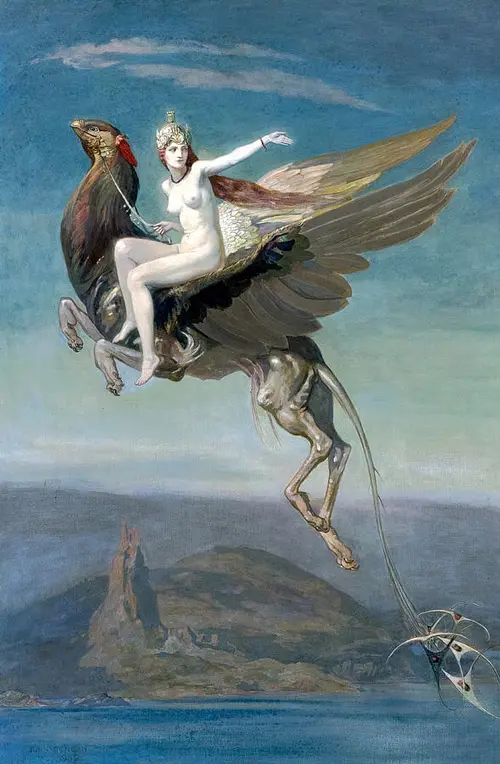
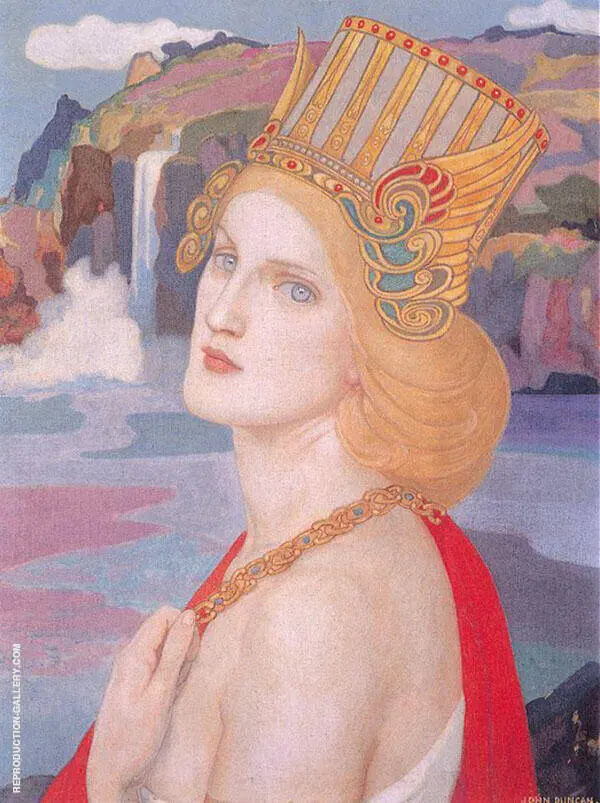
- John Duncan, Heptu Bidding Farewell to The City of Obb 1909. John Duncan was a Scottish Symbolist painter focusing on Celtic folklore and Arthurian legends. In this unusual scene, a naked girl with alabaster-white skin rides across the sky on a fantastical beast. The girl’s crown and jewels suggest she was a Princess of Obb. Her palace sits precariously on the rocky mountains below, with land cast in shadow. Despite these details, information about this painting is scarce. It remains a genuinely enigmatic and mysterious fantasy oil painting on canvas. It is also an extremely popular reproduction oil painting.
Buy Famous Painting Reproductions of Fantasy Art and Greek Mythological Paintings
Explore our extensive collection of Fantasy wall art replica paintings to discover the otherworldly beauty of Greek mythological art.

Testimonial from TM, Los Angeles, CA



Enter Your Private Gallery
Log in with your gallery ID here
Track Your Order
Type your order number here




Cannot Find What You Are Looking For?
Reproduction Gallery Information
Customer Service

(Send Us A Message)

Tel: (302) 513 3464