




Landscapes Oil Painting Reproductions
Discover Hand-Painted Landscape Art by Famous Artists
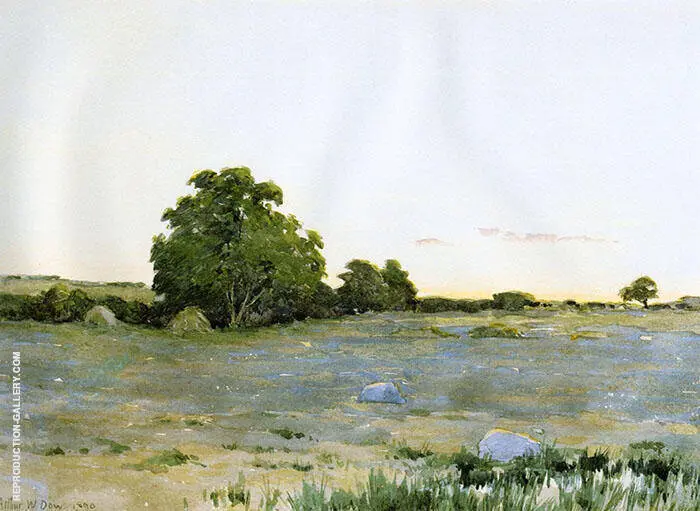
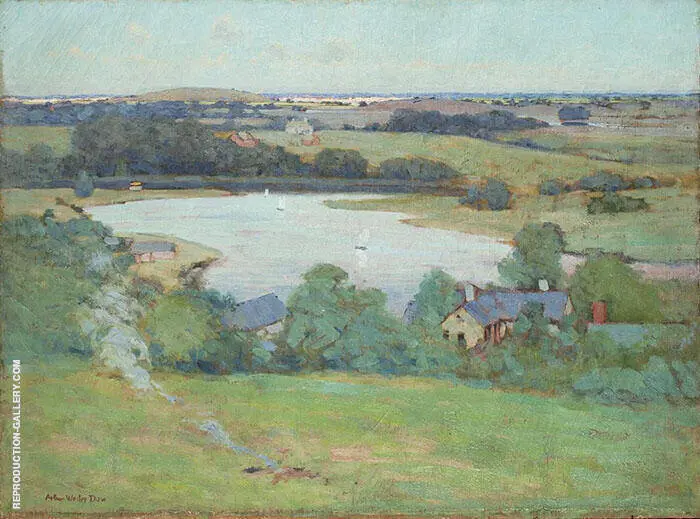
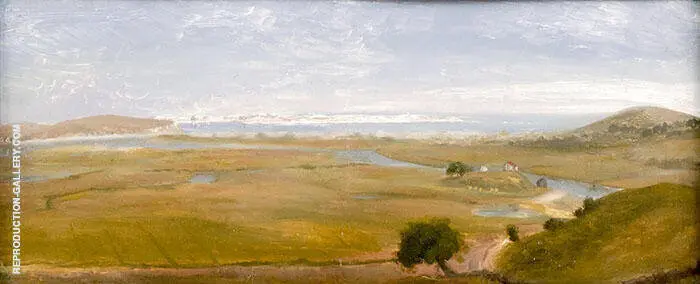
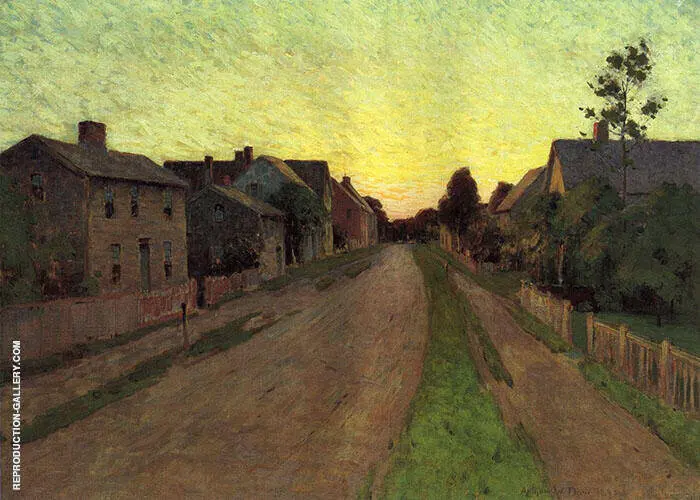
Landscape painting has developed over centuries from scenery that often supported another subject into a major genre in its own right. Artists have approached the landscape in very different ways. Some painted places they knew well; others rearranged or imagined what they saw, giving the landscape their own interpretation.
The history of landscape painting is therefore not the story of a single style. Classical compositions, Dutch landscapes, Romanticism, the Hudson River School, Impressionism, and Post-Impressionism each changed how artists represented a place and what they wanted the viewer to experience.
Our Landscapes art collection brings these different traditions together through hand-painted oil painting reproductions on canvas, with works by artists from many periods and styles.
What Defines a Landscape Painting?
A landscape painting is one in which the setting becomes the principal subject rather than simply providing a background for something else. People, animals, buildings, or boats may be present, but the viewer's attention is primarily drawn to the place itself and the way the artist has chosen to represent it.
For centuries, scenery often provided the setting for religious stories, mythology, portraits, and historical events. Over time, artists began devoting entire paintings to the places and surroundings that had previously occupied a supporting role.
Nor does a landscape have to reproduce a place exactly as it appeared. Artists can simplify, rearrange, exaggerate, or interpret what they see. The result may be closely observed or highly expressive, but it is the landscape's role as the central subject that defines the painting.
How Did Landscape Painting Become a Major Art Genre?
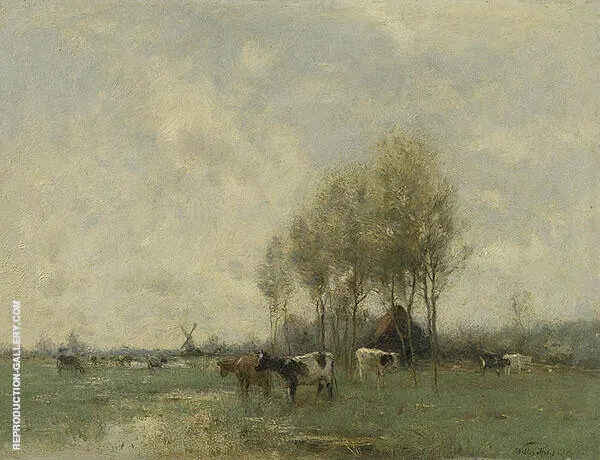
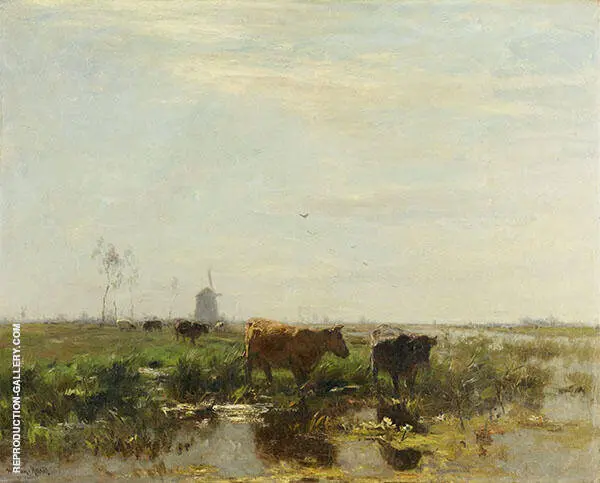
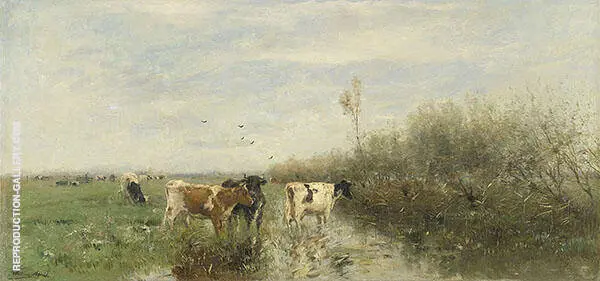
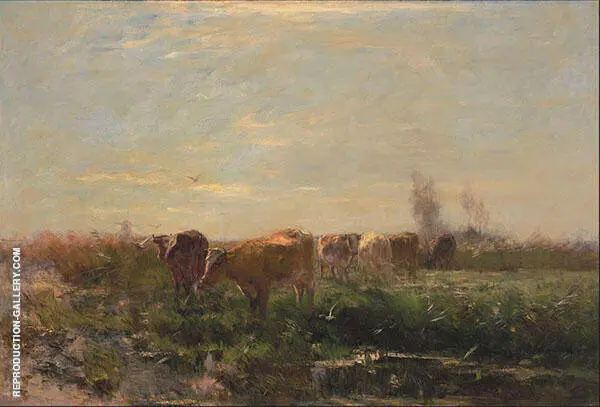
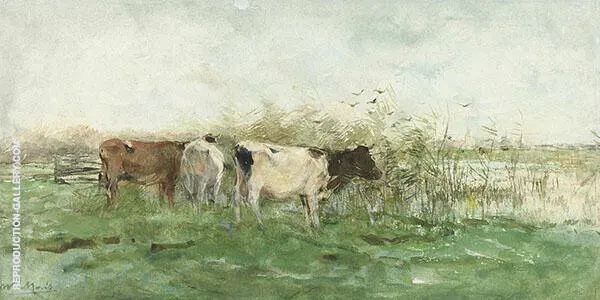
The Dutch Golden Age played an important role in establishing landscape painting as an independent genre. During the 17th century, artists in the Dutch Republic found subjects in their own surroundings rather than relying on the religious, mythological, or historical narratives that had dominated much earlier European painting. Jacob van Ruisdael and Jan van Goyen became leading landscape painters of the period, drawing inspiration from the Dutch countryside and waterways.
Elsewhere in Europe, landscape painting developed along a different path. Claude Lorrain created carefully composed scenes in which architecture, distant scenery, and atmospheric light were arranged to create a sense of harmony and depth. Nicolas Poussin also used landscape prominently in his classical and mythological paintings, helping to establish an approach that would influence European artists for generations.
Why Was the 19th Century Important for Landscape Painting?
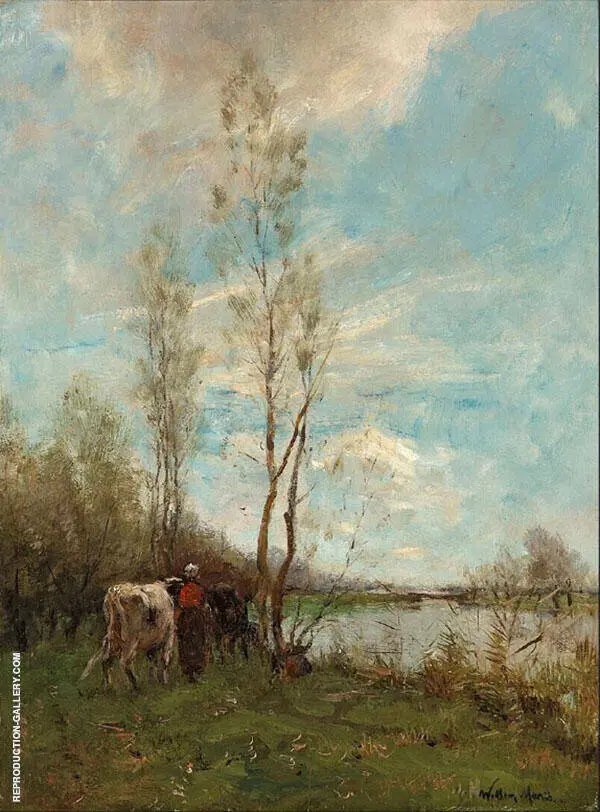
The 19th century expanded the possibilities of landscape painting as artists gave greater attention to direct observation, atmosphere, emotion, and the character of particular places. Landscape was already an established genre, but painters now had greater freedom to interpret what they saw.
In Britain, John Constable found much of his inspiration in the countryside of Suffolk and Essex. His paintings gave familiar rural scenery a significance that had previously been more commonly associated with grander subjects. J.M.W. Turner approached landscape differently, using light, weather, and color to create paintings in which atmosphere could be as important as the scenery itself.
Landscape also became closely associated with Romanticism. Caspar David Friedrich used scenery to explore scale, solitude, and contemplation, showing that a landscape could express ideas and emotions as well as represent a place.
How Did the Hudson River School Shape American Landscape Painting?
The Hudson River School helped establish landscape painting as an important part of American art during the 19th century. Its artists looked to the country's scenery for inspiration, creating paintings that conveyed the scale, beauty, and distinctive character of places that were still unfamiliar to many viewers.
Thomas Cole, regarded as the founder of the Hudson River School, combined closely observed scenery with imaginative and symbolic elements. Frederic Edwin Church followed with ambitious paintings inspired by his travels in North and South America, bringing remarkable detail and dramatic natural effects to his landscapes.
Albert Bierstadt became particularly known for his paintings of the American West, where dramatic scale and carefully controlled light became defining features of his compositions. Together, Cole, Church, and Bierstadt helped define a distinctly American approach to landscape painting.
How Did Impressionism Change Landscape Painting?
Impressionism changed landscape painting by placing greater emphasis on light, color, weather, and the immediate appearance of a scene. Painting outdoors, known as plein air painting, allowed artists to observe these changing conditions directly. Rather than carefully controlling every detail, Impressionist painters used visible brushwork and color to capture what they saw at a particular moment.
Claude Monet repeatedly painted the same subjects, showing how light and season could transform a familiar view. Camille Pissarro found inspiration in both rural and urban settings, while Alfred Sisley devoted much of his career to painting landscapes directly observed outdoors.
Their approach gave landscape painting a new sense of immediacy. A familiar place could provide many different paintings as the time of day, weather, and season changed what the artist saw.
What Made Post-Impressionist Landscape Painting Different?
Post-Impressionist landscape painting became more individual as artists used color, brushwork, and form to interpret a scene rather than record its appearance. Vincent van Gogh used bold color and expressive brushwork to give landscapes a strong sense of movement and emotion, particularly in the paintings he created in southern France.
Paul Cézanne was more concerned with structure and form. In his many paintings of Mont Sainte-Victoire in Provence, Cézanne explored the underlying shapes and structure of the mountain, creating some of the best-known examples of mountain painting in his work. His treatment of form, color, and perspective would later influence artists working in new directions during the early 20th century.
By the end of the 19th century, landscape painting could be highly personal, shaped as much by the artist's individual approach as by the place being depicted.
These different approaches to landscape painting require different skills when they are recreated by hand. Our landscape reproductions are assigned to professional artists with experience suited to the style and technique of the original. Explore our Landscapes catalog to discover hand-painted oil painting reproductions by many of the artists who shaped the genre.



Enter Your Private Gallery
Log in with your gallery ID here
Track Your Order
Type your order number here
Most Popular Artists