




Romanticism Oil Painting Reproductions
Find Romanticism Oil Painting Replicas by Romanticism Artists
Romanticism produced some of the most emotionally powerful and visually dramatic paintings in Western art. Emerging in Europe around 1800, the movement challenged established artistic conventions and encouraged painters to explore imagination, nature, personal identity, and emotional expression in new ways.
Many of the world's most famous paintings belong to the Romantic tradition, including Wanderer Above the Sea of Fog by Caspar David Friedrich, The Hay Wain by John Constable, Liberty Leading the People by Eugène Delacroix, and The Fighting Temeraire by J.M.W. Turner.
Romanticism remains one of the most collected and widely recognized art movements because its themes continue to resonate with modern viewers. Questions about freedom, identity, nature, spirituality, and the search for meaning remain just as relevant today as they were two centuries ago.
Why Romanticism Changed European Art
Before Romanticism, much of European painting was shaped by classical traditions that emphasized order, balance, and idealized subjects. Romantic artists challenged these conventions by placing emotion, imagination, and personal experience at the center of artistic expression.
For the first time, landscape painting became a major vehicle for exploring ideas about beauty, spirituality, memory, and humanity's relationship with nature. Artists also became more willing to address contemporary events, political upheaval, and individual experience rather than relying primarily on subjects drawn from the ancient world.
The influence of Romanticism extended far beyond the nineteenth century. Later movements, including Realism, Symbolism, Impressionism, and Expressionism, inherited aspects of the Romantic belief that art should communicate personal vision and emotional truth rather than follow established artistic rules.
Why Nature Became Central to Romantic Art
One of the defining features of Romanticism was its extraordinary interest in the natural world.
As European cities expanded during the Industrial Revolution, many artists became concerned that industrialization was distancing people from nature. Mountains, forests, oceans, rivers, and storms became symbols of something larger than everyday life.
Romantic painters were particularly interested in what philosophers described as the "sublime" moments when the beauty and power of nature inspired both admiration and awe.
This fascination can be seen throughout the movement. Vast mountain ranges, dramatic skies, rough seas, and distant horizons became recurring subjects that allowed artists to explore humanity's relationship with forces greater than itself. It is one of the reasons Romantic paintings continue to appeal to modern collectors.
Expansive skies, distant horizons, mountain landscapes, and dramatic seascapes create a sense of depth and atmosphere that is particularly effective on larger walls and in rooms with longer viewing distances. Paintings by Friedrich, Turner, and Constable remain enduring favorites because they combine visual impact with a quieter sense of reflection and contemplation.
The Artists Who Defined Romanticism
While Romanticism spread across Europe, several artists became particularly influential in shaping the movement.
Caspar David Friedrich and the Spiritual Landscape
Caspar David Friedrich transformed landscape painting into a vehicle for spiritual reflection and personal contemplation. At a time when many artists focused on historical or classical subjects, Friedrich placed solitary figures within vast natural settings, encouraging viewers to reflect on their relationship with nature and the wider world.
His masterpiece Wanderer Above the Sea of Fog (1818), now housed in the Hamburger Kunsthalle, remains one of the defining images of Romanticism. The painting's combination of mystery, atmosphere, and psychological depth perfectly captures the movement's fascination with nature, individuality, and the sublime.
John Constable and the Celebration of Rural Life
John Constable elevated ordinary rural scenes into major works of art at a time when historical, religious, and classical subjects dominated European painting. His masterpiece, The Hay Wain (1821), now housed in the National Gallery, demonstrated that familiar countryside landscapes could possess the same artistic significance as traditional grand subjects.
Rather than idealizing nature, Constable carefully observed the changing effects of weather, light, and the seasons. His direct study of the English countryside helped transform landscape painting and influenced generations of artists across Europe.
J.M.W. Turner and the Power of Atmosphere
J. M. W. Turner transformed landscape painting through his remarkable ability to capture light, atmosphere, weather, and movement. Rather than treating nature as a backdrop, Turner made it the central subject of his work, emphasizing both its beauty and its overwhelming power.
His celebrated seascape painting The Fighting Temeraire (1838), now in the National Gallery, combines historical memory with a meditation on technological change and the passing of an era. The painting reflects a distinctly Romantic fascination with emotion, nostalgia, and humanity's relationship with forces larger than itself.
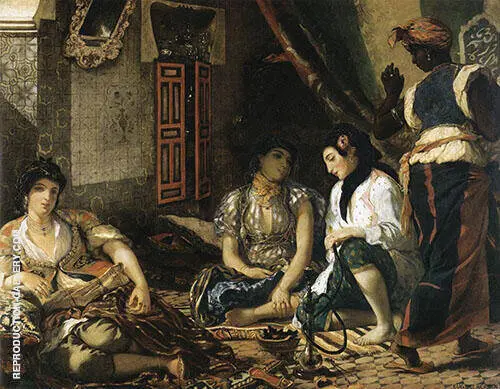
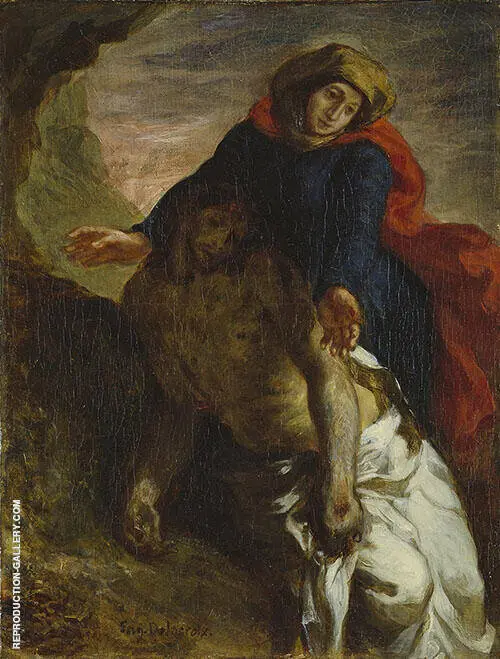
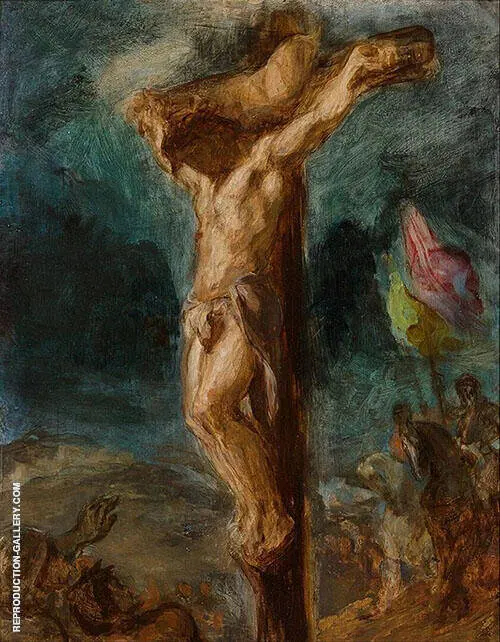
Eugène Delacroix and Revolutionary France
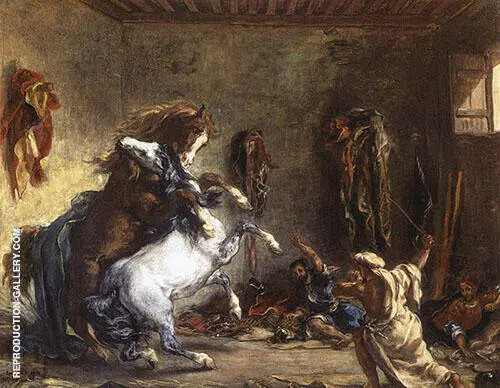
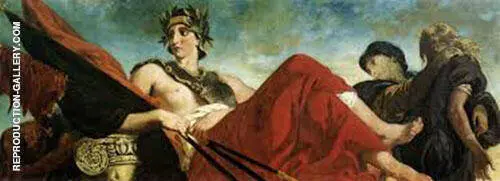
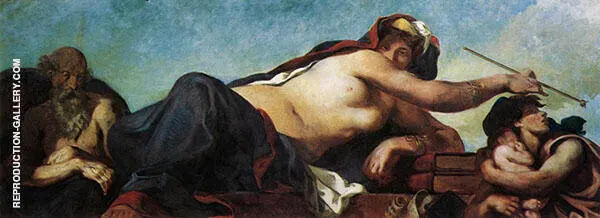
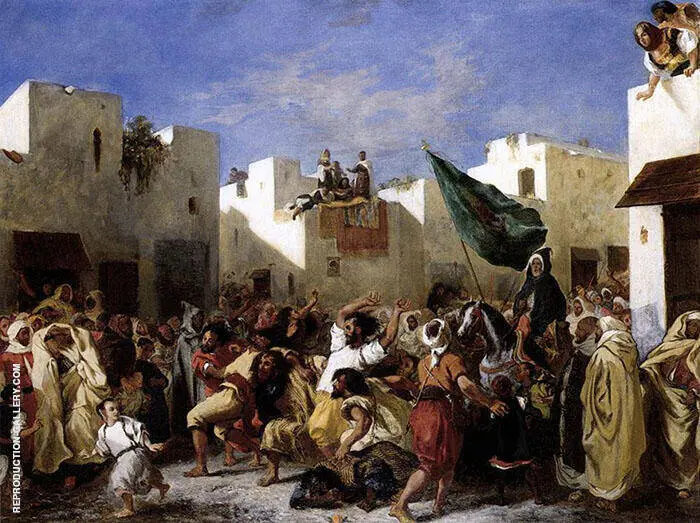
Eugène Delacroix brought Romanticism into the political sphere. His masterpiece Liberty Leading the People (1830), housed in the Louvre Museum, became an enduring symbol of revolution, freedom, and national identity.
Delacroix demonstrated that contemporary events could be transformed into powerful artistic statements. His energetic compositions, dramatic use of color, and emphasis on emotion helped establish Romanticism as a movement capable of responding directly to the social and political changes of the 19th century.
Théodore Géricault and Human Tragedy
Théodore Géricault pushed Romanticism toward subjects of human suffering, endurance, and survival. Rather than focusing on mythology or idealized historical scenes, he drew inspiration from contemporary events and the emotional realities of life in the modern world.
His monumental The Raft of the Medusa (1818–1819), displayed in the Louvre Museum, transformed a recent maritime disaster into one of the most influential paintings of the 19th century. Its emotional intensity, dramatic composition, and unflinching portrayal of human desperation helped establish Romanticism as a major force in European art.
Francisco Goya and the Darker Side of Human Experience
Although difficult to classify within a single movement, Francisco Goya profoundly influenced Romanticism through his exploration of war, fear, conflict, and human psychology. His later works rejected idealized visions of humanity and instead confronted viewers with the realities of violence, suffering, and uncertainty.
His painting The Third of May 1808 (1814), now housed in the Museo del Prado, remains one of the most powerful anti-war images in art history. Its emotional intensity and unflinching portrayal of human suffering helped expand the possibilities of Romantic art and influenced generations of later artists.
Why Romantic Landscapes Work So Well in Modern Homes
Many Romantic painters were drawn to expansive landscapes, dramatic skies, distant horizons, and the changing effects of light and atmosphere. These characteristics continue to make Romantic paintings particularly effective in contemporary interiors.
Large Romantic landscapes are especially well suited to open-plan living areas, staircases, entrance halls, and rooms with longer viewing distances. Unlike highly detailed narrative paintings that reward close inspection, many Romantic compositions reveal their full visual impact when viewed from several meters away.
Artists such as Friedrich, Turner, and Constable frequently used atmospheric perspective, broad areas of sky, and layered landscapes to create a powerful sense of depth. This visual structure can help larger walls feel balanced while adding atmosphere and visual interest to a room.
Collectors who appreciate the emotional atmosphere of Romantic landscapes often enjoy exploring our Romantic Paintings collection, which focuses on themes of love, companionship, beauty, and emotional storytelling. While Romanticism as an artistic movement explored many subjects, both collections share an emphasis on emotion, imagination, and personal storytelling.
Explore Romanticism Oil Painting Reproductions
From Friedrich's contemplative mountain landscapes and Turner's atmospheric seascapes to Delacroix's revolutionary imagery and Géricault's dramatic narratives, Romanticism produced some of the most memorable paintings in Western art.
Many of these masterpieces remain among the highlights of major museum collections and continue to inspire collectors more than two centuries after their creation. Their combination of emotion, atmosphere, imagination, and visual drama helps explain why Romanticism remains one of the most admired movements in art history.
Explore our collection of hand-painted Romanticism oil painting reproductions and discover museum masterpieces recreated by professional artists for today's collectors.





Enter Your Private Gallery
Log in with your gallery ID here
Track Your Order
Type your order number here
Most Popular Artists