




John Constable Oil Painting Reproductions
John Constable replica paintings on Canvas for sale
Who Was John Constable, the British Landscape Painter?
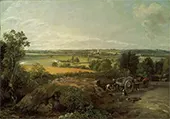
John Constable (1776–1837) was one of the most important English Romantic landscape painters, best known for his naturalistic depictions of the Suffolk countryside, especially the Stour Valley—an area now known as “Constable Country.” He is recognized for his expressive brushwork, direct observation of nature, and his ability to capture changing light, weather, and atmosphere with remarkable accuracy.
Although he struggled to gain widespread recognition in England during his lifetime, Constable achieved considerable success in France, where his work was exhibited at the Paris Salon and admired by leading artists. His naturalistic approach directly influenced the Barbizon School and played an important role in shaping the evolution of modern landscape painting.
John Constable Artist at a Glance
A leading figure in British Romantic painting, Constable focused on the Suffolk countryside of rural England. His work is distinguished by naturalism, detailed observation of light and weather, and expressive, textured brushwork.
What Are the Key Facts About John Constable?
- Born: 1776, East Bergholt, Suffolk, England
- Died: 1837, London, England
- Nationality: British
- Art Movement: Romanticism
- Known for: Landscape paintings of the English countryside
- Famous Paintings: The Hay Wain (1821), Flatford Mill (1816–17), Dedham Vale (1802)
- Influences: Thomas Gainsborough, Peter Paul Rubens, Claude Lorrain
- Institution: Royal Academy, London (elected Royal Academician in 1829)
What Is John Constable Known For?
John Constable is best known for his landscape paintings of Suffolk, where he was born and spent much of his life, particularly the Stour Valley landscapes that later became known as “Constable Country.” His work focuses on everyday rural scenes—rivers, mills, cottages, and open fields—rendered with exceptional attention to natural detail and atmosphere.
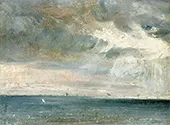
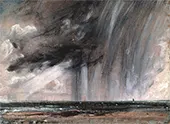
Unlike many landscape painters of his time, Constable moved away from idealized classical compositions and instead painted directly from nature. His oil sketches and cloud studies were especially innovative, documenting changing weather conditions with a near-scientific precision while maintaining strong artistic expression.
Why Was John Constable Important in Art History?
Constable played a pivotal role in elevating landscape painting into a major and respected artistic genre. His commitment to realism and direct observation marked a shift away from idealized traditions, influencing a new generation of artists, particularly in France.
His work had a profound impact on the Barbizon School, including artists such as Jean-François Millet, Théodore Rousseau, and Charles-François Daubigny, who adopted his naturalistic approach to landscape. This emphasis on direct observation and changing light conditions later contributed to the development of Impressionism.
What Are John Constable’s Most Famous Paintings?
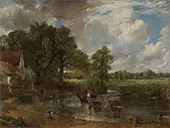
- The Hay Wain (1821)
National Gallery, London
130.2 × 185.4 cm (51.3 × 73 in)
One of the most celebrated English landscape paintings, depicting a peaceful rural scene on the River Stour near Flatford Mill in Suffolk, an area central to Constable’s work.
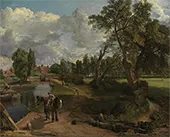
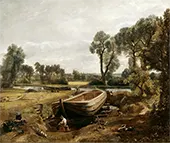
- Flatford Mill (1816–17)
Tate Britain, London
101.6 × 127 cm (40 × 50 in)
A detailed view of Constable’s childhood surroundings, highlighting the daily rhythms of rural working life in Suffolk.
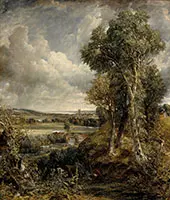
- Dedham Value (1802)
Victoria and Albert Museum, London
61 × 50.8 cm (24 × 20 in)
A panoramic view of the Suffolk landscape, often referred to as “Constable Country,” capturing the expansive rural scenery that defined much of his work.
Where Are John Constable’s Paintings Located Today?
John Constable’s paintings are primarily held in major British institutions, including:
- National Gallery, London
- Tate Britain, London
- Victoria and Albert Museum, London
His works are also held in major international museum collections, reflecting his lasting influence on European landscape painting and his importance within 19th-century art history.
Why Do John Constable Landscape Paintings Work in Modern Interiors?
John Constable’s landscape paintings are highly versatile and integrate seamlessly into both traditional and contemporary interiors, offering a timeless connection to nature.
They are particularly effective because:
- Natural earth tones and sky-filled compositions create a calm, balanced atmosphere
Rural English landscapes introduce warmth and a sense of heritage into interiors
Open skies and atmospheric depth enhance light and spatial perception
Understated compositions complement both minimalist and classic design schemes
Whether displayed in a home, office, or hospitality setting, Constable’s landscapes bring a sense of tranquility and connection to nature.
Where Can You Buy a Hand-Painted John Constable Reproduction?
Bring the timeless beauty of John Constable’s English landscapes into your space with a museum-quality hand-painted oil painting reproduction.
- Hand-painted by skilled artists using traditional oil techniques
Available in custom sizes to suit your space
Carefully packaged and shipped FREE worldwide
45-day money-back guarantee for complete peace of mind
View the full collection:
https://www.reproduction-gallery.com/artist/john-constable
Shop The Hay Wain reproduction:
https://www.reproduction-gallery.com/oil-painting/1456989024/the-hay-wain-1821-by-john-constable/
Browse landscape paintings:
https://www.reproduction-gallery.com/movement/landscapes/
Why Collectors Choose Our Constable Reproductions
- Museum-grade oil paints and materials
- Skilled artists trained in traditional techniques
- Accurate detail, texture, and color matching
- Trusted by collectors and interior designers worldwide since 1996







Enter Your Private Gallery
Log in with your gallery ID here
Track Your Order
Type your order number here




Cannot Find What You Are Looking For?
Reproduction Gallery Information
Customer Service

(Send Us A Message)

Tel: (302) 513 3464