




Camille Pissarro Oil Painting Reproductions
Camille Pissarro replica paintings on Canvas for sale
Camille Pissarro Paintings: Impressionist Art
Camille Pissarro was born on 10 July 1830 as Jacob Abraham Camille Pissarro. He was a pioneering Impressionist painter and Pointillist artist. His stunning impressionist paintings changed the course of modern art. From a humble upbringing on the Island of St. Thomas, part of the Danish West Indies. Pissarro is one of the most important Impressionist painters of 20th century France.
In 1871, Pissarro married Julie Vellay, the housekeeper of his mother. They had seven children together, and continuing the family legacy, six of Pissarro’s children also became painters. Camille Pissarro and his family lived outside Paris in the villages of Pontoise and Louveciennes.
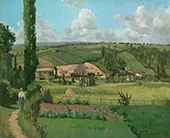
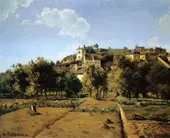
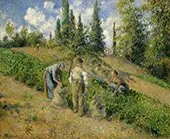
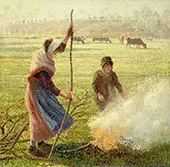
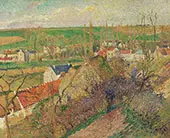
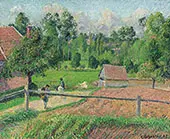
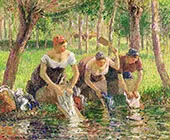
These rural locations inspired many of Pissarro’s paintings, such as The Harvest Pontoise. They feature everyday village scenes of farming landscapes, woods, rivers, and people working hard.
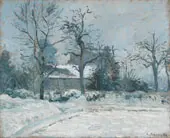
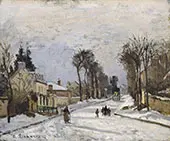
With the onset of the Franco-Prussian War, and despite this seeming idyll, the family moved to Norwood. Pissarro found the transition to a small village on the outskirts of London difficult. His now-famous impressionist oil paintings, such as Upper Norwood Crystal Palace 1870 and Snowy Landscape at South Norwood, were unpopular in the UK. During the 1890s, Pissarro returned to London, where he painted views of Kew Gardens and Stamford Brook. While these paintings provide a fascinating insight into the city’s expansion, London never inspired Pissarro to the same extent as Paris.
Who is Camille Pissarro?
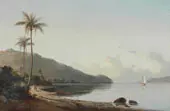
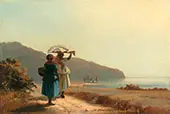
When Camille was 12, his father, Frederick Abraham Gabriel, sent him to France. He studied at the Savary Academy in Passy, near Paris, and developed a love of paintings by the Old Masters. Supported by Monsieur Savary himself, Camille Pissarro’s talent for impressionist oil paintings was evident. Returning to St. Thomas at seventeen, Pissarro often drew inspiration from nature. Nonetheless, his father ensured he worked as a port clerk in the family business. The young artist Pissarro took every opportunity to practice drawing during lunch breaks, mornings, and evenings. He later painted the beautiful island with famous paintings such as A Creek in Saint Thomas Antilles, 1856.
At 21, Pissarro met the Danish Artist Fritz Melbye. He was both a friend and mentor to Pissarro, encouraging him to pursue painting as a full-time career. As a result, Pissarro left his job and his family and moved to Venezuela. He drew everything he could in this fascinating country, filling up many sketchbooks and canvases.
In 1855, Pissarro returned to Paris to assist Anton Melbye, Fritz Melbye’s brother. Pissarro studied famous French artists such as Gustave Courbet, Jean Francois Millet, and Corot. Camille Pissarro was impressed by these artists and their innovative Realism paintings, and he sought instruction from Jean-Baptiste Corot.
Critics noted Pissarro’s extraordinary skill and talent even in his early career. In 1868, Emile Zola described him as one of the few true painters of the day. Another critic described how Pissarro enveloped objects in the atmosphere and painted the smell of the earth. After the mid-1860s, Camille Pissarro’s reputation grew significantly. His Impressionist landscape oil paintings from this period are particularly celebrated.
Famous Impressionist Paintings by Camille Pissarro.
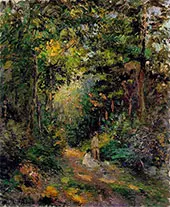
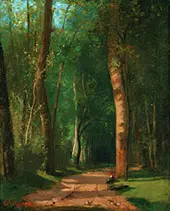
When Pissarro met the art dealer Paul Durant-Ruel in London, he secured many of Pissarro’s paintings. They met with Claude Monet, who was also in London, and the two artists viewed the famous landscape paintings of John Constable and J M W Turner. Both of these famous artists were instrumental in influencing Camille Pissarro and Monet’s “en Plein air” approach. They subsequently viewed light and modern life with renewed vigor. From the mid-1870s onwards, paintings by Camille Pissarro became more spontaneous. Pissarro's impressionist painting, Resting in the Woods, 1878, features loose brushwork and a thick impasto technique.
Pissarro's early experiences formed the basis of a more mature style. His famous impressionist paintings contain carefully observed figures and landscapes saturated with vibrant colors and soft light. Pissarro’s early oil paintings correlate with traditional Salon paintings, but Jean-Baptiste Corot encouraged him to rebel. Consequently, Camille Pissarro focused more on everyday rural scenes, painting “en Plein air.”
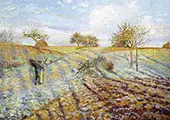
In 1874, he and his French Impressionist artist friends participated in the first Impressionist Exhibition. Pissarro displayed five Impressionist landscape paintings at the show, including the calmly beautiful "Hoarfrost." Impressionist paintings were shocking and horrifying to the critics; their comments noted that impressionist paintings were "vulgar, commonplace, sketchy, and insulting."
Why did Camille Pissarro Paint the Boulevard Montmartre?
The Boulevard Montmartre at Night, 1897, exemplifies Pissarro’s infatuation with Paris. He painted the wide avenue in all weathers, at all times of the day. Intriguingly, though, this artwork is the only night painting by Pissarro. His painting explores the patterns of artificial light reflected on rainy pavements. The cool white street lamps contrast with the warm, traditional yellows of shop windows. Pissarro’s brushwork is so loose and free that it is almost abstract, suggesting passing crowds and traffic.
Famous Impressionist Artists
Pissarro returned to Paris in the late 1850s. While studying at the Académie Suisse in 1859, he met several aspiring young artists. Claude Monet and Paul Cezanne were his friends, and they later formed the French Impressionist group. Paul Cezanne was a father figure for many impressionist artists. Indeed, Paul Cezanne provided the young Pissarro with sympathy, understanding, and encouragement. Pissarro's inclusion in the French Impressionist movement gave a sense of community and support.
In some ways, Camille Pissarro is the “purest” impressionist painter. He believed in the importance of depicting individuals in nature without fake mythological narratives or unnecessary grandeur. He was also the only artist to participate in every French Impressionist exhibition.
What are the characteristics of Impressionist paintings?
French Impressionist paintings use loose, free brushwork and bright colors. Painting outdoors was paramount. Impressionist artists depict the fleeting effects of light and modernity, often including rural and coastal subjects, while also featuring everyday urban life.
Did Camille Pissarro create Pointillism Art?
Despite his integral importance to the Impressionist art movement, Pissarro distanced himself from the group in the late 1880s and 90s, returning to painting simple countryside scenes reminiscent of his work in Venezuela. Pissarro met Georges Seurat and Paul Signac in 1885.
During this time, Seurat and Signac developed a more scientific theory of painting known as Pointillism or Divisionism. Using small dots and dabs of pure color creates the illusion of blended shading when viewed from a distance. Pissarro found these pointillism techniques fascinating, adopting them in many of his oil paintings.
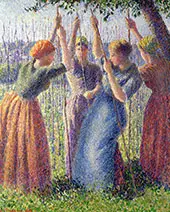
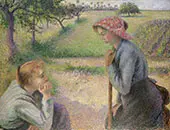
Camille Pissarro’s paintings "Apple Harvest at Eragny" and "Woman in a Meadow" employ pointillism painting techniques. These works notably differ from Pissarro’s early Impressionist oil paintings, marking his transition to Neo-Impressionism.
By the late 1880s, Camille Pissarro's Impressionist paintings had moved away from Pointillism art. Despite his earlier associations with Georges Seurat and Paul Signac, he described it as “too artificial.” His work became more subtle, controlled, and careful as he approached old age.
How did Pissarro influence Van Gogh?
The art dealer Theo van Gogh contacted Pissarro in 1884. He asked if his older brother, Vincent Van Gogh, could stay with him. Pissarro was deeply impressed by Van Gogh’s paintings and welcomed the idea. Lucien Pissarro, the artist's son, described how his father recognized the power of Van Gogh's paintings. Indeed, Van Gogh was just twenty-three years old at the time.
Pissarro influenced Van Gogh through their discussions on light and technique, and he specifically advised Vincent Van Gogh on ways to express color and light. These formative ideas stayed with Van Gogh throughout his astoundingly creative yet tragically short career.
Camille Pissarro: Later Life and Death
Returning to France after the war, Pissarro sadly discovered almost all his oil paintings had been destroyed. Of 1,500 paintings created over many years, only 40 survived. As some of the earliest Impressionist oil paintings, this destruction leaves a significant gap in our understanding of art history. Despite this setback, Pissarro continued to work undaunted.
Pissarro faced continuing financial problems well into his sixties, but he remained true to his creative approach, prioritizing integrity over commercial success.
In later years, Pissarro suffered from recurrent eye infections, and as a result, he could not paint Plein air except in clear weather. He increasingly painted city scenes from hotel windows and balconies. As demonstrated in "The Tuileries Gardens Morning, Spring Sun, 1899," his later Impressionist paintings contain views from a high vantage point.
Pissarro died on November 13, 1903, in Eragny-sur-Epte. He is buried in his beloved Paris, and his tomb is in the Père Lachaise Cemetery.
Camille Pissarro paintings: Impressionist oil painting reproductions
If you love the unparalleled beauty of oil paintings by the French artist Camille Pissarro, explore our collection of replica art of the most famous Impressionist artists. Enjoy fine art reproductions from Claude Monet, Georges Seurat, and Paul Signac.




Testimonial from Joann S, Victoria, BC, Canada

Enter Your Private Gallery
Log in with your gallery ID here
Track Your Order
Type your order number here




Cannot Find What You Are Looking For?
Reproduction Gallery Information
Customer Service

(Send Us A Message)

Tel: (302) 513 3464