




Cassius Marcellus Coolidge Oil Painting Reproductions
Cassius Marcellus Coolidge replica paintings on Canvas for sale
Why Dogs Playing Poker Became an American Cultural Icon
Mention Dogs Playing Poker, and almost everyone can picture the scene. A tense card game, suspicious glances across the table, cigars curling through the air, and a group of dogs behaving with remarkably human determination. The image has found its way onto calendars, greeting cards, television shows, movies, advertisements, and countless walls around the world. Yet surprisingly, many people know the paintings far better than the artist who created them.
That remarkable journey began in the late 19th century when the American publishing company Brown & Bigelow commissioned Cassius Marcellus Coolidge to create artwork for its advertising calendars. Calendar illustrations are rarely expected to enjoy a long life, yet these proved to be an extraordinary exception. Instead of fading with the passing years, they gradually became woven into American culture, earning recognition few commercial commissions have ever achieved.
Part of the magic lies in how instantly familiar the scenes feel. Coolidge understood that every card table has its own cast of characters: the confident player who believes luck is permanently on his side, the cautious opponent who studies every move, and the person trying very hard to look innocent while hoping nobody notices what's happening beneath the table. Replace those players with dogs, and something wonderfully unexpected happens. The humor feels effortless because the personalities are so believable.
Unlike many famous works of art that require historical knowledge or symbolic interpretation, Dogs Playing Poker welcomes everyone. You don't need to know the rules of poker, recognize the artist, or understand the history behind the series to appreciate what's unfolding. The expressions alone tell the story. A raised eyebrow, a concealed ace, or a look of disbelief communicates more than pages of written explanation ever could.
Perhaps that's why the series has never really disappeared. Long after the calendars were forgotten, the paintings continued to find new audiences, becoming part of American popular culture in a way that few artists could ever have imagined. They've remained instantly recognizable, raised countless smiles, and earned a place among the most familiar images in American art—not because they followed artistic convention, but because they quietly celebrated the wonderfully familiar quirks of human nature.
Cassius Marcellus Coolidge: The Artist Behind Dogs Playing Poker
Cassius Marcellus Coolidge (1844–1934) will always be associated with Dogs Playing Poker paintings, but reducing his career to a single idea doesn't do him justice. He was an illustrator, painter, inventor, humorist, and creative thinker who understood something many artists overlooked: people are naturally drawn to pictures that tell a story.
Born in Antwerp, New York, Coolidge followed an unconventional path into the art world. Before establishing himself as a professional illustrator, he explored a variety of occupations that exposed him to everyday life and ordinary people. Rather than separating art from daily experience, he embraced familiar situations, recognizing that the most memorable images are often inspired by moments everyone understands.
That outlook shaped everything he created. While many artists of the late 19th century pursued historical subjects, dramatic landscapes, or formal portraits, Coolidge chose a different direction. He looked for humor in ordinary life, observing the expressions, habits, and personalities that make people instantly recognizable. His paintings don't ask viewers to admire perfection; they invite them to recognize themselves and the people around them.
Perhaps Coolidge's greatest gift wasn't simply painting memorable characters—it was understanding how to hold a viewer's attention. Every composition invites you to pause, look a little longer, and discover something you didn't notice at first. A small gesture, a carefully timed glance, or a subtle expression quietly advances the story without a single line of dialogue. That ability to communicate so much through observation became one of the defining characteristics of his work.
He occasionally signed his illustrations using the playful name "Kash Koolidge," a small detail that reflects the wit running throughout his career. Even when working on commercial commissions, he approached every project with imagination rather than routine, creating artwork that entertained without sacrificing craftsmanship. It's a balance that very few commercial illustrators have achieved.
Many artists become known for technical brilliance. Others are remembered for changing artistic styles or movements. Cassius Marcellus Coolidge earned his place in American art history for something rather different: he created characters that people never forgot. Ask a group of people to choose their favorite dog around the poker table, and you'll probably hear a different answer every time. That's the mark of memorable character design rather than a simple visual joke.
The Complete Dogs Playing Poker Series
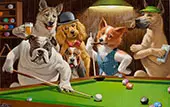
While Dogs Playing Poker has become the name by which the collection is known, it isn't a single scene repeated with different characters. Each work introduces a new episode, expanding the world that Cassius Marcellus Coolidge created while revealing another side of his wonderfully observant sense of humor. Together, the paintings read almost like chapters in an illustrated story, with every visit to the poker table bringing fresh personalities, unexpected situations, and another memorable twist.
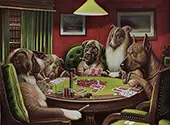
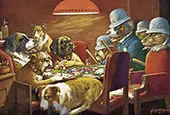
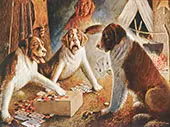
The story begins with "Poker Game" (1894), in which Coolidge first imagined dogs behaving exactly like experienced card players. It was an idea that immediately stood apart from traditional animal paintings. Instead of hunting, guarding homes, or posing faithfully beside their owners, these dogs argued over cards, studied one another's expressions, and tried to outwit their opponents with all the confidence and occasional overconfidence of seasoned poker players.
As the series developed, Coolidge resisted the temptation to repeat the same formula.
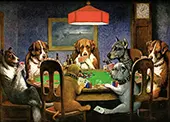
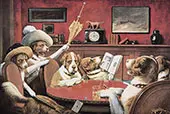
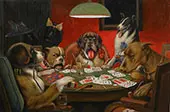
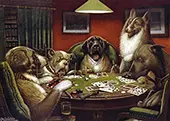
A Friend in Need (1903) remains the best-known scene, capturing the unforgettable moment when one bulldog quietly slips an ace beneath the table to help his companion.
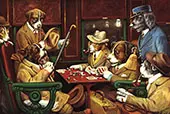
Pinched with Four Aces (1903) replaces quiet concentration with sudden panic as police officers interrupt an illegal card game, while His Station and Four Aces (1903) moves the familiar characters onto a railway carriage, showing how easily Coolidge could transport his canine cast into a completely new setting without losing the charm of the series.
In Only a Pair of Deuces (1910), a waitress calmly serves refreshments while the game continues, adding another touch of everyday life to the unfolding drama.
One of the pleasures of exploring the series is discovering how confidently Coolidge expanded his original idea. Rather than repeating a successful formula, he continually introduced new locations, fresh situations, and unexpected twists while leaving viewers to interpret the outcome for themselves. Every scene feels complete on its own, yet each adds another chapter to the larger story.
Rather than producing a collection of unrelated pictures, Cassius Marcellus Coolidge created one of the best-known series of famous dog paintings ever produced. Each scene stands comfortably on its own, yet together they reveal an artist who understood that memorable art isn't simply about what people see; it's about the stories they continue to imagine long after they've walked away.
Why Dogs Playing Poker Still Makes People Smile
Some paintings reveal everything at first glance. Dogs Playing Poker does the opposite. The longer you spend with the series, the more entertaining it becomes. What first appears to be a simple card game gradually unfolds into dozens of small moments, each adding another layer to the story. It's the kind of artwork that rewards curiosity rather than demanding attention.
One person might become fascinated by the player quietly hiding an ace beneath the table. Someone else notices the suspicious glance from across the room or the confident grin of a dog convinced he's holding the winning hand. Ask a group of friends which character they trust the least, and you'll probably get a different answer from each person. Part of the series' enduring charm is that it encourages people to become participants rather than simply observers.
Unlike many humorous paintings, the joke never wears thin because it doesn't depend on a single punchline. Every card game seems to include the overconfident player, the cautious strategist, the eternal optimist, and the one person nobody is entirely sure they should trust. Every poker player thinks they know who's bluffing. Coolidge quietly reminds us that we're not always as good at reading people as we think. The longer you spend with Coolidge's dogs, the easier it becomes to forget they're dogs at all. Before long, you're simply watching a table full of wonderfully familiar personalities. That's why the series continues to feel fresh every time you return to it.
There's another reason these paintings continue to appeal across generations: they bring people together. Whether hanging in a family recreation room, a private office, or a favorite gathering place, Dogs Playing Poker paintings almost always start a conversation. People compare favorite scenes, debate who's bluffing, and invent their own versions of what happened before the cards were dealt or after the final hand was played. Very few works of art invite that kind of interaction.
Perhaps that's Cassius Marcellus Coolidge's greatest achievement. His paintings remain just as enjoyable on the tenth viewing as on the first because every return reveals another detail, another expression, or another small clue hidden within the scene. It's remarkable how quickly you stop looking at the dogs and start wondering who's about to win the next hand. That's when you realize Coolidge's greatest achievement wasn't painting animals — it was capturing human nature.
Where Dogs Playing Poker Paintings Look Their Best
Walk into a room displaying Dogs Playing Poker, and you'll quickly notice something unusual. People rarely walk straight past it.
It's the kind of artwork that draws people in almost immediately, inviting them to take a closer look before inevitably asking, "Which one is your favorite?" Long before the conversation turns to the artist or the history behind the series, it has already done exactly what great art should do: it's brought people together.
That natural ability to start conversations explains why Cassius Marcellus Coolidge's paintings have become a favorite for home bars, game rooms, billiard rooms, private studies, executive offices, restaurants, hotels, and dedicated poker rooms. The scenes create a relaxed atmosphere without feeling overly formal, adding humor, personality, and a touch of Americana to spaces where people gather to unwind and enjoy one another's company.
The paintings are equally at home in a professional office or private study. They introduce character without dominating the room, offering a welcome reminder that success and professionalism don't have to come at the expense of humor. More than one business owner has chosen Dogs Playing Poker because clients remember it long after they've forgotten the furniture or décor. That's an unusual quality for any work of art.
If you're deciding where a Dogs Playing Poker painting will have the greatest impact, our guide to Choosing the Right Oil Painting for Your Home offers practical advice on selecting the right size, placement, and proportions for different spaces.
Choosing a favorite often says as much about the owner as it does about the artwork itself. Some people are drawn to A Friend in Need for its mischievous sense of loyalty, while others enjoy the drama of Pinched with Four Aces or the quieter tension found in other scenes throughout the series. Every painting captures a different personality, allowing buyers to select the story that feels most familiar to them.
While decorating styles come and go, genuine character never falls out of fashion. That's one reason Dogs Playing Poker has remained such a popular choice for generations. Whether displayed above a fireplace, behind a desk, or chosen as large wall art for a dedicated entertainment room, these paintings bring warmth, humor, and individuality to a space in a way that very few works of art can match.
Reproducing Cassius Marcellus Coolidge's Paintings
At first glance, Dogs Playing Poker paintings appear deceptively simple to reproduce. In reality, it's one of those subjects where the smallest details make the biggest difference.
The real challenge lies in preserving the details that make each scene so engaging; the subtle expressions, the carefully balanced composition, the atmosphere around the table, and the countless small touches that bring every character to life. These are the elements that transform an amusing concept into a work of lasting appeal.
Our work begins well before an order is placed. Every Coolidge artwork is carefully researched before it is added to our catalog, allowing us to confirm the original title, dimensions, historical background, and the best available reference material. That preparation gives our artists a solid foundation and helps ensure every reproduction reflects the original composition as faithfully as possible.
When an order is received, it is reviewed with the artist selected to complete the commission. Rather than assigning paintings at random, we match each project with an artist whose strengths best suit the subject matter. Coolidge's work may appear playful, but recreating believable figures, natural expressions, and convincing period interiors requires considerable technical skill and careful observation.
Every reproduction is hand-painted in oils on canvas, using the artwork's original aspect ratio. We never crop or stretch a composition to fit a standard frame size. Preserving the artist's intended proportions ensures that every figure, every gesture, and every carefully planned relationship within the scene remains exactly where it belongs.
Whether you choose A Friend in Need, Pinched with Four Aces, His Station and Four Aces, or another favorite from the series, our objective is always the same: to create a hand-painted oil painting that captures not only the appearance of the original, but also its atmosphere, balance, and character.
For us, a successful reproduction is measured by more than color accuracy or brushwork. It should capture the feeling that first attracted you to the artwork.
When the finished painting arrives, you instinctively pause to study the characters, notice another small detail, or imagine the story unfolding around the table. That's when we know we've achieved exactly what we set out to do.







Enter Your Private Gallery
Log in with your gallery ID here
Track Your Order
Type your order number here
Most Popular Artists