




Fra Angelico Oil Painting Reproductions
Fra Angelico replica paintings on Canvas for sale
Who Is Fra Angelico?
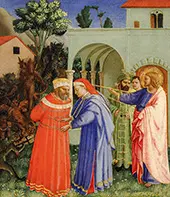
Fra Angelico (c. 1395–1455) was an Italian Early Renaissance painter and Dominican friar known for religious paintings, frescoes, angel paintings, and paintings of Christ.
Active in 15th-century Florence, he combined spiritual devotion with early Renaissance techniques, influencing artists such as Michelangelo, Leonardo da Vinci, and Raphael.
His work is especially valued for structured composition, luminous color, and spiritual clarity, bridging medieval symbolism and Renaissance naturalism.
Why Is Fra Angelico Important in Renaissance Art?
Fra Angelico is considered a foundational figure in Renaissance art, known for merging religious devotion with structured composition and early perspective. His work helped transition European painting from medieval symbolism to Renaissance clarity, influencing generations of artists and shaping the visual language of Christian art.
Fra Angelico — Key Facts (At a Glance)
- Artist: Fra Angelico
- Born: c. 1395, Vicchio, Mugello, Tuscany, Italy
- Died: 1455, Rome, Italy
- Movement: Early Renaissance
- Medium: Fresco and tempera on panel
- Known for: Religious paintings, angel paintings, and paintings of Christ
- Major collections:
- San Marco Monastery
- Uffizi Gallery
- Louvre Museum
- Metropolitan Museum of Art
Fra Angelico’s major works are held in leading museum collections, reinforcing their historical and cultural significance.
What Defines Fra Angelico’s Artistic Style?
Fra Angelico’s style represents a pivotal transition between medieval spirituality and Renaissance naturalism, prioritizing clarity, structure, and devotional meaning.
Key characteristics include:
- Luminous color palettes symbolizing divine presence
- Balanced compositions using early perspective
- Graceful, restrained figures focused on spiritual expression
- Calm, contemplative atmospheres designed for reflection
His approach influenced the anatomical precision of Michelangelo and the compositional harmony of Raphael.
What Makes Fra Angelico’s Religious Paintings Unique?
Fra Angelico’s religious paintings are distinguished by clarity, restraint, and spiritual purpose rather than dramatic intensity.
Distinctive qualities include:
- Structured and readable biblical narratives
- Gentle, idealized depictions of angels
- Serene portrayals of Christ emphasizing calm devotion
- Compositions designed for meditation in monastic settings
Art historians widely regard his work as essential to Early Renaissance Christian painting.
Most Famous Fra Angelico Paintings (Top Masterpieces)
Fra Angelico’s most famous paintings represent key developments in Early Renaissance religious art, combining structured composition, spiritual clarity, and devotional purpose.
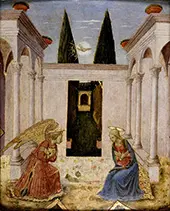
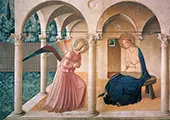
The Annunciation (c. 1440–1445)
- Medium: Fresco
- Size: 230 × 321 cm
- Location: San Marco Monastery
A defining Early Renaissance fresco, celebrated for its balance, light, and spiritual clarity.
The Deposition (c. 1432–1434)
- Medium: Tempera on panel
- Size: 176 × 185 cm
- Location: San Marco Museum, Florence
A complex yet harmonious composition demonstrating narrative control and emotional restraint.
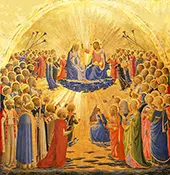
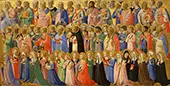
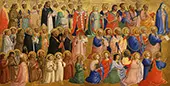
The Coronation of the Virgin (c. 1434–1435)
- Medium: Tempera on panel
- Size: 213 × 211 cm
- Location: Louvre Museum, Paris
A luminous celestial composition featuring richly detailed angelic figures.
The Crucifixion with Saints (c. 1420–1423)
- Medium: Tempera on panel
- Size: 63 × 36 cm
- Location: Metropolitan Museum of Art, New York
An early work emphasizing structure, symbolism, and devotional focus.
The Lamentation over the Dead Christ (c. 1436–1441)
- Medium: Tempera on panel
- Size: 62 × 80 cm
- Location: Museo di San Marco, Florence
A contemplative composition expressing emotion through gesture and spatial harmony.
These works are extensively studied in art history and remain central to museum collections and academic research.
Explore Fra Angelico Paintings Collection
Fra Angelico’s works form one of the most important bodies of Early Renaissance religious paintings. Key subjects include:
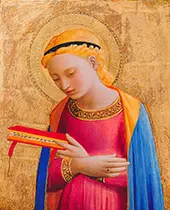
- The Annunciation (multiple versions)
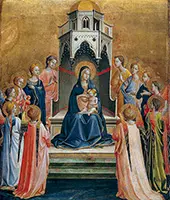
- The Coronation of the Virgin
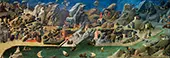
- The Last Judgment
- The Deposition
- The Crucifixion
- The Lamentation over Christ
- Angelic choir scenes and altarpieces
These works are widely studied and reproduced due to their clarity, balance, and spiritual depth.
Fra Angelico’s works are frequently reproduced as religious Renaissance wall art and hand-painted oil paintings, making them accessible to collectors seeking historically significant Christian art.
How Does Fra Angelico Compare to Other Renaissance Artists?
Fra Angelico’s work differs significantly from other Renaissance masters:
- vs Michelangelo
Focuses on spiritual calm rather than dramatic anatomy - vs Leonardo da Vinci
Prioritizes clarity over scientific realism and sfumato - vs Raphael
Emphasizes devotion over idealized human beauty
Fra Angelico’s strength lies in spiritual simplicity rather than technical complexity.
Why Are Fra Angelico Paintings Still Collected Today?
Fra Angelico’s paintings continue to attract collectors due to their harmony, structure, and devotional focus.
Collectors value them for:
- Their connection to museum-held masterpieces
- Their ability to introduce meaning without visual overload
- Their suitability for refined, contemplative interiors
- Their enduring relevance in religious and classical art
How Do Fra Angelico's Paintings Work in Interior Design?
How Do His Paintings Influence a Space?
Fra Angelico’s paintings introduce a calm, structured, and visually balanced aesthetic, enhancing interiors without overwhelming them.
They create environments that feel:
- Harmonious and intentional
- Refined and elegant
- Quiet and contemplative
Which Interior Styles Suit Fra Angelico's Paintings?
Fra Angelico’s paintings integrate naturally into:
- Minimalist interiors requiring warmth and depth
- Classical interiors with architectural detailing
- Neutral environments requiring visual structure
- Traditional interiors inspired by Renaissance art
Which Rooms Are Best For These Paintings?
- Living rooms (refined focal point)
- Bedrooms (calm, reflective atmosphere)
- Home offices (focus and clarity)
- Hallways (visual continuity)
Can Fra Angelico's Paintings Be Created as Large Wall Art?
Fra Angelico’s compositions can be scaled into large wall art while maintaining their original structure and balance.
This allows collectors to:
- Fill large walls with meaningful artwork
- Preserve compositional clarity at scale
- Create visual impact without excess
How to Choose the Right Fra Angelico Painting for Your Space
Fra Angelico’s paintings range from serene devotional scenes to more complex narrative compositions, making selection an important factor in achieving the right visual and emotional balance in an interior.
Calm vs Narrative Scenes
- Simple compositions such as The Annunciation create a quiet, balanced atmosphere
- More complex works like The Deposition introduce storytelling and visual depth
Size and Wall Proportion
- Large-scale paintings suit open walls and statement spaces
- Smaller works are ideal for intimate or contemplative settings
Placement and Function
- Bedrooms and offices benefit from calm, minimal compositions
- Living areas can support more detailed narrative works
Selecting the right painting ensures the artwork enhances both the visual balance and intended atmosphere of the space.
Why Collectors Choose Fra Angelico Reproductions Today
Collectors seeking museum-quality art choose Fra Angelico reproductions for their combination of historical significance and refined visual presence.
At Reproduction-Gallery.com:
- 100% hand-painted oil on canvas (never prints or giclée)
- Created by trained artists using traditional techniques
- Museum-grade materials for longevity
- Custom sizes available, including large-scale works
- Free worldwide shipping
- 45-day money-back guarantee
- Established studio since 1996
- Each reproduction is based on high-resolution museum references to ensure historical accuracy in composition, tone, and detail.
Each painting is created to reflect the balance, tone, and spiritual clarity of the original masterpiece.
FAQ About Fra Angelico
What type of artwork is Fra Angelico known for?
Early Renaissance religious paintings, including frescoes, angel imagery, and depictions of Christ, define Fra Angelico’s work.
Where can you see Fra Angelico’s original paintings?
Fra Angelico’s works are held in major museums, including the Uffizi Gallery, the Louvre Museum, the Metropolitan Museum of Art, and the monastery of San Marco in Florence.
Why is Fra Angelico important in Renaissance art?
Fra Angelico is considered a foundational figure in Renaissance art, influencing later artists such as Michelangelo, Leonardo da Vinci, and Raphael.
Are Fra Angelico's paintings suitable for modern interiors?
Fra Angelico’s paintings are well-suited to modern interiors due to their structured compositions and restrained color palettes.
Why Does Fra Angelico Still Matter Today?
Fra Angelico remains a pivotal Early Renaissance artist whose work defined the shift toward structured composition and devotional clarity in Western painting.






Enter Your Private Gallery
Log in with your gallery ID here
Track Your Order
Type your order number here
Most Popular Artists