




Ivan Aivazovsky Oil Painting Reproductions
Explore Ivan Aivazovsky Paintings
Who Was Ivan Aivazovsky?
Ivan Aivazovsky (1817–1900), born Hovhannes Aivazian into an Armenian family in Feodosia, Crimea—then part of the Russian Empire was a Romantic painter celebrated for his seascapes, naval battles and extraordinary treatment of light on water
During a career that spanned more than sixty years, the artist produced over 6,000 paintings and exhibited throughout Europe. His most famous works, including The Ninth Wave (1850), The Rainbow (1873), and The Battle of Chios (1848), remain among the best-known examples of nineteenth-century maritime art.
Today, paintings by Ivan Aivazovsky can be found in major museum collections, including the State Russian Museum, Tretyakov Gallery, and Aivazovsky National Art Gallery, where they continue to attract admirers of Romantic art and 19th century seascapes.
Why The Sea Became Ivan Aivazovsky's Lifelong Subject
Few artists are as closely associated with a single subject as Ivan Aivazovsky was with the sea. Raised in the port city of Feodosia on the Black Sea coast, he developed an early fascination with ships, changing weather, and the constant movement of water.
Throughout his career, the sea remained both his inspiration and his primary artistic subject. Rather than depicting water simply as a landscape feature, he treated it as a living force capable of expressing beauty, danger, hope, isolation, and human resilience.
His connection to maritime subjects was further strengthened through his relationship with the Russian Navy. Naval commissions and extensive travel provided opportunities to study oceans, coastlines, ports, and ships, all of which became recurring themes in his paintings.
This lifelong fascination with the sea helped establish Aivazovsky as one of the most important marine painters in art history.
What Makes Ivan Aivazovsky's Paintings Unique?
Ivan Aivazovsky developed a highly individual approach to painting that distinguished him from many of his contemporaries. Although he spent considerable time observing nature, he often created finished compositions from memory rather than painting directly outdoors.
This method allowed him to combine careful observation with the emotional atmosphere associated with Romanticism. His paintings are rarely simple records of maritime events. Instead, they use the sea to explore themes of survival, faith, human vulnerability, and the power of nature.
Perhaps the most recognizable aspect of Aivazovsky's work is his treatment of light. Sunrises, sunsets, moonlit waters, and distant storms are rendered through subtle tonal transitions that create an extraordinary sense of luminosity. In many paintings, light appears to glow from within the canvas itself, giving his seascapes a visual quality that remains distinctive more than a century after they were painted.
The Most Famous Ivan Aivazovsky Paintings
The paintings below are among his most important works and continue to influence marine painters today.
The Ninth Wave (1850)
Medium: Oil on canvas
Size: 221 x 332 cm (87 x 131 in)
Location: State Russian Museum
Widely regarded as Aivazovsky's masterpiece, The Ninth Wave depicts survivors clinging to wreckage after a devastating storm. While the scene captures the destructive power of the sea, the warm light of sunrise introduces a sense of hope and renewal.
The painting's monumental scale, atmospheric lighting, and emotional depth have made it one of the most celebrated maritime paintings ever created.
The Rainbow (1873)
Medium: Oil on canvas
Size: 102 x 132 cm (40 x 52 in)
Location: Tretyakov Gallery
The Rainbow contrasts the violence of a recent storm with the appearance of a brilliant rainbow stretching across the horizon. The painting demonstrates Aivazovsky's remarkable ability to combine natural observation with symbolic themes of redemption and survival.
The Battle of Chios (1848)
Medium: Oil on canvas
Size: 188 x 287 cm (74 x 113 in)
Location: Aivazovsky National Art Gallery
Depicting a historic naval engagement, The Battle of Chios illustrates Aivazovsky's talent for combining historical narrative with atmospheric seascape painting. The work reflects both his interest in maritime history and his close association with the Russian Navy.
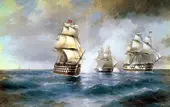
Brig Mercury Attacked by Two Turkish Ships (c.1892)
Medium: Oil on canvas
Size: 212 x 339 cm (83 x 133 in)
This large-scale naval painting portrays a famous episode of resistance at sea. Dynamic wave formations, carefully controlled light, and a strong sense of movement combine to create one of his most memorable maritime compositions.
Why Is Ivan Aivazovsky Important In Art History?
Aivazovsky helped elevate seascape traditions from a specialist subject into a respected artistic genre capable of conveying complex emotions and dramatic narratives.
His paintings demonstrated that seascapes could be as powerful and expressive as historical paintings, portraits, or religious art. Through his depiction of storms, shipwrecks, naval battles, and changing weather conditions, he expanded the artistic possibilities of painted seascapes and influenced generations of artists who followed.
Success during his lifetime also contributed to the international popularity of maritime art, helping establish seascapes as a significant category within nineteenth-century European painting.
Today, Aivazovsky remains one of the most widely recognized marine artists in art history.
Which Museums Display Ivan Aivazovsky Paintings?
Important paintings are held in museum collections throughout Europe and beyond.
Notable institutions include:
• State Russian Museum
• Tretyakov Gallery
• Aivazovsky National Art Gallery
These institutions preserve works spanning the artist's entire career, from early naval paintings to the large-scale seascapes for which he is best known.
Can You Buy Hand-Painted Ivan Aivazovsky Reproductions?
Selected paintings by Ivan Aivazovsky are for sale as hand-painted oil painting reproductions created entirely by hand on canvas.
Because his paintings depend heavily upon atmospheric perspective, reflected light, and subtle tonal transitions, reproducing a seascape composition requires an artist with experience in ocean painting techniques.
Each painting is individually created using traditional oil painting methods to capture the depth of the sea, the changing qualities of light, and the sense of scale that characterize his most famous works.
Custom sizes are available, including larger formats suitable for feature walls, entrance halls, hotels, and other spaces where maritime artwork can be displayed to maximum effect.
How Are Ivan Aivazovsky Paintings Recreated By Hand?
The visual character of Aivazovsky's paintings depends upon the interaction of water, atmosphere, light, and distance. Ocean surfaces often contain multiple reflections, subtle color transitions, and changing weather effects that work together to create a remarkable sense of depth and luminosity.
To recreate these qualities, our artists use traditional oil painting techniques and carefully build layers of color to capture the movement of the sea, the transparency of water, and the atmospheric effects that define his work.
Reproductions are assigned to artists experienced in maritime subjects and nineteenth-century Romantic painting. Particular attention is given to horizon depth, reflected light, and the luminous skies that make many of his seascapes instantly recognizable. The goal is not simply to copy the composition, but to recreate the atmosphere, balance, and visual impact that have made the artist's work some of the most admired seascapes in art history.
Why Collectors Continue To Choose Aivazovsky's Seascapes
Ivan Aivazovsky reproductions remain popular because they combine art historical significance with exceptional visual impact.
Many of his best-known paintings were created on a monumental scale, making them particularly suitable for larger living spaces, entrance halls, libraries, hotels, and offices where the breadth of the composition can be fully appreciated.
For collectors who appreciate marine art, hand-painted reproductions offer an opportunity to enjoy some of the most celebrated seascapes in art history while preserving the character and atmosphere of the original compositions.
Frequently Asked Questions About Ivan Aivazovsky
What Is Ivan Aivazovsky Best Known For?
He is best known for his seascapes, maritime battles, shipwreck scenes, and exceptional ability to depict light on water.
What Art Movement Was Ivan Aivazovsky Associated With?
Aivazovsky is generally associated with Romanticism, a movement that emphasized emotion, imagination, atmosphere, and the power of nature.
What Are Ivan Aivazovsky's Most Famous Paintings?
Among his best-known works are The Ninth Wave (1850), The Rainbow (1873), The Battle of Chios (1848), and Brig Mercury Attacked by Two Turkish Ships.
Where Can You See Ivan Aivazovsky Paintings Today?
Major collections of Aivazovsky's famous paintings can be found in the State Russian Museum, the Tretyakov Gallery, and the Aivazovsky National Art Gallery.
Are Ivan Aivazovsky Paintings Valuable?
Original Aivazovsky paintings are highly sought after by collectors and have achieved multi-million-dollar prices at major international auctions.




Testimonial from EK, Sydney, Australia

Enter Your Private Gallery
Log in with your gallery ID here
Track Your Order
Type your order number here
Most Popular Artists