




Alexandre Cabanel Oil Painting Reproductions
Alexandre Cabanel replica paintings on Canvas for sale
Alexandre Cabanel Paintings: An Artistic Biography
Alexandre Cabanel produced some of France’s most famous religious paintings. Throughout his long career, he painted a wide range of subjects, including historical narratives, classical mythology, nude paintings, and religious art. Cabanel paintings exemplify the French Academic tradition, sometimes known as “l'art Pompier.” While this style of art fell out of fashion in subsequent decades, Alexandre Cabanel was Emperor Napoleon III’s favorite painter, and the artist enjoyed critical acclaim and success during his lifetime.
This brief biography presents some of the most famous Alexandre Cabanel paintings and explores the influences that shaped the artist.
Alexandre Cabanel: An Artistic Education
Alexandre Cabanel was born on September 28, 1823, in Montpellier, in the South of France. He attended the local school in Montpellier, and his artistic aptitude was evident from an early age. At the age of 17 and given his talent, he enrolled at the École des Beaux-Arts in Paris. He studied under François-Édouard Picot, a classically trained artist famed for his realistic mythological artworks.
When did Alexandre Cabanel start painting?
Alexandre Cabanel started painting in the 1840s. One of his earliest oil paintings was "Agony in the Garden," which earned him a second-place prize in the Prix de Rome competition. Cabanel excelled in his studies and exhibited at the prestigious Paris Salon in 1844. He won first place in the Prix de Rome scholarship the following year. He was just twenty-two years old at the time. In 1864, the École des Beaux-Arts appointed Alexandre Cabanel as a Professor, and he taught at the institution from that date until he died in 1889. During his twenty-five years in teaching, Cabanel inspired many young French artists. Students included famous names such as Alexandre Jean-Baptiste Brun, Gaston Bussiere, Eugène Carrière, Eugène Chigot, and Jules Bastien-Lepage.
Alexandre Cabanel - French Academic Painting?
Alexandre Cabanel's paintings exemplify French Academicism, a style of painting that dominated European tastes during the 19th century. The great academies of Western Europe, including the École des Beaux-Arts, prioritized this style of painting. It is characterized by mythological subjects and an incredibly polished, realistic finish that the French upper classes particularly admired.
The Paris Salon also supported Academic artists, lending prestige and critical acclaim to their artworks. For example, as a first-rate Academic painter, Alexandre Cabanel soon enjoyed a successful career within the upper-class world of French art. The Paris Salon regularly elected Alexandre Cabanel to their jury, where he selected paintings for their exhibitions. In addition, he often gave his students chances to exhibit, shaping the look and feel of the Paris Salon for decades. These opportunities epitomize the character of “belle époque” French oil paintings.
However, Alexandre Cabanel’s strict Academic focus was not without its detractors. Alongside fellow jurist William Adolphe Bouguereau, he refused several Impressionist paintings entry into the Salon. The refusal of paintings from Edouard Manet in 1863 led to the formation of the Salon des Refusés. This counter-Salon allowed avant-garde art movements such as Impressionism and Symbolism to flourish. However, as an unforeseen consequence, it eventually led to the decline of French Academicism, which appeared increasingly old-fashioned and staid.
Alexandre Cabanel's Famous Nude Paintings?
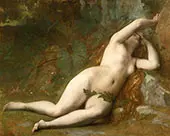
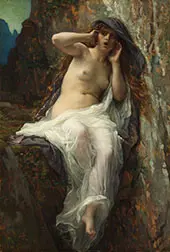
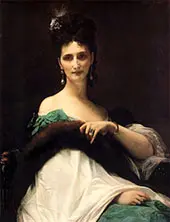
Alexandre Cabanel’s paintings of nudes are among his most famous. However, he also produced several notable portrait paintings and religious art. Cabanel’s reputation remained largely unchallenged throughout the 1860s and 1870s. The Paris Salon awarded Alexandre Cabanel the Grande Médaille d'Honneur in 1865, 1867, and 1878.
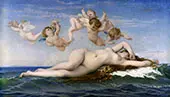
Alexandre Cabanel, The Birth of Venus, 1863.
Today, Cabanel’s The Birth of Venus painting is the most prominent example of 19th century French Academic Art.
Emperor Napoleon III was so enamored with the painting that he purchased it soon after its completion. In 1875, Cabanel created a miniature replica painting for the wealthy banker John Wolf. The Metropolitan Museum of Art currently owns the smaller version. The original, larger version hangs in the Musée d’Orsay, Paris. While The Birth of Venus is one of Cabanel’s most famous nude paintings, it embodies the principles of French Academic art perfectly. Indeed, Cabanel’s graceful composition, the mythological subject, and perfect human forms characterize the style.
What does The Fallen Angel painting depict?
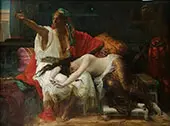
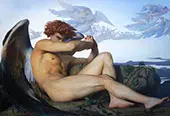
Fallen Angel by Alexandre Cabanel 1847 depicts the devil after his expulsion from heaven. John Milton’s poem Paradise Lost, written in 1667, inspired Cabanel's painting of the devil. Milton, in turn, drew inspiration from the “War in Heaven” story in the biblical Book of Revelation. In this book, God casts the devil out of heaven for his rebellious and deceptive nature, stating he was “cast out into the earth.” In addition, Lucifer’s angels were “cast out with him.” These angels are just visible in the background skies of Cabanel’s painting.
The Fallen Angel painting shows Lucifer (the Fallen Angel, or L’Ange Déchu) seething with silent anger. Every muscle in his body appears tense, and his piercing eyes gaze from behind his muscular arm.
Cabanel's The Fallen Angel is one of his earlier oil paintings. It received mixed critical reactions, with one critic condemning the artist’s overly Romantic focus. In addition, the reviewer declares the execution “inadequate” and Cabanel’s draftsmanship “imprecise.” However, other commentators praised the figure’s perfect symmetry and muscular form. Intriguingly, it is also one of the first paintings to represent the devil in human form, and its controversial presentation shocked the audiences of the time. Famous Angel paintings are some of our most popular painting reproductions.
What materials did Alexandre Cabanel use?
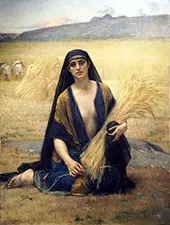
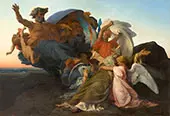
Cabanel usually created oil paintings on canvas, although he also produced many drawings and preparatory sketches. In addition to Fallen Angel, other famous religious paintings include The Death of Moses (also known as La mort de Moïse, painted in 1851), Paradise Lost, and Ruth in the Field of Boaz. The Death of Moses currently hangs in the Dahesh Museum in New York City. This energetic and colorful painting depicts Moses’ death after forty years of wandering in the Moab desert. Moses died on Mount Nebo, aged 120, “at the command of the Lord.”
Alexandre Cabanel died at the age of sixty-five on 23 January 1889. He passed away in Paris, France, where he spent most of his career, leaving behind a rich oeuvre of astounding Academic paintings.
Replica Oil Paintings for Sale
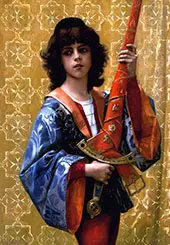
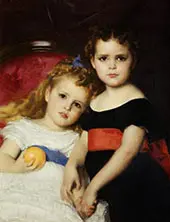
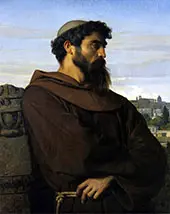
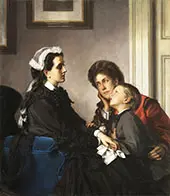
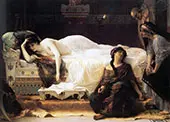
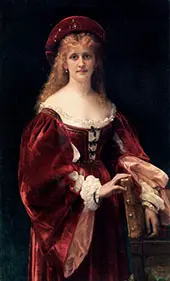
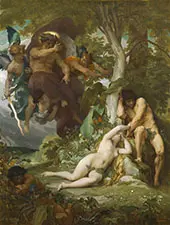
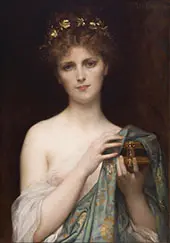
Explore our extensive collection of reproduction oil paintings to enjoy Alexandre Cabanel's religious art and famous nude paintings. Discover paintings by similar artists, including William Adolphe Bouguereau, Rudolf Ernst, and Giuseppe de Nittis.






Enter Your Private Gallery
Log in with your gallery ID here
Track Your Order
Type your order number here




Cannot Find What You Are Looking For?
Reproduction Gallery Information
Customer Service

(Send Us A Message)

Tel: (302) 513 3464