




Alexandre Cabanel Oil Painting Reproductions
Alexandre Cabanel replica paintings on Canvas for sale
Who Was Alexandre Cabanel
Alexandre Cabanel (1823–1889) was a French Academic painter known for mythological paintings, idealized female figures, Academic nude art, religious paintings, and highly polished oil on canvas techniques. A favorite artist of Napoleon III and professor at the École des Beaux-Arts, Cabanel became one of the leading representatives of 19th-century French Academic painting and Salon art.
What Are the Key Facts About Alexandre Cabanel?
- Born: 1823, Montpellier, France
- Died: 1889, Paris, France
- Nationality: French
- Movement: French Academic Art
- Known for: Mythological paintings, Academic nude art, religious paintings, portrait painting.
- Medium: Oil on canvas
- Famous paintings: The Birth of Venus, The Fallen Angel, Cleopatra Testing Poisons on Condemned Prisoners
- Major museums: Musée d’Orsay, Paris; Musée Fabre, Montpellier; Metropolitan Museum of Art, New York City
What Defines Alexandre Cabanel’s Academic Painting Style?
Alexandre Cabanel’s paintings exemplify the refined ideals of French Academic art, the dominant artistic system taught through institutions such as the École des Beaux-Arts and promoted through the Paris Salon during the 19th century.
Key characteristics of Cabanel’s painting style include:
- Idealized anatomy and classical beauty
- Smooth, polished surfaces with minimal visible brushwork
- Mythological and religious subject matter
- Balanced and harmonious compositions
- Refined tonal transitions and controlled lighting
- Detailed realism combined with idealization
Cabanel’s highly finished oil on canvas technique appealed strongly to aristocratic patrons, imperial commissions, and collectors seeking paintings that reflected technical perfection and classical refinement.
Why Is Alexandre Cabanel Famous?
Alexandre Cabanel became famous for combining technical precision with idealized classical beauty in large-scale Academic paintings shown at the Paris Salon. His works were admired for their polished surfaces, graceful figures, and balanced compositions, helping establish him as one of the leading Academic painters of 19th-century France.
His reputation grew significantly after Napoleon III purchased The Birth of Venus at the Paris Salon of 1863, elevating Cabanel into the highest ranks of French Salon painting.
Today, Cabanel remains internationally recognized for:
- Mythological oil paintings
- Academic nude paintings
- Religious and historical compositions
- Salon art of the Second French Empire
- Highly polished Academic painting techniques
His paintings continue to be studied as defining examples of French Academic art before the rise of Impressionism.
What Is Alexandre Cabanel Known For?
Alexandre Cabanel trained at the École des Beaux-Arts in Paris under François-Édouard Picot and rose rapidly through the French Academic system.
Important milestones in his career include:
- Winning the Prix de Rome at age 22
- Exhibiting regularly at the Paris Salon
- Becoming professor at the École des Beaux-Arts in Paris in 1864
- Receiving the Grande Médaille d’Honneur multiple times
- Influencing Salon selections as a jury member
Cabanel became especially known for paintings that combined mythological subject matter with refined sensuality and technical perfection, qualities that defined Academic painting during the mid-to-late 19th century.
What Are the Most Famous Alexandre Cabanel Paintings?
Alexandre Cabanel’s most famous paintings represent some of the finest examples of 19th-century French Academic art, combining mythological subject matter, idealized beauty, and highly refined oil painting techniques. Many of these works remain preserved in major museum collections and continue to influence collectors, historians, and classical interior design.
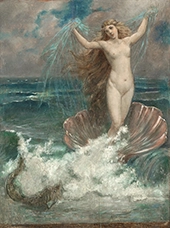
The Birth of Venus (1863)
- Medium: Oil on canvas
- Size: 130 × 225 cm (51.2 × 88.6 inches)
- Location: Musée d’Orsay, Paris, France
One of the most famous mythological paintings of the 19th century, The Birth of Venus established Cabanel as a leading Salon artist after being purchased by Napoleon III. The painting became internationally recognized for its idealized depiction of Venus, luminous skin tones, and exceptionally polished Academic technique.
The Fallen Angel (1847)
- Medium: Oil on canvas
- Size: 121 × 189 cm (47.6 × 74.4 inches)
- Location: Musée Fabre, Montpellier, France
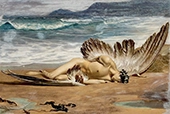
Depicting Lucifer immediately after his expulsion from Heaven, The Fallen Angel combines Academic precision with emotional intensity. Inspired partly by John Milton’s Paradise Lost, the painting remains one of Cabanel’s most widely reproduced works and one of the most recognized examples of Romantic-influenced Academic art. Its dramatic expression and refined technique have also made it one of the most sought-after works within our Famous Angel Paintings collection, where collectors explore museum-quality hand-painted oil painting reproductions inspired by biblical and celestial themes.
Cleopatra Testing Poisons on Condemned Prisoners (1887)
- Medium: Oil on canvas
- Size: 87 × 148 cm (34.3 × 58.3 inches)
- Location: Royal Museum of Fine Arts, Antwerp, Belgium
This dramatic historical painting demonstrates Cabanel’s mastery of theatrical composition, controlled lighting, and Academic storytelling. The work reflects the 19th-century fascination with exotic historical themes and imperial power.
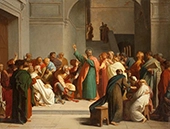
The Death of Moses (1851)
- Medium: Oil on canvas
- Size: 136 × 195 cm (53.5 × 76.8 inches)
- Location: Dahesh Museum of Art, New York City, United States
A monumental biblical composition illustrating Moses’ final moments, this painting demonstrates Cabanel’s ability to combine religious narrative with balanced composition and refined Academic realism.
Portrait of Emperor Napoleon III (1865)
- Medium: Oil on canvas
- Size: 210 × 125 cm (82.7 × 49.2 inches)
- Location: Château de Compiègne, Compiègne, France
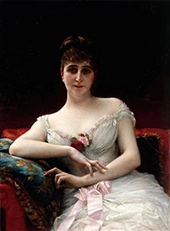
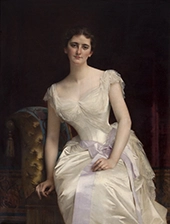
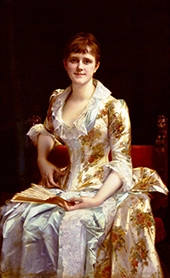
Cabanel became one of the preferred portrait painters of the French imperial court. This formal state portrait reflects the elegance, prestige, and controlled realism associated with official Academic portraiture during the Second Empire.
What Subjects and Themes Did Alexandre Cabanel Paint?
Alexandre Cabanel explored a wide range of subjects associated with French Academic painting, allowing him to appeal to aristocratic patrons, Salon audiences, and imperial commissions.
Recurring themes in his paintings include:
- Mythological scenes and classical deities
- Religious narratives and biblical paintings
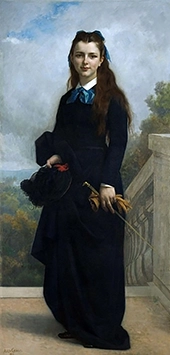
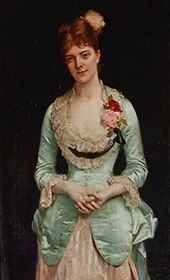
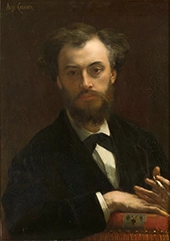
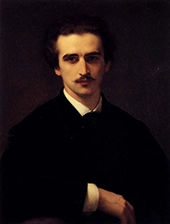
- Portraits of aristocracy and elite patrons
- Academic nude paintings
- Historical and allegorical compositions
- Idealized representations of beauty and emotion
This versatility helped Cabanel maintain enormous success within the Academic system throughout much of the 19th century.
Why Is Alexandre Cabanel Important in Art History?
Alexandre Cabanel played a central role in maintaining the dominance of French Academic art during a period of major artistic transition in Europe.
His influence extended beyond painting itself:
- He shaped artistic standards through the Paris Salon
- He mentored younger artists at the École des Beaux-Arts in Paris
- He reinforced the ideals of Academic painting during the rise of modern art
- He became associated with the institutional resistance to avant-garde movements such as Impressionism
As a Salon juror, Cabanel participated in the rejection of works by artists including Édouard Manet, decisions that contributed to the emergence of the Salon des Refusés and ultimately helped accelerate the rise of Impressionism.
Cabanel therefore represents both the height of Academic painting and one of the defining opposition points against early modernism.
What Materials and Techniques Did Alexandre Cabanel Use?
Alexandre Cabanel primarily worked using traditional Academic oil painting techniques associated with the French Academy.
His process commonly included:
- Oil on canvas painting
- Detailed preparatory sketches and anatomical studies
- Layered glazing techniques
- Fine blending to eliminate visible brushstrokes
- Controlled tonal modeling and soft transitions
- Carefully balanced compositional structure
These techniques contributed to the smooth, highly polished appearance that became synonymous with French Academic painting.
Where Can You See Alexandre Cabanel Paintings Today?
Original Alexandre Cabanel paintings are preserved in major museum collections throughout Europe and the United States.
Important collections include:
- Musée d’Orsay, Paris, France
- Musée Fabre, Montpellier, France
- Metropolitan Museum of Art, New York City, United States
- Dahesh Museum of Art, New York City, United States
- Royal Museum of Fine Arts, Antwerp, Belgium
- Château de Compiègne, Compiègne, France
These museum holdings reinforce Cabanel’s historical importance within 19th-century French Academic painting and Salon art.
How Do Alexandre Cabanel Paintings Work in Interior Design?
Alexandre Cabanel paintings work particularly well in elegant interiors because of their refined compositions, balanced tonal structure, and classical subject matter. Mythological paintings such as The Birth of Venus and emotionally dramatic works such as The Fallen Angel are frequently selected as statement wall art for luxury interiors.
These paintings are especially suited to:
- Formal living rooms
- Classical and traditional interiors
- Luxury bedrooms
- Boutique hotels and refined hospitality spaces
- Offices requiring elegant figurative artwork
- Gallery-style interiors with large focal walls
Cabanel’s Academic paintings combine softness, structure, and visual sophistication, allowing them to integrate effectively into both traditional and contemporary spaces.
Are Large Alexandre Cabanel Paintings Available?
Many Alexandre Cabanel paintings adapt exceptionally well to large-scale wall art because of their balanced compositions and panoramic formats.
Popular oversized hand-painted reproduction requests include:
- The Birth of Venus
- The Fallen Angel
- Historical Cleopatra paintings
- Academic nude paintings
- Classical mythological oil paintings
Large-scale reproductions can be commissioned in custom dimensions while preserving the original proportions, composition, and visual balance of the artwork.
Original Alexandre Cabanel paintings are preserved in major museum collections and rarely available to private collectors. As a result, museum-quality hand-painted oil painting reproductions remain one of the few ways collectors can experience the scale, atmosphere, and refined detail associated with Cabanel’s Academic masterpieces.
Where Can You Buy Hand-Painted Alexandre Cabanel Paintings?
Collectors searching for Alexandre Cabanel paintings for sale often seek museum-quality hand-painted oil painting reproductions that preserve the refined brushwork, idealized anatomy, and tonal harmony associated with French Academic art.
At Reproduction-Gallery.com:
- Every painting is 100% hand-painted in oil on canvas
- No prints or giclée reproductions are used
- Created by trained artists experienced in Academic painting techniques
- Museum-grade materials ensure durability and color stability
- Custom sizes available while maintaining original proportions
- Suitable for both luxury interiors and gallery-quality wall art
- Free worldwide shipping
- 45-day money-back guarantee
- Established fine art studio since 1996 with Nearly 30 years of experience in hand-painted oil painting reproduction.
Each fine art reproduction handmade painting is created using traditional oil painting methods designed to accurately recreate the composition, atmosphere, and surface quality of the original artwork.
Each painting undergoes strict in-house quality control to ensure accuracy in composition, tonal harmony, anatomical detail, and overall finish before international delivery. Production typically requires approximately 21 days depending on size, complexity, and drying time.
FAQs About Alexandre Cabanel
Was Alexandre Cabanel an Academic painter?
Alexandre Cabanel was one of the leading representatives of French Academic painting during the 19th century, known for idealized figures, mythological subjects, and highly polished oil painting techniques.
What is Alexandre Cabanel’s most famous painting?
The Birth of Venus (1863) is widely considered Cabanel’s most famous painting. Preserved at the Musée d’Orsay in Paris, France, it became internationally famous after being purchased by Napoleon III.
Why Is The Birth of Venus by Alexandre Cabanel So Famous?
The painting became famous for its idealized representation of mythological beauty, technical perfection, and refined Academic realism. Its success at the Paris Salon helped establish Cabanel as one of the leading painters of the Second French Empire.
Where can you see Alexandre Cabanel paintings today?
Cabanel’s paintings are held in major museums including the Musée d’Orsay in Paris, France; Musée Fabre in Montpellier, France; the Metropolitan Museum of Art in New York City, United States; and the Royal Museum of Fine Arts in Antwerp, Belgium.
Was Alexandre Cabanel opposed to Impressionism?
Cabanel represented the Academic tradition associated with the Paris Salon and participated in the rejection of several avant-garde artists, including Édouard Manet. These conflicts contributed to the emergence of Impressionism and modern art movements outside the Academic system.
What style of art did Alexandre Cabanel represent?
Cabanel represented French Academic painting, a style emphasizing idealized beauty, polished surfaces, balanced composition, classical themes, and technical precision.
Are Alexandre Cabanel paintings suitable for hand-painted oil reproductions?
Alexandre Cabanel paintings are particularly well suited to museum-quality oil painting reproductions because their refined tonal transitions, balanced compositions, and smooth Academic techniques translate effectively into hand-painted oil on canvas recreations.
Are Alexandre Cabanel Paintings Popular for Luxury Interiors?
Alexandre Cabanel paintings are highly sought after for luxury interiors because of their refined compositions, classical elegance, and sophisticated tonal balance. Works such as The Birth of Venus and The Fallen Angel are frequently selected as statement wall art for formal living rooms, boutique hotels, gallery-inspired interiors, and elegant private spaces.
Their combination of Academic realism, mythological subject matter, and highly finished surfaces allows them to function as both decorative focal points and historically important fine art. Large-scale hand-painted oil painting reproductions are especially popular for classical interiors, luxury wall décor, and refined hospitality environments seeking timeless European artistic influence.







Enter Your Private Gallery
Log in with your gallery ID here
Track Your Order
Type your order number here
Most Popular Artists