




Pieter Claesz Oil Painting Reproductions
Pieter Claesz replica paintings on Canvas for sale
Who Was Pieter Claesz, the Dutch Golden Age Still-Life Painter?
Pieter Claesz (c. 1597–1660) was a Dutch Golden Age still-life painter known for his refined monochromatic compositions, realistic textures, and symbolic vanitas still life paintings. Born in Antwerp and active in Haarlem, he became one of the leading figures of 17th-century Dutch still-life painting, particularly recognized for his “breakfast pieces” (ontbijtjes), which depict everyday objects with subtle tonal harmony and deep symbolic meaning related to mortality and the passage of time.
Born in the Spanish Netherlands (modern-day Belgium), Pieter Claesz later became a leading member of the Haarlem School, where he helped define the development of Dutch Golden Age still-life painting.
Pieter Claesz Artist at a Glance
Pieter Claesz was a Dutch Golden Age still-life painter known for vanitas paintings and monochrome breakfast pieces, characterized by tonal harmony, realistic textures, and symbolic themes of mortality, time, and the fleeting nature of material life.
What Are the Key Facts About Pieter Claesz Artist?
- Born: c. 1597, Antwerp, Spanish Netherlands (modern Belgium)
- Died: 1660, Haarlem, Dutch Republic
- Nationality: Dutch (Flemish-born)
- Movement: Dutch Golden Age, Baroque
- Specialism: Still life, vanitas painting
- Known for: Pieter Claesz vanitas still life, monochrome still life paintings known as breakfast pieces
- Active in: Haarlem School of painting
What Is Pieter Claesz known for as an Artist??
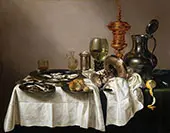
The Pieter Claesz artist is best known for his calm, highly controlled still-life compositions that emphasize tonal balance over bright color. His paintings typically feature everyday objects arranged with precision and illuminated by soft, natural light.
Common elements include:
- Pewter plates and silverware
- Glass vessels with detailed reflections
- Bread, fruit, and partially eaten meals
- Subtle light effects and shadow
These paintings are often referred to as Dutch still-life breakfast pieces (ontbijtjes, the Dutch for "breakfast"), which elevate ordinary objects into sophisticated works of art.
What Is a Vanitas Still Life in Pieter Claesz’s Work?
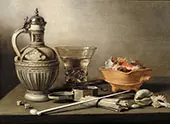
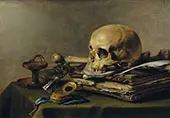
A Pieter Claesz vanitas still life is a symbolic type of still-life painting that reflects on the transience of life and the inevitability of death and the fleeting nature of material possessions.
Popular during the Dutch Golden Age, vanitas paintings use carefully arranged objects to communicate deeper philosophical and moral messages.
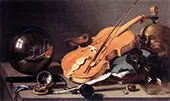
In the work of Pieter Claesz, vanitas still life paintings often include everyday objects rendered with remarkable realism, combined with subtle symbolic elements that remind viewers of life’s impermanence.
Common vanitas symbols include:
- Skulls — reminders of mortality
- Extinguished candles — the passage of time
- Books and writing tools — knowledge and human achievement
- Overturned glasses or musical instruments — the temporary nature of pleasure
These symbolic compositions reflect the religious and cultural values of the 17th-century Dutch Republic, where art often served as a meditation on life, death, and spiritual awareness.
What Are the Most Famous Pieter Claesz Paintings?
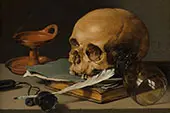
Still Life with a Skull and a Writing Quill (1628)
- Medium: Oil on wood
- Original Size: 9 1/2 × 14 1/8 inches (24.1 × 35.9 cm)
- Location: Metropolitan Museum of Art, New York
- Type: Pieter Claesz vanitas still life
This is one of the earliest and most important Pieter Claesz vanitas still life paintings. The skull, extinguished lamp, and writing tools symbolize mortality, knowledge, and the fleeting nature of human life, making it a defining example of Dutch Golden Age vanitas imagery.
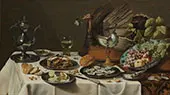
Still Life with a Turkey Pie (1627)
- Medium: Oil on panel
- Original Size: approx. 75.5 × 132.5 cm (29.7 × 52.2 inches) (standard accepted museum dimensions)
- Location: Rijksmuseum, Amsterdam
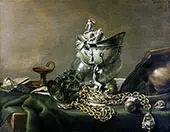
- Type: Banquet / pronkstilleven (luxury still life)
This large-scale still life demonstrates Claesz’s mastery of composition, texture, and reflected light. The richly arranged table with a turkey pie, glassware, and luxury objects reflects the prosperity of the Dutch Golden Age while subtly maintaining vanitas undertones.
Vanitas Still Life (c. 1630)
- Medium: Oil on panel
- Original Size: approx. 39 × 56 cm (15.3 × 22 inches) (dimensions vary slightly by version)
- Location: Mauritshuis, The Hague (representative example of this composition type)
- Type: Pieter Claesz vanitas still life
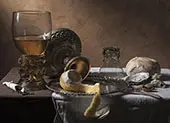
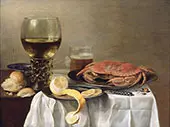
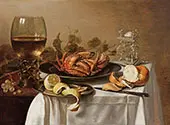
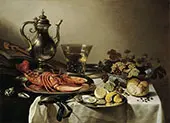
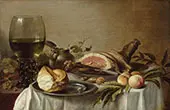
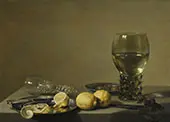
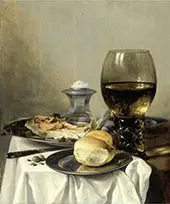
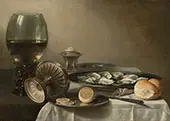
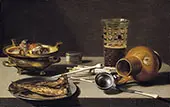
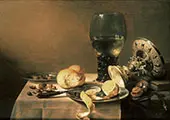
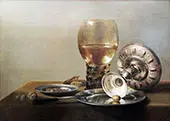
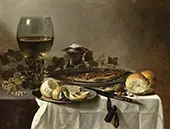
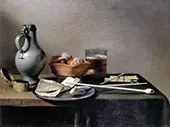
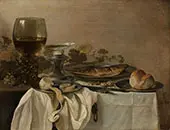
These breakfast pieces (ontbijtjes) are among the most recognizable works by Pieter Claesz, featuring simple arrangements of bread, glassware, and table settings.
They are known for their muted palette, tonal harmony, and quiet realism.
How Did Pieter Claesz Influence Dutch Still-Life Painting?
The artist Pieter Claesz played a central role in the Haarlem still-life tradition and influenced other important still-life painters such as Abraham Mignon and Severin Roesen.
His work helped define:
- Monochromatic tonal harmony
- Minimalist composition
- Realistic light and reflection
- Symbolic storytelling
Why Do Pieter Claesz Vanitas Still Life Paintings Work in Any Interior Style?
Pieter Claesz vanitas still life paintings have a timeless versatility that allows them to complement virtually any interior style, from classic and traditional homes to modern offices and contemporary living spaces.
Their appeal lies in a combination of visual balance, neutral tones, and intellectual depth, making them adaptable across different environments.
They work beautifully in:
- Homes (living rooms, dining areas, kitchens):
The subject matter of food, table settings, and everyday objects naturally complements domestic spaces, creating a sense of warmth and quiet sophistication. - Offices and professional spaces:
The symbolic nature of Pieter Claesz's vanitas still life paintings, reflecting themes of time, knowledge, and achievement, adds depth and meaning to work environments, making them especially suitable for offices, libraries, and study areas. - Traditional and classic interiors:
Their Dutch Golden Age origins pair seamlessly with antique furniture, wood finishes, and heritage-style décor. - Modern and minimalist interiors:
The restrained color palette—soft greys, browns, and muted golds allows these paintings to integrate effortlessly without overwhelming clean, contemporary spaces. - Eclectic or transitional interiors:
Their balanced composition and subtle realism make them easy to combine with a mix of styles, acting as a unifying focal point.
Unlike highly decorative or brightly colored artworks, Pieter Claesz vanitas still life paintings offer a calm, refined presence. Their muted tones, realistic textures, and symbolic meaning create a sense of depth and sophistication, making them equally effective in both residential and professional interiors.
Where Can You Buy Hand-Painted Pieter Claesz Oil Painting Reproductions?
At Reproduction-Gallery.com, we offer museum-quality hand-painted oil painting reproductions of Pieter Claesz vanitas still life paintings.
Why Do Collectors Choose Our Pieter Claesz Reproductions?
- 100% hand-painted (no prints or digital reproductions)
- Created using traditional oil painting techniques
- Accurate tonal harmony and authentic brushwork
- Custom sizes available
- Museum-quality materials
- FREE Shipping worldwide
- 45-day money-back guarantee
- Trusted studio experience since 1996
Which Other Still-Life Artists Are Similar to Pieter Claesz?
- Abraham Mignon - known for detailed floral still lifes with symbolic meaning
- Severin Roesen - famous for lush fruit still-life compositions
- Jan Davidsz de Heem - a master of luxurious banquet still lifes and complex vanitas symbolism




Testimonial from Antonio L, Skopje, Macedonia


Enter Your Private Gallery
Log in with your gallery ID here
Track Your Order
Type your order number here
Most Popular Artists