




John Singer Sargent Oil Painting Reproductions
John Singer Sargent replica paintings on Canvas for sale
Famous Oil Paintings by John Singer Sargent
John Singer Sargent was born on January 12th, 1856. He was an Italian-American painter renowned for his elegant portrait paintings of Edwardian society.
In 1874, Sargent traveled to Paris to study portrait painting with Carolus-Duran, who was renowned for his portraits of high-society individuals during the Third Republic in France. Carolus-Duran particularly admired the paintings of Diego Velázquez, a passion he passed on to a young John Singer Sargent.
During this formative period in France, Sargent experimented with new Impressionist and Realist techniques. This influence stayed with the artist throughout his life and is evident in his later, loose, light American Impressionist paintings.
Paris Salon and European Travels
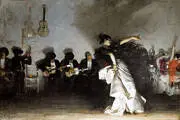
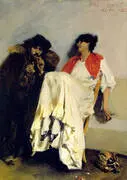
Singer Sargent exhibited at the Paris Salon in 1877. He won an Honorable Mention in 1879 and a Second-Class medal in 1881. Sargent’s work from this period reflects his travels around Europe and further afield. One of the most notable Singer Sargent paintings is the theatrical oil painting, El Jaleo. Completed in 1882, from earlier preparatory studies, John Singer Sargent’s popular oil painting El Jaleo depicts a Spanish gypsy dancer performing spiritedly.
Sargent found a visit to Spain and North Africa in 1879 inspiring, and El Jaleo is a result of his travels. At the time, it caused a sensation. The dramatic shadows cast on the back wall create a dynamism that was genuinely revolutionary for portraiture paintings of the time.
Returning to Europe that year, John Singer Sargent visits Madrid, discovering the work of Diego Velázquez. In the Netherlands, the famous portraits of Dutch Golden Age painter Frans Hals were a revelation. Enthused by the Old Master artists, Singer Sargent's paintings began to adopt a dark, jewel-like color palette.
Early Portraiture
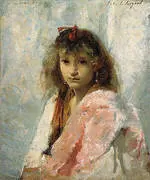
A Parisian Beggar Girl 1880 reflects John Singer Sargent’s shift towards portrait paintings. While he later worked almost exclusively with the upper echelons of society, this oil on canvas painting provides a rare glimpse into a more naturalistic model; in this case, the young woman was Carmela Bertanga. Indeed, many of John Singer Sargent's early artworks feature peasant families and young children as their subjects. These paintings focus on light, tone, and brushwork, reflecting impressionist concerns. Sargent mixed these painterly qualities with his brand of astounding realism.
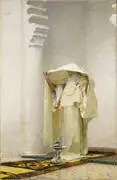
John Singer Sargent also experimented with more exotic subject matter around this period; Fumée D'ambre Gris (Smoke of Ambergris) is one such painting. Ambergris is a waxy substance extracted from whales and used in religious rituals. It is famed for its aphrodisiac qualities. While it started in Tangier, the suggestive painting was completed in Singer-Sargent’s Paris studio. It reflects Western fantasies and romantic depictions of North Africa, which were common during this era.
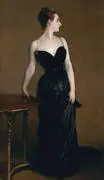
John Singer Sargent Madame X
Today, Madame X is the most famous work of art by John Singer Sargent. It was introduced at the Paris Salon of 1884, portraying a renowned society beauty, Madame Gautreau. The artist considered this painting his finest masterpiece.
John Singer Sargent was devastated when his painting met with derision and scandal at the Paris Salon. The indiscreet pose and the revealing dress provoked outrage in Parisian society. In the search for success, Sargent fled Paris to the safety of James McNeill Whistler's studio on Old Tite Street in Chelsea.
Despite the move to England, John Singer Sargent's famous portraits proved risqué for contemporary tastes. Indeed, The Pall Mall Gazette voted one of his works (The Misses Vickers) the “worst picture of the year” in 1886.
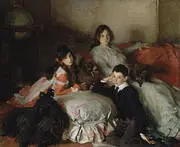
The Daughters of Edward Darley Boit (1882) also met with disdain. In this painting, the influence of Velázquez and Las Meninas is particularly evident in this unsentimental and psychologically compelling group portrait.
Luckily for John Singer Sargent, however, his luck was about to change. An earlier work, Carnation Lily, Lily Rose (1885), captured the hearts of the British public. He painted the image during a stay in Broadway, a picturesque English village in the Cotswolds, while in the company of leading Anglo-American artists and writers. With its nostalgic and romantic portrayal of two young girls, he successfully tapped into high-society tastes. Again, the influence of Japonisme is apparent with the delicate floral touches and children lighting Japanese lanterns.
Success as a Famous Portrait Artist.
From this moment on, leading British and American members of high society commissioned John Singer Sargent's portrait paintings. On average, his clients paid $5,000 for a full-length portrait. His quick brushstrokes, bold touches, and bright palette of color created the impression of a fleeting, intimate moment.
John Singer Sargent’s paintings deal with each sitter as a unique individual. The artist rarely repeated props or poses, resulting in genuinely personalized and revealing portraits.
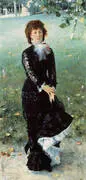
Sargent's popular portrait of Lady Agnew of Lochnaw, 1882, illustrates this technique in the articulate handling of the painting. The sitter’s piercing eyes gaze directly back at the viewer, while the delicate fabrics of her dress represent amazing freestyle movement and brushstrokes.
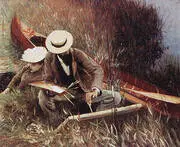
John Singer Sargent's portrait paintings feature famous artists of the time, such as Claude Monet, Painting by the Edge of the Woods, and Dennis Miller Bunker, Painting at Calcot.
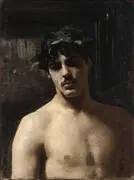
The artist's romantic life is the subject of scholarly debate, as a lifelong bachelor with known male and female lovers. The sensitive depiction of the male form is particularly evident in an early work, Man Wearing Laurels (1874-80), and the later Nude Study of Thomas E McKeller (1917-20). The latter is particularly notable for its direct and unabashed treatment of full-frontal male nude painting. Albert Belleroche, Sargent’s primary partner, features in multiple intimate and loving portraits throughout the artist’s career.
John Singer Sargent's Landscape Paintings.
From 1910 onwards, the artist discarded portrait painting in favor of murals and landscapes. John Singer Sargent often spent the Summer and Autumn of each year painting the landscapes he visited across Europe. Oil paintings from this period mainly consist of French and Italian alpine watercolor landscapes. Then, taking inspiration from the likes of J.M.W. Turner, Sargent moved towards romantic and impressionist techniques. Camouflaged Field in France (1918) and A Wrecked Tank (1918) combine the tradition of romantic landscapes with the horrors witnessed across Europe in the carnage of World War One.
Sargent's involvement in the American art scene in later life led to his co-founding New York City’s Grand Central Art Galleries in 1922. His last murals include a commission for the Boston Public Library and the Museum of Fine Arts, Boston.
In 1924, a major retrospective of Sargent’s work was held at the Grand Central Art Galleries. Returning to London and battling heart disease, John Singer Sargent died at home on April 15th, 1925.
Buy John Singer Sargent oil painting reproductions. Fine art reproductions are available in many sizes, and we specialize in oversized wall art. Each of our stunning hand-painted replica oil paintings is created entirely by hand by one of our resident professional artists




Testimonial from PS, Littleton, CO

Enter Your Private Gallery
Log in with your gallery ID here
Track Your Order
Type your order number here




Cannot Find What You Are Looking For?
Reproduction Gallery Information
Customer Service

(Send Us A Message)

Tel: (302) 513 3464