




Famous Angel replica paintings on Canvas for sale
Buy famous angel reproduction oil paintings
Why Angel Paintings Remain Popular Today
Angel paintings have remained popular for centuries because they combine religious symbolism, artistic beauty, and universal human themes. Angels have appeared in Western art for more than 1,700 years, from early Christian frescoes and Renaissance altarpieces to 19th century Academic painting and modern interpretations.
For some collectors, the appeal lies in faith and spiritual meaning, making angel paintings among the most enduring forms of religious art in the Western artistic tradition. Others are drawn to the beauty of Renaissance cherubs, the emotional power of biblical narratives, or the extraordinary craftsmanship found in works by artists such as Raphael, Rembrandt, and William-Adolphe Bouguereau. This combination of artistic achievement and enduring symbolism has helped angel paintings remain one of the most recognizable and widely collected subjects in Western art.
The History of Angels in Art
The earliest surviving depictions of angels date to the third century and can be found in the Catacomb of Priscilla in Rome. Angels later became prominent subjects in Byzantine mosaics, medieval manuscripts, church frescoes, and other forms of religious art throughout Europe.
During the Renaissance, artists began portraying angels in a more naturalistic manner, giving them realistic proportions, expressive faces, and a greater sense of humanity. This shift reflected the broader move toward observation and realism that transformed European painting. As a result, angel paintings became some of the most admired works of Renaissance art and continue to rank among the most recognizable images in Western art history.
Some of the Most Famous Angel Paintings in Art History
Angel paintings have inspired artists for centuries and appear in some of the most important works of Renaissance, Baroque, Academic, and Modern art. The following works are among the most admired and influential depictions of angels ever created, each reflecting a different artistic style, period, and interpretation of the angelic theme.
The Angel of the Annunciation (1481) by Sandro Botticelli
Botticelli's depiction of the Archangel Gabriel announcing Christ's birth to the Virgin Mary is one of the finest examples of Early Renaissance religious art. Created during a period when artists were increasingly combining spiritual subjects with realistic settings, the painting places a biblical event within an elegant Renaissance environment.
Botticelli's graceful figures, refined use of line, and attention to symbolic detail helped establish him as one of the most important painters of 15th century Florence. Today, the painting is housed in the Uffizi Gallery in Florence, Italy, one of the world's most important collections of Renaissance art.
The Sistine Madonna (c.1513) by Raphael
Few angelic images are more recognizable than the two cherubs beneath Raphael's Sistine Madonna. Although they occupy only a small portion of the composition, they have become some of the most reproduced angel images ever created and remain enduring symbols of Renaissance art. Commissioned by Pope Julius II, the painting depicts the Virgin Mary holding the Christ Child while standing upon clouds surrounded by heavenly figures.
Today, the painting is housed in the Old Masters Picture Gallery in Dresden, Germany. More than five centuries after it was painted, Raphael's cherubs remain among the most familiar angelic figures in the history of Western art.
H3: Jacob Wrestling with the Angel (1659) by Rembrandt van Rijn
Rembrandt's interpretation of this biblical story focuses on the emotional encounter between humanity and the divine. Rather than emphasizing physical conflict, the painting explores themes of faith, struggle, compassion, and spiritual transformation. Through subtle lighting, expressive figures, and remarkable psychological depth, Rembrandt transformed a familiar biblical narrative into a profoundly human experience.
The painting is now part of the collection of the Staatliche Museen zu Berlin in Germany. It is widely regarded as one of the most important religious paintings of the Dutch Golden Age.
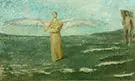
The Angel Standing in the Sun (1846) by J. M. W. Turner
This dramatic painting depicts the Archangel Michael above scenes of conflict, judgment, and redemption. Created during the final years of J.M.W Turner's career, the work reflects the artist's growing interest in spirituality, mortality, and the afterlife.
The brilliant use of light, atmosphere, and color demonstrates the innovative approach that made Turner one of the most influential painters of the 19th century. Today, The Angel Standing in the Sun is part of the National Gallery's collection in London and remains one of the most unusual and thought-provoking angel paintings ever created.
Angel Paintings by William-Adolphe Bouguereau
William-Adolphe Bouguereau played a major role in shaping the popular image of angels during the 19th century. The French Academic painter became renowned for his extraordinary technical skill, realistic treatment of the human figure, and ability to combine classical ideals with emotional warmth. His paintings of angels, cherubs, and mythological subjects are celebrated for their luminous color, graceful compositions, and remarkable attention to detail. Works such as First Kiss, L'Amour et Psyché, Enfants, and Wet Cupid remain among the finest examples of Academic painting and continue to influence contemporary figurative artists.
Bouguereau's angel paintings remain among the most admired and most frequently requested works in our catalog. Collectors interested in religious art, Academic painting, and museum masterpieces are often drawn to the extraordinary craftsmanship and timeless beauty of his work.
How Artists Have Interpreted Angels Through the Centuries
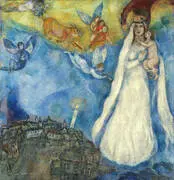
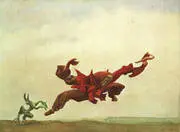
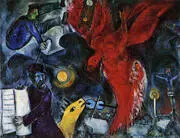
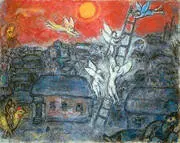
The representation of angels has evolved significantly over the centuries. Early Christian artists emphasized symbolism and spirituality, while Renaissance painters introduced greater realism and human emotion. Later artists such as Rembrandt and Turner explored angels as powerful narrative and spiritual subjects. At the same time, modern painters, including Marc Chagall and Paul Klee, reimagined angels through highly personal and imaginative interpretations.
Despite these changes, angels have remained one of the most enduring themes in Western art.
Why Collectors Choose Angel Paintings for Their Homes
Angel paintings are displayed in a wide variety of settings, from churches and prayer rooms to entrance halls, libraries, bedrooms, and private art collections. Some collectors choose angel art for its religious significance, while others appreciate the sense of calm, beauty, and continuity that these images can bring to a living space.
Their appeal extends beyond religious traditions and often reflects broader themes such as protection, hope, comfort, guidance, and the connection between the earthly and the spiritual. This enduring relevance helps explain why angel paintings continue to appear in homes throughout the world despite changing artistic trends.
Different styles of angel paintings often suit different interiors. Renaissance cherubs and classical religious paintings can complement traditional homes, while larger and more dramatic works by artists such as Rembrandt, Turner, or Bouguereau can create a striking focal point in living rooms, entrance halls, staircases, libraries, and other prominent spaces. Oversized angel paintings are also frequently chosen for churches, chapels, retreat centers, hotels, and public buildings where their scale and symbolism can have a particularly powerful visual impact.
In residential settings, oversized angel paintings are often displayed above fireplaces, in double-height entrance halls, or at the end of long hallways where they can be appreciated from a distance.
Angel paintings are also commonly selected as meaningful gifts for weddings, baptisms, confirmations, memorials, and other important milestones. For many collectors, the enduring appeal of angel art lies not only in its artistic beauty but also in the personal meaning and emotional connection these images can inspire. If you are considering an angel painting for your home, our guide to choosing the right painting can help you select an appropriate size, style, and placement for your space.
Hand-Painted Angel Replica Paintings on Canvas
Many of history's most admired angel paintings can only be viewed in museums, churches, and private collections, often thousands of miles from where collectors live. Hand-painted oil painting reproductions allow collectors to enjoy these celebrated works in their own homes while faithfully preserving the composition and character of the original artwork.
Popular choices include Raphael's cherubs from The Sistine Madonna, Botticelli's Renaissance religious paintings, Rembrandt's biblical scenes, and the angel paintings of William-Adolphe Bouguereau. These works remain popular because they combine artistic beauty, historical significance, and enduring spiritual symbolism.
Since 1996, Reproduction-Gallery has specialized in creating hand-painted oil painting reproductions on canvas. Each painting is created entirely by hand by professional artists, and all standard catalog paintings retain the artwork's original aspect ratio.
Multiple sizes are available, including oversized formats suitable for churches, prayer rooms, hotels, offices, and large residential interiors. This allows collectors to select anything from a modest devotional painting for a private room to an oversized statement piece for a church, staircase, or large wall.



Enter Your Private Gallery
Log in with your gallery ID here
Track Your Order
Type your order number here
Most Popular Artists