




Popular Oil Painting Reproductions on Canvas
Every painting is a hand painted reproduction oil painting, created by a talented artist and comes with a 100% Money Back Guarantee and free shipping worldwide.
Most Popular Oil Paintings and Hand-Painted Reproductions
Some oil paintings remain popular for centuries while countless others fade from public awareness. The works featured on this page have achieved something unusual: they are admired by museum visitors, studied by art historians, reproduced in books, and repeatedly selected by collectors as hand-painted oil painting reproductions to display in their homes.
At Reproduction-Gallery, we have seen demand for certain paintings remain remarkably consistent despite changing decorative trends. While new artists and styles periodically gain popularity, works such as The Starry Night, Water Lilies, the Mona Lisa, and Girl with a Pearl Earring continue to be requested by collectors throughout the world.
The oil paintings below represent some of the most enduring and widely reproduced works in Western art. Their continued popularity reflects a combination of artistic significance, museum visibility, and a proven ability to remain engaging when displayed in homes, offices, and private collections.
Why Certain Paintings Remain Popular Across Generations
Art history contains thousands of important paintings, yet only a small number become instantly recognizable across different countries and cultures. Some achieved fame because they introduced new artistic ideas. Others remain memorable because of a distinctive expression, dramatic use of light, striking color relationships, or a composition that continues to resonate with viewers centuries after it was created.
Museum visibility also plays an important role. Paintings displayed in institutions such as the Louvre, the Museum of Modern Art, the Uffizi Gallery, the Mauritshuis, and the National Gallery in London become familiar through exhibitions, education, publishing, and tourism.
For collectors, however, historical importance alone is rarely enough. The paintings that remain most popular as oil reproductions are often those that continue revealing new details and visual qualities over time.
Which Famous Paintings Are Most Frequently Reproduced?
The paintings below span more than four centuries of art history and represent a variety of artistic movements, from the Italian Renaissance and Dutch Golden Age to Impressionism, Post-Impressionism, Romanticism, and Modern American art. Despite their differences, each remains among the most widely recognized and frequently reproduced paintings in the world.
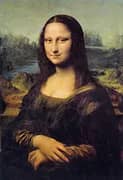
Mona Lisa (c.1503–1506) by Leonardo da Vinci
Leonardo da Vinci's Mona Lisa remains one of the world's most recognizable paintings because of its enigmatic expression and extraordinary technical refinement. Leonardo's use of sfumato allows shadows and contours to blend gradually, creating a subtle sense of movement within the face.
The painting hangs in the Louvre Museum in Paris and measures just 77 x 53 cm (30 x 21 in), considerably smaller than many visitors expect. Rather than relying on scale, the portrait holds attention through its balance, restraint, and remarkable psychological presence.
More than five hundred years after it was painted, the Mona Lisa continues to define portrait painting and remains one of the most sought-after subjects for fine art reproductions.
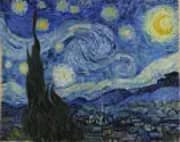
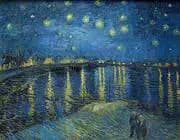
The Starry Night (1889) by Vincent van Gogh
Painted while Vincent van Gogh was living in Saint-Rémy-de-Provence, The Starry Night became famous for its swirling sky and heavily textured brushwork.
Today displayed at the Museum of Modern Art in New York, the painting measures 73.7 x 92.1 cm (29 x 36¼ in). Thick impasto and energetic brushstrokes create a sense of movement that remains one of the defining characteristics of Van Gogh's work.
More than a century after its creation, The Starry Night remains one of the most requested oil painting reproductions in the world because of its energy, color, and instantly recognizable composition.
Girl with a Pearl Earring (c.1665) by Johannes Vermeer
Johannes Vermeer's Girl with a Pearl Earring is celebrated for its quiet atmosphere, luminous lighting, and direct gaze.
Displayed at the Mauritshuis in The Hague, the painting measures only 44.5 x 39 cm (17½ x 15⅜ in). Despite its modest size, the portrait creates an unusual sense of intimacy that often surprises visitors seeing it in person.
Only around thirty-five Vermeer paintings are generally accepted as authentic today, adding to the fascination surrounding his work. Its simplicity and elegance continue to make it one of the most popular portrait reproductions available.
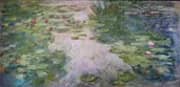
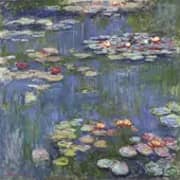
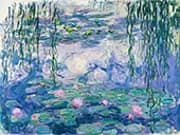
Water Lilies by Claude Monet
Claude Monet's Water Lilies series transformed traditional landscape painting through its focus on reflection, color, and atmosphere. Created at Monet's garden in Giverny, the series eventually expanded to approximately 250 paintings. Some of the largest examples can be seen at the Musée de l'Orangerie in Paris, where panoramic panels stretch across entire rooms.
The series remains especially popular because its soft palette and atmospheric brushwork work comfortably within a wide variety of interior styles while remaining one of the defining achievements of Monet's Water Lilies series.
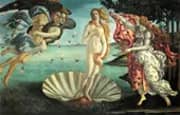
The Birth of Venus (c.1484–1486) by Sandro Botticelli
The Birth of Venus is one of the defining images of the Italian Renaissance. Painted by Sandro Botticelli in Florence, the composition combines flowing movement, decorative elegance, and idealized beauty. The original painting is displayed at the Uffizi Gallery in Florence and measures 172.5 x 278.9 cm (67⅞ x 109⅝ in). Its graceful lines and harmonious composition have helped maintain its popularity for more than five centuries.
Today it remains one of the most widely recognized Renaissance paintings in the world and continues to attract collectors drawn to classical subjects and decorative refinement.
Nighthawks (1942) by Edward Hopper
Edward Hopper's Nighthawks became an icon of modern American art through its atmosphere of isolation and quiet tension.
Displayed at the Art Institute of Chicago, the painting measures 84.1 x 152.4 cm (33.1 x 60 in). The contrast between the brightly illuminated diner and the surrounding empty streets creates a mood that has influenced generations of filmmakers, photographers, and artists.
Its cinematic atmosphere and restrained color palette continue to attract collectors who prefer modern subjects over traditional landscapes and portraits.
The Fighting Temeraire (1839) by J.M.W. Turner
J.M.W. Turner's The Fighting Temeraire is one of the best-known paintings of British Romanticism. The painting depicts the historic warship HMS Temeraire being towed for dismantling, symbolizing the transition from sail to steam power.
Displayed in the National Gallery in London, the painting measures 90.7 x 121.6 cm (35.7 x 47.8 in). Its luminous sky, atmospheric color, and emotional depth continue to captivate viewers nearly two centuries after its creation.
Turner's treatment of light would later influence Impressionism and many modern landscape painters, helping to secure the painting's place among the most admired works in British art.
Why These Famous Paintings Continue to Be Chosen as Oil Reproductions
The popularity of these oil paintings extends beyond their place in art history. Many possess qualities that translate exceptionally well into hand-painted oil painting reproductions, including strong composition, distinctive brushwork, rich color relationships, and enduring visual appeal.
Some paintings reveal new details through texture and layering, while others rely on atmosphere, lighting, or color harmony to maintain their appeal over repeated viewing. Their continued popularity demonstrates that great paintings can remain relevant regardless of changing artistic trends or decorative fashions.
Paintings that rely heavily on color relationships, visible brushwork, or atmospheric effects often translate particularly well into oil on canvas because much of their appeal comes from the physical handling of paint rather than the image alone.
Whether a collector prefers the atmosphere of Monet, the energy of Van Gogh, the elegance of Botticelli, or the quiet realism of Vermeer, these paintings continue to offer a combination of artistic significance and visual appeal that few works can match.
Why Certain Famous Paintings Work Particularly Well as Oil Reproductions
Not every image benefits equally from hand-painted reproduction. Some artists relied heavily on physical paint handling techniques that are difficult to appreciate in printed form.
Vincent van Gogh used thick impasto that creates texture and shadow across the canvas. Claude Monet relied on layered color relationships and broken brushwork that become more apparent at different viewing distances. J.M.W. Turner used glazing and atmospheric transitions that create depth and luminosity, while Vermeer's subtle tonal shifts reveal extraordinary control over light.
These qualities are best appreciated as painted surfaces rather than flat printed images, helping explain why these artists remain especially popular among collectors seeking museum quality oil reproductions.
The Lasting Appeal of Hand-Painted Oil Reproductions
Many of the world's most famous oil paintings remain permanently housed in museums and public collections. Hand-painted oil reproductions allow collectors to experience some of the visual qualities that make original paintings so compelling.
Unlike flat printed reproductions, oil paintings possess physical texture, layered brushwork, and subtle variations in pigment density. These characteristics contribute to the depth and visual richness that have made oil painting the preferred medium of many of history's greatest artists.
For collectors, a hand-painted reproduction offers an opportunity to enjoy a closer connection to some of the most celebrated works ever created while preserving many of the qualities that make the originals so admired.
Why Famous Paintings Continue to Feel Relevant
Artistic styles and decorative trends evolve constantly, yet certain paintings continue to resonate across generations. Whether displayed in museums, private collections, or homes, the strongest works maintain their ability to engage viewers through composition, atmosphere, color, and craftsmanship.
From the mystery of the Mona Lisa to the energy of The Starry Night, the tranquility of Water Lilies, and the quiet tension of Nighthawks, these paintings continue to reward repeated viewing long after their creation.
This combination of artistic importance, recognizable imagery, and suitability for hand-painted oil painting reproduction helps explain why these works remain among the most requested oil paintings in the world.


























































Enter Your Private Gallery
Log in with your gallery ID here
Track Your Order
Type your order number here